A few shows I've been watching for a while had down or least unexciting seasons in 2017, but for the most part it was a great year for TV, with several new series that really impressed me.
Best of 2017
10. Review (Comedy Central)
Review's third and final season was very brief, but it was a perfect send-off for a series that was much more fascinating than I really expected when I gave it a shot. Right up to the end they kept coming up with new ways for Andy Daly's Forrest MacNeill to torture himself, putting his obsession with doing his job over every other concern he should have. You really just have to see it for yourself.
9. Agents of S.H.I.E.L.D. (ABC)
This was maybe the biggest surprise of the year. From the beginning, S.H.I.E.L.D. has been the dutiful television branch of the Marvel Cinematic Universe that cleans up the scraps of story left by the movies and does competent but bland espionage action every week. Things were different in season four, when they finally abandoned the pretense that they were really "connected" to the movies and focused on three tighter story arcs instead of a single meandering thread. It resulted in what was quite easily the show's best season, recalling what works about the Whedon TV formula with smart plots, strong character drama, and twists that really stick the knife in. I don't know if I would tell anyone they really need to watch this show, but that season alone made the years of investment worth it.
8. Samurai Jack (Adult Swim)
Samurai Jack returned after many years to finally conclude the tale of his defeat of Aku and return to his own time. The show matured along with most of its audience, becoming more violent and bittersweet as it introduced a couple of new concepts but focused mostly on creating a proper ending for the series and its characters. I thought the climax could have used a bit more time to breathe, but it was a really good show with some of the best animated sequences you'll ever see on TV.
7. Rick and Morty (Adult Swim)
Rick and Morty's fandom really seemed to boil over into full on insufferable, ashamed-to-be-associated-with-some-of-these-people mode in the last couple years, but the show itself is about as good as ever, mixing razor sharp humor with wild sci-fi ideas and bitterly human moments at a crazy pace. It continues to be formally experimental in eye-opening ways, and a few of these episodes are easily among the most memorable half hours of entertainment to come along in a while.
6. Legion (FX)
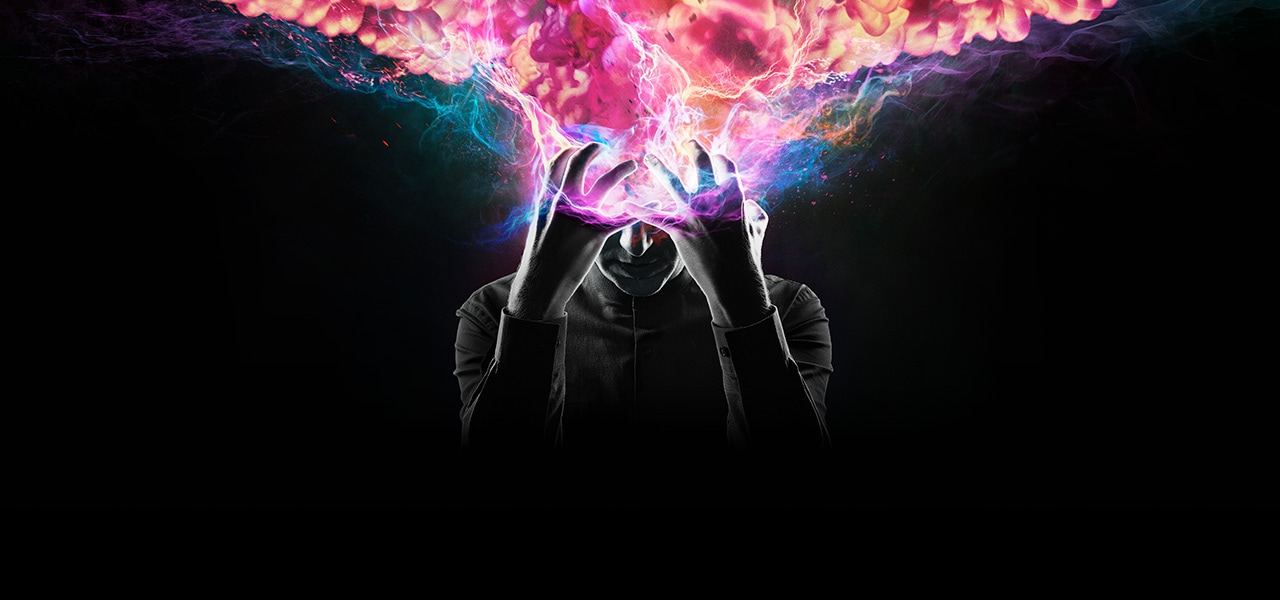
FOX has been having a nice of run of success with its X-Men related output lately, and Legion might be my favorite thing they've done. It's a superhero story as a psychological drama. In the comics, David Haller is the son of Professor X. In the show, there are no real references to any well-known mutants to be found, but the character is intact as a mentally unstable, powerful mutant who isn't sure where his abilities end and his hallucinations begin. The show is really more of a horror series than anything else, with some truly unsettling moments as the characters fight to survive some truly bizarre situations. It stands apart from other X-Men adaptations as something truly unique.
5. The Good Place (NBC)
The new comedy from the Parks and Recreation brain trust takes place in "The Good Place", the place good people go when they die, based on a complicated point system. The problem in the first episode is the new arrival and protagonist, played by Kristen Bell, knows there's no way she shouldn't have been sent to "The Bad Place", and from there begins a whole series of complications and screw-ups that drive one of my favorite new comedies in a long time. The Good Place is ambitious, smart, and hilarious, and is story focused in a way that makes compulsive watching easy if not unavoidable. And the cast is diverse and brilliant, particularly Ted Danson as Michael, the architect of the neighborhood the show takes place in. He might be the lifetime sitcom MVP.
4. The Deuce (HBO)
David Simon's new show is a return to what he does best - rich, complicated examinations of systems of crime and neglect that inevitably end up hurting the vulnerable the most. It's about the intertwined industries of prostitution and pornography in 1970s New York, as the former is pushed behind closed doors and the latter starts gaining mainstream acceptance. The ensemble cast is reliably excellent, as is the writing, which takes time to explain how things work and why they're terrible and won't be fixed without being preachy or unnatural. There's a lot of sex in this show, but it feels illustrative rather than titillating. When you know how the sausage is made, you don't want to eat it as much.
3. Better Call Saul (AMC)
In some ways, I think Better Call Saul might be better than Breaking Bad. I don't want that to be taken the wrong way, because there are things that Breaking Bad did that no other show can do as well, and that Saul doesn't really try. But it can do subtler, smaller storytelling in ways that show this team doesn't need Breaking Bad's excesses to make one of the most consistently riveting dramas on TV. The rivalry between Jimmy and Chuck is one of the most heartbreaking family conflicts I can remember, and Mike getting himself intertwined with Gus and the cartel, knowing where that eventually goes, is always great stuff. And what the heck is going to happen to Kim? God this show is fun.
2. The Leftovers (HBO)
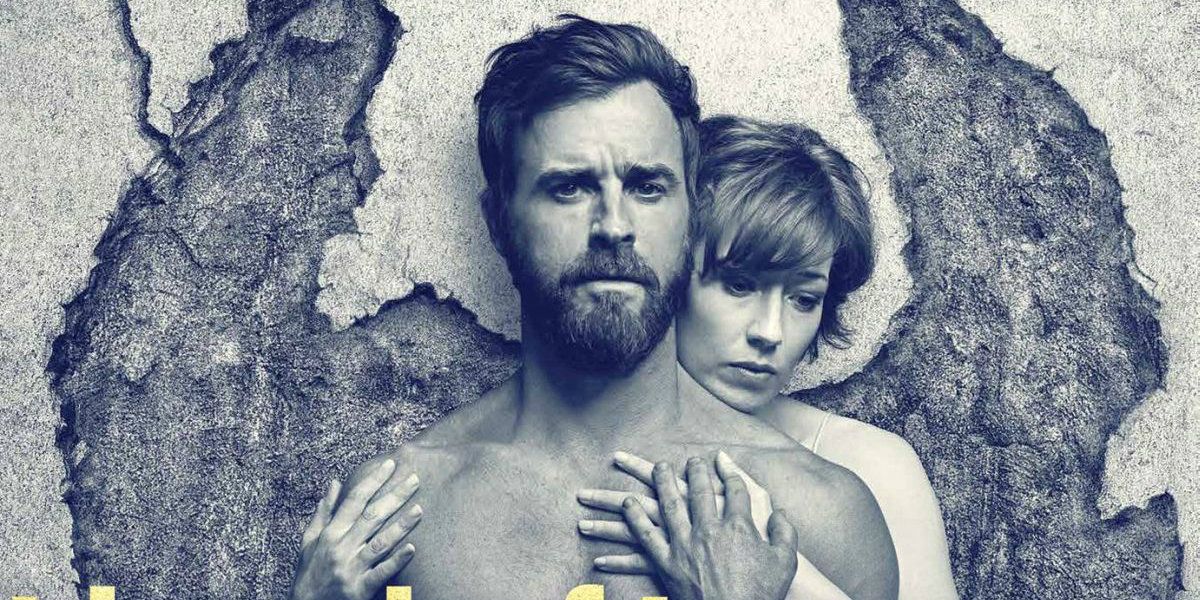
The Leftovers' third and final season (déjà vu) brings the story to a close in a way that satisfied, bringing more comparisons to Lost, Damon Lindelof's other show about mysterious, unexplained events. It's all a matter of perspective. While people expected certain things from Lost that the creators never intended to give them, it seemed clear from the outset that the focus of The Leftovers was how the strange disappearance of 2% of the population affected the people who remained, and not the disappearance itself. That was driven home here, as the characters struggle to find some catharsis or really anything to latch onto, as they reel from further events that spun out from the results of the "rapture". The final season was raw, emotional, devastating, and hopeful from beginning to end.
1. Twin Peaks: The Return (Showtime)
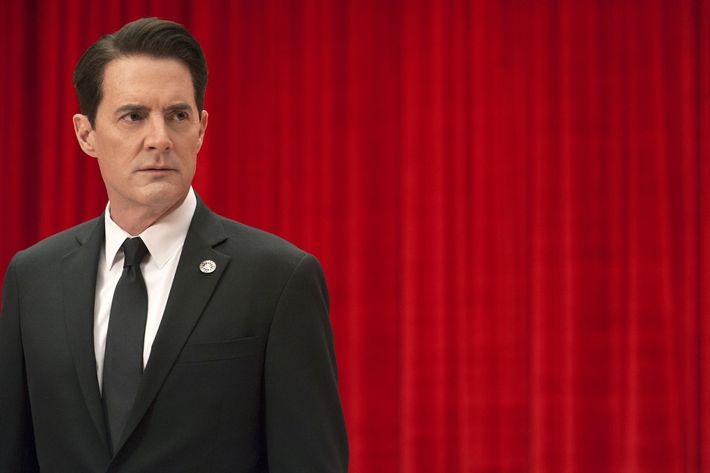
There was some trepidation about what to expect from David Lynch's return to the world of Twin Peaks for the first time in 26 years, and his first major work behind a camera in 11. Does he still have it? Will it be too familiar? Too different? The answers to those questions are yes, no, and no. Twin Peaks still resembles the old Twin Peaks, but it feels appropriately twisted. Evil has been running free for decades, and the advanced aging of the many returning cast members illustrate the toll it has taken on this world. It's like Lynch got to make an eighteen hour long movie and could do whatever the hell he wanted with it as long as it tied into a story that didn't get a proper ending the first time. There are a few moments of comfort and familiarity, but the show is frequently challenging, even frustrating, and often very experimental. It won't work for everyone, but as a fan of most of Lynch's filmography, I loved the hell out of it. I'm not sure I've ever seen anything as ballsy as that ending. Also, Kyle MacLachlan kills it. I'd love to see another season, or really anything else David Lynch wants to make.
Delayed Entry
This is the best show that didn't air in 2017 but I didn't watch until then.
The Last Man on Earth (FOX)
I'm now caught up on this show, and while it didn't quite land on the top 10, it's also another one of my favorite new-ish comedy series. Will Forte stars as Phil Miller, an oddball of a man and one of only a few who seem to be immune to a virus that wiped out almost all life on the planet (spoiler, the title of the show is quickly shown to be inaccurate). The whole cast is good, but it's really Forte who drives the thing. The show actually takes its premise quite seriously, and it has its share of effective dramatic developments and careful consideration of what would follow the near-extinction of humanity. But taking that story, and putting this character at the center, is so weird and brilliant and funny. Will Forte should have gotten his own show a long time ago.
Thursday, January 18, 2018
Best Shows of 2017
Thursday, January 17, 2013
Best Shows of 2012
Since I only consider shows that complete a season in a given year, and Breaking Bad only aired the first half of its final run, this will be the first year since it started that it won't be on my list. What show will take its three years running top slot?
Best of 2012
10. Homeland (Showtime)
People sure can turn on a show quickly. I wasn't as disappointed by the quicker pace and bigger action of Homeland's second season as some others, but I did find it to be a step down in quality. Still, the acting is great, the dramatic scenes are played with a lot of effective tension, and those guys still know how to spin an exciting yarn of terrorism and the people who counter it.
9. Luck (HBO)
Based on the fact that they were reportedly already filming the second season, I believe that Luck really was canceled because of the unfortunate death of horses they were using, and that wasn't just a cover-up of the fact that the show hadn't succeeded financially yet. It's a shame, because David Milch created a really interesting environment for a much longer series. The intricate dialogue was handled with skill by a great cast led by Dustin Hoffman, and the scenes of the actual races were absolutely breathtaking. I'll always wonder what could have been.
8. Sons of Anarchy (FX)
There are lots of dramas, and even crime dramas about bad guys specifically, that are more graceful, classier, subtler, more emotionally meaningful, and a lot of other words you can think of than Sons of Anarchy. Few of them though ever approach this show's ability to put together a plot. Characters are always hiding things, discovering secrets, getting into and out of trouble, and the shit just seems to never stop piling up against them. Yet it never totally breaks. I was highly disappointed by the finale of the last season, but not only did they manage to earn back my trust this year, they actually made those seemingly bad decisions look like good ones. I don't know how much more there'll be, but I'm on board.
7. Louie (FX)
This season was definitely less consistent than the second, with a few episodes that weren't particularly funny, which would usually be fine with this show, but in this case failed to have significant merits elsewhere at the same time. When the show's like that, it's still good enough to watch, but you know Louis C.K. can do better. Luckily , some of the season was really, really good, notably the appearances by Parker Posey and Chloë Sevigny as brilliant takes on the problems with a typical "manic pixie dream girl" character (I kind of hated typing that) and an arc where Louie tries to win Letterman's hosting job with the help of a strange mentor played by David Lynch. The show won't be back until next year, and I'm going to miss it.
6. Justified (FX)
It's probably a good idea that Justified didn't try to top the pure, unnerving menace of Margo Martindale's Mags Bennett from season two, instead aiming for a bit more color with its new characters who end up trading threats with Raylan Givens. It might be taking the easy way out, but the show is already more colorful than others of the same type, which is part of what makes it stand above the rest. Justified's version of Harlan county and the surrounding areas is becoming as well developed and entertaining as any fictional place I can think of, and it's one of the few shows where I don't care if what's happening ties into a larger story or not. It's fun to watch regardless.
5. Community (NBC)
Season three of Community was not without its share of problems. Some of the supporting characters continued to be used to less than their potential, larger story elements lurched at times, and it could not quite be counted on to be brilliant every single week. But I simply cannot pretend that a show that made episodes like "Remedial Chaos Theory", "Documentary Filmmaking: Redux", "Regional Holiday Music", "Pillows and Blankets", "Basic Lupine Urology", and "Introduction to Finality" is not one of my favorites.
4. Game of Thrones (HBO)
Game of Thrones' second season took a lot more risks than the first, intentionally changing the story from the books more often and attempting things like showing a large siege battle that most shows wouldn't even think doing. It mostly paid off, and continued to be a bloody, sexy cable show that managed to have a good story and good acting anyway. The third book in the series has some of the story's most infamous scenes, and I can't wait for the show to get to them.
3. Boardwalk Empire (HBO)
You always wonder what will happen to a show when one of its central characters is no longer around (Game of Thrones fits this too), and it's a bit surprising how much better Boardwalk Empire seemed with Michael Pitt gone. The other characters got to have their own stories a bit more, and they ended up with the best buildup and climax to an arc yet, one that focused on the war between Nucky and a competitor for his illegal goods played by Bobby Cannavale. The 1920s setting is still pretty fascinating, and it's interesting to watch how Terence Winter weaves his gangster tale with the truths of history.
2. Parks and Recreation (NBC)
Some things are growers. They can be albums, foods, people, and in this case, a TV show. Was Parks and Recreation markedly, demonstrably better in 2012 than it was before? Probably not. But the more I see it, the more I just like spending time watching it, and seeing what will happen to the characters, who I can't help but feel attached to, whether things are going fine for them or they're struggling. I hope it stays on the air for years to come.
1. Mad Men (AMC)
Like Parks and Recreation, Mad Men has been a grower for me. I can't rightly say that there's an objective reason that it was my favorite show of 2012 and not one of my top 10 in 2007, I just know that it was, and it would take a second watch of the whole series to dig deeper into the question. It does seem less focused on social commentary and reliving the 60s, and more focused on the character relationships and memorable scenes, which are things I tend to prefer. There was a period of time when the show was just absolutely on fire in season five, every episode absolutely stuffed with brilliant writing, directing, and acting, and even though there's no ticking time bombs or unexpected gun fights, it was the show I anticipated most from week to week.
Delayed Entry
This is the best show that didn't air in 2012 but I didn't watch until then.
Veronica Mars (UPN/CW)
I'm surprised I didn't notice the parallels between this and Buffy the Vampire Slayer a bit sooner. A show on UPN about a plucky and beautiful but dangerous and talented blond girl (Kristen Bell instead of Sarah Michelle Gellar) in high school, that plays with genre conventions (mystery instead of supernatural horror), and gets a bit worse when she moves on to high school? It's kind of scary, actually. The first two seasons of Veronica Mars have her solving both basic but inventive cases week to week and bigger, season-spanning conspiracies in the long term, and the way they balance humor, drama, and intrigue is remarkable. The third season is disjointed and lighter in tone, which definitely hurts it, but it's still worth seeing. It's a show that's easy to gorge on, and it's too bad that there aren't more than 64 episodes to enjoy.
Thursday, January 12, 2012
Best Shows of 2011
Once more, with feeling: this list was chosen from seasons of shows that had their season finale air in 2011. So for the network shows, material that occurred way back in the fall of 2010 is relevant, and the brand new seasons aren't. It's just the only way to make it work, okay? I don't see the value in looking at it otherwise. Stop looking at me like that.
Best of 2011
10. It's Always Sunny in Philadelphia (FX)
It's Always Sunny doesn't have the human core that it would take to be my favorite comedy on television right now, but that's by design. It's about a bunch of loudmouth jerks who do terrible things to each other, and that's been the launching point for a lot of great comedy in the last seven years. Just going by the strength of the laughs, this was one of the better seasons in the show's run, which is quite a feat considering how generally consistent it is with its cast and its writing. It's not that new anymore, but what they're doing is still so good that I don't really care.
Favorite Episode: "Frank's Pretty Woman"
9. Sons of Anarchy (FX)
This could have possibly ended up higher on the list if the finale turned out differently, but it was still an exciting, tension-filled season of a show that does a great job of balancing baser thrillers like gun fights and car chases with some really strong human drama that drives everything. It turned out to be sort of a table setting season in the end, but the journey to reach its lukewarm conclusion was at times as brilliant as anything else I saw on TV last year.
Favorite Episode: "Hands"
8. Parks and Recreation (NBC)
The third season of Parks and Rec built wonderfully on the second, continuing to develop its ensemble cast into one of the most lovable bunches on television while adding two more talented people to its cast in Adam Scott and Rob Lowe. They also did a lot to gradually turn Pawnee, Indiana into one of the most fully developed and enjoyable fictional towns in TV history. It's just a show that's always growing, and never feels like it has to stop. It doesn't blow my mind as much as shows higher on this list, but it's wonderful all the same.
Favorite Episode: "Media Blitz"
7. Louie (FX)
I don't know if I'd like Louie more if the show made more of a concerted effort to be funny. Because as much as I love the fact that Louis C.K. can do pretty much anything he wants with the show, and am frequently moved or affected by some of his wilder experiments, I still often find myself thinking that the inserted moments of his regular stand-up comedy are the most enjoyable bits of the show. Still, it's hard to fault the show for what it is; an incredibly honest and inventive series that's more concerned with doing something different and interesting than making you laugh a few times. That's admirable, and the show is good enough to pull it off.
Favorite Episode: "Oh Louie/Tickets"
6. Game of Thrones (HBO)
You know I think was a strong year for drama on cable when a nearly perfect adaptation of one of my favorite books is my fifth favorite. George R. R. Martin's fantasy series is the definition of meaty, and television would be the only reasonable way to adapt it without totally gutting the story. That some things are simplified or lost in translation is besides the point - Game of Thrones is highly successful at bringing the series to a larger audience, and is a lot of fun to watch whether you're familiar with the books or not. The production values and quality of the cast are outstanding for television, and the dark, unforgiving world the story takes place in fits right in with the gritty cable feel. Again, not perfect, but plenty good enough.
Favorite Episode: "The Pointy End"
5. Boardwalk Empire (HBO)
For a lot of these dramas, the favorite episode is somewhat randomly chosen. Pretty much episode has something good to it, and what it comes to is which one had that one killer moment that jumps out more than the rest. Boardwalk had a very successful debut last year, and it was improved this time around, expanding on the scope of its examination of the way crime and politics intertwine in early 20th century America, and giving more time for all of its characters to grow into believable people that you care about. It's a bit too stately and concerned with symbolism to match the gripping personal intensity of HBO's very best crime dramas, but it's still damn good and always fun to watch.
Favorite Episode: "Ourselves Alone"
4. Homeland (Showtime)
Looking back, this might be the only brand new show that I watched in 2011. And if that's the case, it was a darn good pick. What starts out as a nice paranoid spy thriller quickly grows into something more, as the characters doing the watching start interacting with the watched, and it turns into a messy smashing together of personal and political turmoil. The show doesn't quite have the breadth of other dramas on this list, being so focused on a single story and a small group of characters. But what they do with that limited scope is very impressive, and worth celebrating.
Favorite Episode: "Marine One"
3. Justified (FX)

For some reason, the first season of Justified was more concerned with telling a bunch of cool little modern cowboy stories than creating a real story for its great main character, and that seemed to be the case for a little while in season two as well. But it wasn't long before it became clear what the greater plan was, as smaller squabbles gave way to an incredibly compelling story of deep rooted family rivalries in a dangerous community that never forgets past slights. Margo Martindale gave a supporting performance for the ages, and just like that, the show morphed from a solid, stylish police drama into something much greater that everyone should watch.
Favorite Episode: "Brother's Keeper"
2. Community (NBC)
Community doesn't have the consistency of tone and content that other shows might have, that probably help them establish larger and more casual audiences who know what to expect when they turn the TV on. Community's eccentricity might have contributed to its low ratings, and its removal from the spring schedule and possible eventual cancellation before it was even nearly done telling stories. But if removing the less safe elements of the show so it could stay on the air a few years longer meant that it wouldn't be as potentially exciting, unique, and simply hysterical as it routinely is, I wouldn't make that trade. The second season of the show took a lot of risks, but they almost all paid off and helped create one of the best single seasons of a sitcom I have ever seen.
Favorite Episode: "Abed's Uncontrollable Christmas"
1. Breaking Bad (AMC)
Another year, another first place finish for Breaking Bad. I can't help it. There's just no show that combines a unique visual flair, stupendous acting, dark humor, and a shocking and unpredictable plot like Breaking Bad. I don't quite think it was better this year than it was last time, but I was impressed with how they managed to shift the focus away from Walt without compromising the show's unerring watchability or the long term goals that they're striving toward. And with the way the spotlight returned to him as the season ended, it reinforced my belief that he is the most interesting, and doomed, protagonist on TV today.
Favorite Episode: "Crawl Space"
Wednesday, December 21, 2011
Homeland - Season 1
Showtime is quickly becoming famous for green-lighting interesting television series with tricky premises, and then allowing those shows to continue airing long after those premises become strained and hard to take seriously. I can only hope that Homeland isn't destined for the same fate, because as of right now it stands as one of the most well-formed and intriguing first seasons of a new drama series in a long time. It's coming back for at least one year, and I think they could do a couple more after that. But I really hope in five years I'm not lamenting its continued existence right alongside everything else that the network has done. It's too good for that fate.
Homeland is produced by some of the same people who worked on 24, but while it's about similar themes of terrorism and how far people will go to protect their country, it is an altogether more intelligent and less sensationalistic series that manages to hit harder despite fewer fireworks due to its strong work making you actually care about its characters and what they do. Having half the number of episodes to tell their story in, there's less time wasted on plot tangents that become irrelevant and piling twists on top of each other, and we really get to the core of who the principal figures are and what they believe in. The overarching terrorist plot isn't without a couple holes, loose ends, or convenient leaps in logic, but it holds together well enough to support the story. And since the acting is so good, the flaws in the plot become unimportant in the face of what it means to the characters. The body count isn't very high, but every big moment in the show has enormous impact. It's not the best drama on television, but it's pretty special.
Claire Danes stars as a CIA operative, who like many such people, focuses almost entirely on her work, to the detriment of anything resembling a social life. When she hears that terrorists have flipped an American soldier who's coming home, she suspects it's Damian Lewis' character, a marine finally returning to his family after eight years of captivity. Her only real support is from her mentor played by Mandy Patinkin, another man who puts his job before anything else. At first it seems like the show will be about paranoia and surveillance, as Danes installs cameras in Lewis' house and watches his every movie. But it was fun to realize that was only the first part in the story, and the show was not afraid to blow through story developments quickly and move on to new ideas before the old ones even had a chance to turn stale. The three central performances truly are special, and they allow the show to get away with the slightly sillier parts in order to reach some great high points. By the season finale I was completely invested in the central conflict, and it was a wonderfully devastating episode, full of great little touches, memorable scenes, and more than enough justification for a second season. I didn't immediately latch onto the series as much as some others, but by the end I was a believer. Let's hope they really know what they're doing for next year.
Tuesday, December 20, 2011
Dexter - Season 6
You know a show has fallen on hard times when its new episodes are so bad that they make you question whether the earlier ones that you really enjoyed were actually good. I'm still pretty sure that it's not just a series wearing out its formula to the point of extreme degradation, that it's been getting progressively worse at coming up with competent stories and interesting supporting characters, but I'm at least wondering why I liked it quite as much as I did for the first couple seasons. It's kind of been a slow breakdown in every aspect of the series over time - it started as an adequate police drama with an utterly compelling protagonist portrayed very well by Michael C. Hall. As time has gone by, the police drama has become less adequate as the cases they tackle become less original or even coherently written, and the supporting cast has gotten more and more time to expose just how uninteresting their characters are and how little talent their actors have. Season four showed the show could still live with that, when it had John Lithgow doing a great job playing a horrific counterpoint to Dexter, but since then, they've failed to come up with interesting villains, and even Dexter himself has not been immune to simple bad writing, especially when it comes to his increasingly unnecessary and irritating narration. If I hear him mumble "dark passenger" one more time, I don't know what I'll do.
The show has had ups and downs, and season six was definitely the biggest down. I knew things were shaky when they introduced this year's big theme: faith, specifically in the form of religion. Edward James Olmos and Colin Hanks play serial killers who are using the Bible to justify their crimes, and Mos Def (or Yasiin Bey, I suppose) plays a reformed criminal who now uses religion to keep him on the straight and narrow. Dexter tries to learn about how faith can be good from Bey's character, but he gets pushed aside and eventually it just devolves into a hacky doomsday psychopath plot without really saying anything interesting or new about the subject. Bey is easily the best thing about the first half of the season, but he doesn't stick around and unfortunately his exit isn't the most graceful. Olmos' character never does anything interesting, and Hanks is either ill-suited for his or just doesn't have the talent to pull it off. A lot of the season is the show just shuffling in place as Dexter goes on ill-considered detours and offs very boring random bad guys, and a lot of weight is again placed on the folks at the police station, who repeatedly prove to be some of the dumbest TV cops who ever lived. The show doesn't even pretend that law enforcement is a threat to Dexter this year, and their failure to notice all of the little things that don't add up about him is becoming farcical at this point. Deb is the only one who has anything remotely resembling a passable storyline, and even that can't avoid veering into some seriously ill-considered territory by the end. And yet... I might have to watch season seven, depending on how it looks once we get closer. Because those writers, incompetent as they might be, finally recognized the need to do something to actually move toward what could be considered an ending, and they did that in this season's finale scene. I still might not watch, since sitting through these twelve episodes was a pretty terrible experience, but at least it's better than what Weeds did.
Wednesday, September 28, 2011
Weeds - Season 7
I've managed to enjoy Weeds since it left suburban California a few years ago more than many people, but I could tell that my patience for it was running thin when I could barely even enjoy the episodes this season that other people said were actually pretty good. It's hard to say what it is that turned me against the show, because it's pretty much what it was last year. The Botwins are more centrally confined to one location, as they all go to New York once Nancy is let out of prison and put in a halfway house there (a few years after last season ended). But it felt similar to me, like how the Agrestic seasons and then the Ren Mar seasons felt like discrete parts of a larger story. Still something was missing, or wrong. I didn't care about the plot anymore. When the show ignored its plot, I couldn't laugh at any of the jokes. None of the new characters were interesting, and none of the old characters were capable of surprising me anymore. The show was stuck in a rut, and the news that they weren't really planning on making it the final season, even though they had hinted at that previously, really drained a lot of the hope out of me.
There's a difference between a show that can last a long time and a show that can't, and unfortunately Showtime doesn't seem to realize this. Weeds was finishing its seventh season right as Its Always Sunny in Philadelphia was beginning its seventh, and though I'm bored to death of the former, I love the latter as much as ever. The difference is that Weeds is trying to tell a story, and Sunny just wants to be funny. Most stories don't stay interesting after seven years, especially when it's the kind of story with a plot that seems naturally inclined to end in half that time. A suburban mom turning to selling weed to make ends meet just doesn't sound like something that could end up taking nearly a decade to fully play out. Why does she continue to deal drugs, even though the authorities know about her now and it's clearly a practice that has not brought her sustained success in the past? Why do her sons and brother-in-law and Doug of all people stick around her when she's clearly a terrible influence in their lives? Because dealing drugs is what the show is about, and because these are the main characters, and it's easier to write a show when the cast stays together. Nothing about the show feels real anymore, especially when the attempts at broader comedy get more and more out of sync with the general mood. It's Always Sunny could probably get away with a scene where Muslims who are supposed to be shipping weed to America accidentally blow themselves up. A show about a woman who was recently released from jail after her husband was murdered trying to get custody of her son cannot.
And so the show isn't really funny when it tries to be, and the story doesn't work because I don't believe in these characters anymore. It doesn't help that all of the new subplots this year end up being basically meaningless. Nancy's supposed to have to worry about her parole and the conditions of her release, but that turns out to be a lot of nothing before it's swept aside. New dealers and suppliers pop up that the family has to deal with, but they're all pretty much gone by the end. A potentially devastating schism in the family is thrown out the window with a silly last-minute solution. And then the terrible cliffhanger, easily one of the laziest things I've seen a show do to try to keep its audience hooked. The craziest part is that I'm not even sure I won't watch season eight, if they end up making it. But that's mostly just because seven seems like a silly number to quit something on.
Wednesday, May 25, 2011
The Borgias - Season 1
The Borgias is a lot like The Tudors, a period piece focused on a powerful figure from the Renaissance period, that tries to make up for occasionally stilted, stuffy storytelling with a lax attention to accuracy and a fair amount of blood and sex. Much like The Tudors, neither the historical nor the entertainment side of the show is strong enough to make up for the shortcomings on the other side. Shows like True Blood and Spartacus: Blood and Sand definitely tend to have worse writing and acting than The Borgias, but they still entertain me with their frequently over the top depictions of some of our base instincts. Right now I'm plowing through The West Wing, which is a show that relies almost entirely on people talking about politics and is always a ton of fun. So the fact that The Borgias tries for both and ends up just being kind of boring is disappointing. It's not like juggling both can't be done; Rome and Deadwood were both incredibly rich (though abridged) depictions of important points in history and incredibly inappropriate for children at the same time. And right now, Game of Thrones is trampling it in just about every category, and I think I'd be saying that even if I didn't already love the books.
Of course, those HBO shows all have much larger budgets than what Neil Jordan apparently had to work with on Showtime, but it's hard to use that to cover up the issues with the series, which extend beyond the limitations of the sets and computer effects. There's not very much going on in the story, the characters generally aren't likable, and I didn't really get a sense of what was happening being important or where it was leading. It's hard to identify an arc at all, sure, there's an invasion that comes as the season ends, but I had trouble identifying why it mattered. And like I said, it's not much of a guilty pleasure either - plenty of time is spent examining the sexual relationships between the characters, but these scenes don't offer much titillation, and a lot of the violence is either pretty rote stabbings or poorly shot war scenes. I think it's an interesting family, and an historically noteworthy one, but watching them in action hasn't been very fun. I may come back to the show later, when I can watch it in chunks instead of one dull hour at a time, but I see no need to come back to it each week next year. Jeremy Irons is usually really good, but that's about it.
Monday, April 4, 2011
The Tudors
The Tudors is one of those shows that deserves to have quotation marks around the word historical in their descriptions. It's not that they go out of their way to make things up, but it's the simple fact that they are more concerned with telling a story and creating a mood than accurately portraying what happened. The Tudors tells the story of King Henry VIII, the guy we all ready about in school who had a bunch of wives and created the Church of England. Because of the limitations of covering a forty year reign in 38 episodes over the course of four years, many things are compressed and forgotten and compromised in order for it to be a series and not just a documentary.
And that's okay, really. Rome did the same thing, and it was pretty outstanding. But while I thought The Tudors was decent, something about it felt limited. Despite using Henry's parade of marriages as an excuse to turn him into a sex-crazed lunatic, the show really wasn't as trashy as I thought it would be. I wasn't expecting Spartacus: Blood and Sand levels of softcore pornography and fountains of blood, but I was definitely expecting more than there was. Long stretches of the show are merely people meeting at court and planning changes for the kingdom and stuff like that while all of the wars Henry got into occurred mostly off screen, and the worst thing you can really say about is that it's actually a little boring sometimes. The show gets in its fair share of sex scenes and decapitations (and hangings, and burnings at the stake, and drawing and quarterings), but it's not quite debaucherous enough to be pure fun, nor is it really well written enough to pull off a fully respectful treatment of the material. It was popular enough to stay on the air for as long as it did, but I have trouble imagining an audience that was completely satisfied with the series' tone.
Jonathan Rhys Meyers plays King Henry, and I was mostly pleased by his work. He's not exactly the most talented actor, but one of the most important things for the role was that he have a commanding, authoritative presence, which he does. I was also reasonably impressed by the way he handled the character's increasing age as the show wore on. The new Superman Henry Cavill plays the Duke of Suffolk, and is the only actor in a major role to appear in all four seasons besides Rhys Meyers. Unlike most other characters who exist to provide something for Henry to deal with (or have sex on top of), Cavill is mostly just a loyal friend who has problems of his own to deal with, which were often a nice change of pace from the main plot. Otherwise there are a lot of beautiful women who make their way through the court and often die, as well as a number of respected and/or recognizable actors appearing in brief but significant roles, like Sam Neill as a corrupt cardinal who's nonetheless on Henry's side or Peter O'Toole as the pope, who isn't having any of the king's Church of England crap.
So for four seasons we see Meyers grow from a young king to a nearly crippled old man, trying to find a wife that will bear him a male heir, juggling alliances with multiple other finicky monarchs, and rooting out dissent among his people. He puts a lot of people to death, ignores logic to support his own deluded beliefs, and never seems to fully connect with anyone around him. Some subplots were a lot more interesting than others, and you never know when a character you like will disappear or one you hate will hang on for way too long. It's a mostly watchable show that never gets too annoying to be unbearable or too good to make you really excited to keep going. Despite all this though, I found myself surprisingly moved as the series wound down and ended on its own terms. Not incredibly touched really, just surprised that I was a bit sad to see the slow decline of a man who's come to see that his best days are long behind him. The shift to old guy makeup seemed a bit drastic, but it worked nonetheless. The show was entirely written by creator Michael Hirst, and I think that might have been a mistake, because more people working on it could have meant a tighter and more thoroughly entertaining series. But in the end I kept watching it, because I enjoy these sorts of takes on interesting historical eras despite myself. Next I'm going to check out The Borgias, a show created by Neil Jordan that Hirst is producing.
Sunday, February 13, 2011
Brotherhood
Along with creator Blake Masters, Brotherhood was largely written and produced by Henry Bromell, who ran the underrated Rubicon for the too-brief time it was on the air. The show also co-stars Jason Clarke, who now plays the male lead on Shawn Ryan's new FOX cop drama The Chicago Code. These were reasons enough to check out Brotherhood, as if it didn't seem interesting enough on its own.
The show tells the story of two Irish brothers in Providence, Rhode Island; Tommy is a prominent member of the state's legislature, and Michael is a particularly unhinged member of the city's organized crime underground. The two are held together despite their very different worlds by their common upbringing and their amazingly bitchy mother, who came over from Ireland in her youth but blames pretty much everything she sees wrong in the world on illegal immigrants. Other significant characters include Tommy's wife Eileen, who hides a self-destructive side under he perfect politician's wife exterior, the brothers' Irish cousin Colin who becomes Michael's right hand, and Declan, an old friend of Tom's who is turned against him by his career as a detective. Although the show has a definite plot with plenty of twists and turns, it is primarily character driven, painting a rich tapestry of their messed up and interwoven lives while also offering up scathing critiques of how broken many of our country's institutions are.
It's hard to say who you're supposed to root for, because none of the characters are innocent, but none are truly beyond redemption either. Sure, Michael extorts from people and sometimes even kills him, but Tommy ruins plenty of people himself making deals to ensure his own prominence in the government. It's not a very pretty picture, especially with how often the series shows that the two systems that are theoretically completely dissonant, crime and politics, are actually permanently linked together. You can just enjoy the show for the graphic violence and its often hilariously bumbling criminals, but there's a lot more to it if you care to look. The way the show handles gaps between seasons is interesting; many shows take a similar strategy of assuming that a certain amount of time has passed, but few allow so many apparently significant events and developments happen off-screen, as if there's just some chunk of the show missing. Similarly, though the show was canceled after its third season, the finale works well enough as a conclusion to the story. Sure, there are places they could have gone with all of the characters, but there's something of a finality to the way the brutality of the violence peaks in the last episode, and being a show about the lives of the people in it, I don't really see a more conclusive end point that would have been better. People live for a while, and then they stop. Brotherhood is a show that explores that in a really interesting way.
Monday, December 13, 2010
Dexter - Season 5
I did not like this season of Dexter. It wasn't awful, because a show where Michael C. Hall plays a serial killer is always going to be at least passably entertaining. But whereas the boring third season felt like a hiccup more than anything truly worrisome after the fairly awesome fourth one last year, this felt more like the show beginning a true decline. Dexter's bag of tricks just isn't exciting as it used to be. And now I'm suspicious that John Lithgow's amazing job was maybe just an illusion masking a show that's been running out of really good ideas for a couple years now.
The previews leading up to this season and the beginning made it seem like the story might be more organic this time, growing out of the troubles that would arise after the fourth season's surprisingly vicious conclusion. It kicks off just a moment later, with Dexter being questioned by the police and struggling mightily on the inside. But it's not long before that plot is shut down before it can begin, the kids are shipped off so they're less of a nuisance, and we're right back to another big bad on the horizon as Dexter tracks down some bad guys while Peter Weller plays an ex-cop on his tail. Of course they got a special guest for this part, because it's much easier to get rid of a problem like that when it someone who doesn't have an actual relationship with Dexter and a spot on the regular cast list. A big difference this season is that Dexter rescues a victim of this season's boogey man and actually gets her on his side, although it's really just a twist on the same idea from seasons two and three, Dexter gets a friend and we're supposed to wonder if he can keep them. So while Julia Stiles plays the part well and it does provide for some interesting situations, it's not a true game changer like the show pretends it is.
The supporting cast around Dexter continues to be pretty boring and disposable, as the writers keep trying to keep us interested in what they're up to, but they haven't been fun in a while. Masuka's gimmick isn't funny anymore, forcing Angel and Deb into relationships with worse characters really doesn't help them as individual characters, and the homicide unit's side case that runs for most of the season is somehow even less compelling than usual before it gets dropped so the show can pretend that Dexter is in danger of getting caught by someone who knows him. All of this would have been fine if Dexter's stuff was up to its usual standards, but there just seemed like an excessive amount of shortcuts and overly convenient bouts of luckiness and unluckiness just to get the characters through all the story beats they wanted to. It just felt sloppy this year, and while many individual scenes were as raw and thrilling as the show can get, the whole was less than the sum of the parts. It was too easy, like the writers cared more about getting us from scene to scene without making sure it made sense or was even remotely believable. It's sad to see a show you used to love turn into something ordinary, and with the series being as successful financially as it's ever been, I don't see Showtime deciding to end it. Which means the only chance we really have of a proper ending coming reasonably soon is probably for Hall to decide he wants to do something else. Here's hoping that happens.
Tuesday, November 16, 2010
Weeds - Season 6
I don't understand why some publications review seasons of television series and not just episodes before they've actually seen the finale, or even more than a handful of episodes. How can you really pass judgment on the quality of something before you've seen the whole thing? That's like if Roger Ebert walked out of movies after the first hour because he'd seen enough to write his review. Obviously if a show is completely episodic it's more justifiable, because while the quality may ebb and flow slightly from week to week, you pretty much know what you're getting. But with a heavily plotted and character-based show like Weeds, you really need to see the whole thing to know if what came before was worth it.
While I enjoyed the last couple years of Weeds, I have to agree that it seemed like the show lost its way at least a bit during that time. Things were happening just because they needed to keep happening. And for a lot of this season I found myself wondering what the point was, and if the story was actually going anywhere. But by the end I was convinced that it was worth it, and while I still don't know how much longer it can or should last, we should maybe give the creators a bit more credit that we have been. This season actually took a lot of risks by having the Botwins traveling all over America instead of sticking to one location as we finally saw what the world of Weeds is like outside California. We spend time in Seattle, Detroit, and in various other places, never letting one location and set of supporting actors get stale before moving on. It wasn't the show's most exciting or funniest season, but it was competently entertaining, and had one of the best finales in the show's run. I was considering whether I would stick with the show for another year most of the time, but in the end the decision was made for me. I'll be there next year.
Also, here are my recaps for the last four episodes of the season:
Dearborn-Again
Viking Pride
Fran Tarkenton
Theoretical Love is Not Dead
Thursday, January 14, 2010
Best Shows of 2009
Again, things get on this list by having a season end in the year in question. Even if all but one episode was shown in a different year. Causes some odd situations, but it makes it a bit easier. This was a good year for shows I like, with lots of them either maintaining high standards of quality or bouncing back from relatively sub-par seasons.
Best of 2009
8. Pushing Daisies (ABC)
This is one of those odd situations. ABC failed to renew Daisies for a full second season, so they waited until the middle of the year to unceremoniously air the last three episodes. The show's second run didn't have quite the verve of the first, but it was still a beautifully shot, fiendishly clever, and highly charming show while it lasted. Maybe too cute for some, but it never bothered me.
7. Mad Men (AMC)
I really thought this was the show's best run, showing just how much good stuff there was last year. It featured a few of the series' greatest moments so far, some of its best humor, and some truly game-changing upheaval of the status quo in the last couple episodes. Ultimately though, I want to know what happens now more than I want to revisit what already did.
6. Dexter (Showtime)
The show's best go-round since the first, it wasn't perfect but managed to recapture a lot of what was missing the last time and tell an exciting story again. John Lithgow was probably the best pure villain on TV last year, and there were a number of scenes as shocking, disturbing, and downright just as tense as what you can accomplish in the medium. Plus it was the only thing on this list to have a significant supporting character regularly show her tits, which doesn't hurt. Nah, if that actually mattered True Blood would be here.
5. It's Always Sunny in Philadelphia (FX)
This year's best comedy, and I'd be tempted to name it the comedy of the decade if it weren't for Arrested Development. It's not as smart or subtle as some network shows, but it's just so damn laugh-out-loud funny all the damn time that you can't not love it. This was the year I feel Dennis overtook Charlie as the best character, but they're all so good that your personal pick doesn't really matter. I kind of wish the seasons were longer, but it might dilute the humor if they had to hire more writers.
4. Kings (NBC)
I kind of wish I had given it a shot when it was still airing. Not that it would have mattered, because I'm just one person and I don't have a Nielsen Box. Of all the shows I saw last year this one could be considered unique, with its own sense of pacing, dialogue, design, and themes. And Ian McShane played what was probably the year's best character. Just watching him pontificate while he shook hands with one arm and held a noose behind his back with the other was a treat every time he was on screen. Farewell Kings, I hardly knew ye.
3. Dollhouse (FOX)
It's really, really too bad FOX insisted on changing Joss Whedon's vision for the beginning of the series, because the consistently low ratings after just a few weak episodes show that it never really had a chance to recover, despite every nerd who kept with it shouting "No really, it's good now!" at everyone they come across. The show came to its own in the back half of season one, and the unaired (in America) finale was a big-time game changer.
2. Lost (ABC)
You can probably pencil this in for a similar place on the list for this year, as my anticipation for the show's final season is approaching a fever pitch and the creators have done nothing but prove they can do this sort of thing better than anything else on TV right now. Despite saying they weren't going to do time travel early on, they ended up instead creating one of the best long term time travel stories I've seen without coming close to overdoing it, and it ends with a few more shocking revelations while setting up what could be a truly special last run.
1. Breaking Bad (AMC)
Two straight years at the top of the hill. I don't know how much longer Vince Gilligan and company can keep it up, and it's going to take some doing with Dollhouse currently near the end of possibly the best season of science fiction I've ever seen. Still, I can see them doing it. The second season moved a bit beyond the first's angle, showing the meaning of the title as Bryan Cranston ably depicts a man who's lost sight of what's important and will do increasingly terrible things just to keep a leg up. Few shows manage its combination of genuinely good, intelligent drama and heart-wrenching, brutally intense moments. Just consistently brilliant.
Tuesday, December 15, 2009
Dexter - Season 4
I see Dexter's fourth season the same way a woman might see her middle aged husband. He has his flaws. He's not as impressive as he was when you first got to know him. And he sags around the middle. But he does enough for you to remember why you loved him in the first place, and at least he doesn't disappoint you like he did when he started hanging out with Jimmy Smits last year.
I do think this was the show's best season since the first. One big factor in that is John Lithgow's role as the season-long antagonist and possible role model for Dexter, a seasoned serial killer who seems to have managed to figure out how to satiate his urges and keep a nice family at the same time. When you're first just seeing how he works, he's one of the creepiest villains I've seen in a TV show. I know Lithgow pretty much exclusively from his comedic work, so I was pretty blown away by how scary he can be when he wants. He gets a little dull once we see him in domestic mode, at least at first, though as Dexter sees more of the truth behind the lies, things start getting really creepy again. The other factor in the season's success was the ending, not just the mind-blowing last couple minutes (which in a way I kind of actually see as a cop out), but pretty much the last episode entirely, and the last scene of the previous episode - maybe the most tense I've ever been at something on television.
Besides that though, the season did have a few issues. There was some inconsistency with Dexter's character and his struggles at home - yeah, he has an infant son of his own now, but that didn't take center stage like I expected. I constantly found myself thinking "Oh yeah, he has a kid" - it just didn't have a lot of impact on him, not anymore than his existing worries about his family anyway. And there's just a fundamental shift in his MO - Dexter has always tried to channel his compulsion into something somewhat positive - killing criminals that the justice system misses. There are a couple moments where he deviates from this system, intentionally or otherwise, and both are acknowledged yet neither are dealt with satisfyingly. The stuff with Deb was pretty solid this year, and Masuka is really turning into a good character beyond comedic relief, but I found myself not caring a single bit about the thing between LaGuerta and Batista, and I'm basically just counting the days until Quinn's arc of mimicking Doakes comes to the same conclusion. Having a fifth season confirmed before the fourth even aired gave them the opportunity to set up what should be a highly intriguing next part of the story, and now I'm back to waiting again.
Monday, September 7, 2009
Weeds - Season 5
After the first three season arc of Weeds, the fourth year changed things up dramatically with a shift in setting and tone. Season five continues along the same path, as the second part of the show's second trilogy. There's at least one more batch of episodes coming, and it could easily either wrap things up or begin a new saga. It's come quite a ways from "suburban widow sells weed", and I'd actually be interested in where they could go next. The broad strokes this time are Nancy's pregnancy and engagement to Esteban, Silas and Doug's attempt at a (mostly) legitimate business, Andy's attempts to move on from his affections, Shane's continued to development into a pretty unusual kid, and Celia's latest attempt to replicate Nancy's success. Not everything goes well, and it's fun to watch how everything they do connects and forces them to make tough decisions.
Weeds has always seemed a bit odd to me, especially these last two years, because it's remarkably plot-focused for a half hour comedy. It's not like there aren't hour long dramas that are just as funny. I currently have a vague inkling that I've brought this point up before. Oh well. The fact that it's so short though lends a strong, really quick pace as twists and events come hurtling through at breakneck speed. They could probably work it into an hour long show, but it would be a more placid one not in tune with the series' wacky and frenetic style. You never have time to get used to a gag or concept which could easily be milked for more humor before they're already on to the next one. There are several shows running I'd probably call funnier right now, but Weeds is its own unique brand of dark comedy that is always welcome.
Monday, December 15, 2008
Dexter - Season 3
I found the third season of Dexter to be neither as enjoyable nor as believable as the first two, but it's still a solid show with an edge. It's hard to pinpoint the problem, because there's still a lot of good stuff going on. It just felt less like a show about a serial killer and more like a show about a guy who happens to kill people occasionally. When the show started, Dexter was a cold, mysterious person, with all of his outward niceness a facade to hide his terrible secret. He tracked down and killed criminals because he had an insatiable desire to. By now, he's basically transformed into the nice family guy he was pretending to be, it's just he still has to murder once in a while, but it's usually protecting himself anyway. This is all the result of developing the characters over a period of time and clearly intentional, it's just less of a compelling existence.
The main problem Dexter deals with this season is Miguel Prado, an Assistant DA played well by Jimmy Smits. He and Dexter become close friends, and eventually, he becomes the third person in as many seasons to learn Dexter's secret. And if you've seen the first two seasons, you know what's probably going to happen after that. The problem is that I just didn't buy his character arc as easily as the others. His transition from seemingly normal guy to a big problem to be dealt with is just too quick. He has strong convictions, but it's just not something you see happening that way. The supporting cast does a fair bit of growing and changing itself, and the major case the cops are working on is solid enough, if not as well connected to Dexter as it's been before. Another season's on the way, and I hope they can maintain the show's identity enough while still doing what they want to with the story.
Wednesday, September 17, 2008
Weeds - Season 4
Weeds is way different in its fourth season, almost to the point of feeling like a new show. And it pretty much is, if you consider the original premise of a soccer mom that sells weed. Now it's a show about a family living on the run and lots of wacky situations involving Mexicans. Immigration is really the focus of the season, as Nancy becomes involved with some drug runners, who also deal in some seedier crimes. At first she lives with it because the money is good, but she becomes more conflicted as it gets worse, despite getting closer to the man at the top. The finale has enough twists to be satisfying, although for some reason it didn't leave me that desperate for more. The ends of the first two seasons especially were great, this time not as much. The show's creative spark might have faded a bit, as some characters turn into jokes of themselves and it feels a bit more like they're continuing it just because. They said they will make two more seasons, which should be plenty to take care of everything.
The show's still funny though, make no mistake. The dark humor is as sharp as ever in some parts, and seems to branch into different topics more. The beginning of the season is dominated by Al Brooks as Nancy's father-in-law, and everything with him and his outlook on life is simultaneously comic gold and highly depressing. The two brothers sort of flip-flopped in my mind. Silas was much more tolerable, and even sympathetic at times, although he's occasionally still irritating. Shane, on the other hand, had some pretty creepy/terrible plot moments, and he's maturing into kind of a jerk. Andy and Doug are still great though, and their time as nice coyotes was pretty fun. I still like the show, just not as much as I used to. I wonder how the formula will continue to evolve as the story draws to a close in the next couple years.