Showing posts with label new. Show all posts

Saturday, January 28, 2012

Chuck - Season 5


For its entire existence, Chuck has been an uneven show. There are some things it has always done well, mostly involving making its central characters sympathetic and likable, though they've been known to make annoying decisions at various points. There are some things it has had trouble doing consistently, but can often manage. It is occasionally very funny, though it also often isn't, especially when they return to the Buy More for yet another boring B story. And there are some things it has never quite gotten right, mostly involving the spy stuff. It will have moments of inspiration or clever homage, but it's often buried in too many references or plotting that is just poorly thought out and irritating. None of these aspects of the show really changed in the show's brief fifth and final season, but I would say it's probably the show's best since the second, because the action/drama side was at least occasionally competent, and the focus was on giving those likable characters fitting conclusions, and they all got fitting and occasionally touching send-offs, even Jeff and Lester, the bozos who are usually tolerable at best.

The silly idea of the Intersect has always been central to the spy aspect of the series, and that's once again the case this time, though they thankfully managed to put a twist on it by no longer having it stuck in Chuck's head the whole time. It's still the center of the plot though, as a bunch of guest actors and returning villains are brought on and dealt with in rapid fashion as the show teases some possible story arcs but doesn't really stick with any of them for a long time. The last handful of episodes do finally build a sense of momentum with a bad guy who lasts more than an hour, and a gut punch of a plot twist that is surprisingly effective considering how terrible the scene in which it occurs is. It leads to an ending that is not quite the comfortable fairytale finale I was honestly expecting, but is still a touching and hopeful one that does justice to characters who have maintained my affection despite the show's many ups and downs over the years. Chuck was never as good as I wanted it to be, never managing a way to mix espionage and humor in a way that does justice to both, and never quite doing enough with a protagonist that manages to be relatable to nerds rather than an irritating stereotype of one. But while it had flaws, it never stopped being easy to root for, and I'm glad the creators got the opportunity to end the story in an acceptable way despite the series never really growing beyond its small but dedicated audience.

Sunday, January 8, 2012

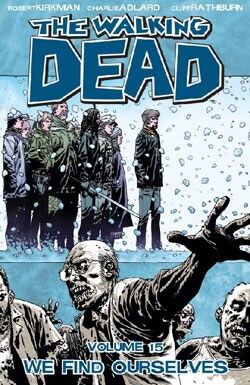
The Walking Dead, Volume 15: We Find Ourselves


Either the book has started to just throw new characters into the story without properly introducing them first (valid given the current situation in the plot), or I'm forgetting some of them in the time it takes for a new volume to come out. My guess is that it's the latter, and that's probably just the reality of reading a comic while it's still coming out, but only in the trade paperback collections. I think part of it though is that things are a bit muddled at this point. There are a whole lot of living characters right now, possibly more than there's ever really been at any point, at least only counting ones that have been given names and things to do. And none of them are really doing that much. There's a bit of a struggle in this volume between some people, but it's over quickly and doesn't have any real consequences. There's very little threat from zombies, either... they're out there, but there's nothing major. It's just sort of a transitional part of the story, taking place shortly after some major events and presumably setting up others. But it's a little underwhelming when it's the only stuff I've read in a few months and I won't read any more for another few. So, yeah. It's fine, there's nothing wrong about it, but at this point it's inessential.

Saturday, December 31, 2011

The Adventures of Tintin


My only previous experience with Tintin was seeing a few episodes of the cartoon when I was a kid. They made enough of an impression though that I was interested in seeing the movie as soon as I heard about it, especially based on the amount of talent involved in its creation. Directed by Steven Spielberg, produced by Peter Jackson, written by three talented British writers, and starring a pretty solid cast. It's actually a pretty darn small cast - if you don't count the bad guy's many henchmen, the film has only a handful of characters with real roles, and there are all of maybe two women who have any lines at all. But it's not really a film focused on dialogue, or subplots, or anything that doesn't relate directly to the central quest. If there's ever a movie that earned the term "breakneck pace", it's this one. It stomps on the gas pedal in the opening minutes, and never lets up until it's all over. Even the exposition scenes are packed with action and visual trickery. That and the fact that the script crams together elements of three different Tintin stories lends the movie a sort of rushed feeling, like there was just too much adventure to get through and not enough time. But while it can be tiring by the end, the movie is so packed with charm and fun that I couldn't help but enjoy it the entire time.

Jamie Bell stars as Tintin, a young European journalist (Bell is British, though in the original books he's Belgian) who frequently gets involved in larger-than-life adventures when following a story. He finds a scale model recreation of a famous lost ship, and when he refuses to sell it to a man played by Daniel Craig named Sakharine, he gets kidnapped and brought on board a boat. There he meets its captain, Haddock, played by a drunken and bumbling Andy Serkis, and the two (along with Tintin's dog Snowy) escape, attempting to find the treasure that Sakharine is really after. The treasure ties into Haddock's family history, and he and Tintin become unlikely friends on their quest to solve the mystery of his past. Serkis gives quite a fun performance, even if he resorts to rhyming exclamations a bit too often. Bell fits well as Tintin, it's fun to see Craig play a villain, and Simon Pegg and Nick Frost are once again a likable pair as Thompson and Thomson.

Of course I haven't really mentioned the fact that the film is animated, or any of the controversy around that. I've seen numerous people complain about the realistic look the movie goes for, rather than exactly mimicking the original art style. There have also been repeated references to the uncanny valley, though I've come to accept that people will now complain about it every time something animated even attempts to resemble reality. Maybe some people really are instinctively put off by any computer animation that isn't completely cartoony, but I was able to watch this entire film without noticing anything that really bothered me. The movie walks a very fine line by obviously being animated but still having extremely detailed nuances in the texture and animation of its characters, but I thought they pulled it off for the most part. I also think they really took advantage of the animated medium, especially in the crafting of the action scenes. There's a heck of a lot of them, and almost every one manages to do things that real life action wouldn't. The highlight of the whole film is a chase scene in a single take, through a Moroccan city and with numerous different characters involved at various points in both the chasing and being chased. Obviously being animated makes such a scene feasible, but even with that caveat, it's still a complete marvel of planning, design, and coordination to pull it off. That it isn't quite the film's climax is a symptom of the fact that the creators might not have known when enough is enough, but it's still a great scene. The last moments of the film are pretty explicitly setting up a sequel, and I hope the movie is successful enough for one to get made, because they did a great job of establishing a really fun and endearing setting, and I'd like to see Peter Jackson take his turn at the wheel.

Wednesday, December 28, 2011

The Girl with the Dragon Tattoo


If you started looking closely at the structure of the story of The Girl with the Dragon Tattoo, you could probably find a number of flaws and weird issues with it. It takes a long time for its two leads to meet and the plot to really get going, and there's a very long final section after the film climaxes before it actually sputters to an end, which might work in a book, but seems unnatural in a movie. But there are times when the effect that a film has goes beyond how well its story adheres to standard conventions of the medium and the odd little things stop bothering you. The script for this second film adaptation of Stieg Larsson's book is definitely flawed, and it's hard to say how much of that is the fault of the book itself. But everything else about the movie helps elevate the material and create a movie that's not quite my favorite this year but darn close. Everything from David Fincher's impeccable direction to the work by people like the cinematographer and editor to the outstanding performances from basically everyone in the cast to the once again pitch-perfect music by Trent Reznor and Atticus Ross.

There are some bells and whistles, but at its core Dragon Tattoo is a mystery story. I started trying to write a quick synopsis here, but it quickly got too long, so I'll try to make it more succinct. Daniel Craig plays Mikael Blomkvist, a journalist who agrees to look into the apparent murder of a girl forty years earlier, a member of a family that runs a large business in the country. Rooney Mara plays Lisbeth Salander, another journalist and an unfriendly, possibly psychotic girl who's been a ward of the state since childhood. Eventually they both end up working on the case together, though not before there's a lengthy sequence ending in a very satisfying revenge as a long way of establishing who Lisbeth is and what she's willing to do. The film is somewhat disjointed up to this point, but once the pair get really cracking on the mystery it picks up, with a suitably creepy series of twists and revelations leading to a tense and thrilling conclusion. That the film goes on for a while after that conclusion is mostly irrelevant.

As I mentioned, the cast is quite strong, with film veterans such as Christopher Plummer, Robin Wright, and Stellan Skarsgård turning in solid supporting performances to help drive things forward. Craig is good in pretty much everything, and he is nicely out of his element as the middle-aged Blomkvist, who occasionally gets in too deep for his own good. The star of the show really is Mara though, having the tough job of portraying both an eminently skilled researcher and hacker and a highly vulnerable and damaged woman, and making them be the same person. There's a lot of tough material, and she nails all of it. It just wouldn't be the same movie without her succeeding as totally as she does. I questioned Fincher's decision to tackle material another filmmaker had already brought to the screen in apparently fine fashion, but while I still haven't seen Niels Arden Oplev's version I can't imagine it being this memorable. It's a Fincher movie through and through.

Sunday, December 25, 2011

Hung - Season 3


When I heard that Bored to Death and Hung got canceled at the same time, I felt slight disappointment at the former and a bit of remorse at the latter. Hung's second season didn't do much for me, but the show has some likable elements and I thought I ought to at least see how they ended things. I blasted through the third season in one sitting using HBO's on demand service, and I found it to be mostly enjoyable. It doesn't give itself a proper conclusion and there are a few annoying elements, but it was possibly the best year the show had. There was a definite arc, the story had definite stakes, and there was some really strong character work. Plus Tanya seemed less awful this time. Not a bad note to go out on.

After having a falling out with Lenore last year (right?), Ray and Tanya need a way to get their business going again. They manage to finagle a loan and start up a wellness center for women as a front for their prostitution business; Tanya runs classes and talks to the women, then setting them up for Ray's "private consultations". He then proceeds to have sex with lots of women for money. What a good show to be talking about on Christmas. Anyway, Lenore is still angry and has a number of attempts to get her cut of the profits, including finding a second guy to make money with and trying to stick Ray's ex-wife in the middle of things. There's a nice back and forth, and it actually felt like people had a purpose this season and had things to fight for. Also we get a lot more of Lennie James' pimp character, and any scene he's in is a good one. Anne Heche doesn't have much to do besides be put upon, and her kids are even less of a factor than before. But they don't really get in the way, and the show is pretty strong based on its decent humor, the competent plotting, and Thomas Jane's once again totally affable performance. There's no proper ending this time, but they did a good job with fixing the show in the time they had.

Wednesday, December 21, 2011

Homeland - Season 1


Showtime is quickly becoming famous for green-lighting interesting television series with tricky premises, and then allowing those shows to continue airing long after those premises become strained and hard to take seriously. I can only hope that Homeland isn't destined for the same fate, because as of right now it stands as one of the most well-formed and intriguing first seasons of a new drama series in a long time. It's coming back for at least one year, and I think they could do a couple more after that. But I really hope in five years I'm not lamenting its continued existence right alongside everything else that the network has done. It's too good for that fate.

Homeland is produced by some of the same people who worked on 24, but while it's about similar themes of terrorism and how far people will go to protect their country, it is an altogether more intelligent and less sensationalistic series that manages to hit harder despite fewer fireworks due to its strong work making you actually care about its characters and what they do. Having half the number of episodes to tell their story in, there's less time wasted on plot tangents that become irrelevant and piling twists on top of each other, and we really get to the core of who the principal figures are and what they believe in. The overarching terrorist plot isn't without a couple holes, loose ends, or convenient leaps in logic, but it holds together well enough to support the story. And since the acting is so good, the flaws in the plot become unimportant in the face of what it means to the characters. The body count isn't very high, but every big moment in the show has enormous impact. It's not the best drama on television, but it's pretty special.

Claire Danes stars as a CIA operative, who like many such people, focuses almost entirely on her work, to the detriment of anything resembling a social life. When she hears that terrorists have flipped an American soldier who's coming home, she suspects it's Damian Lewis' character, a marine finally returning to his family after eight years of captivity. Her only real support is from her mentor played by Mandy Patinkin, another man who puts his job before anything else. At first it seems like the show will be about paranoia and surveillance, as Danes installs cameras in Lewis' house and watches his every movie. But it was fun to realize that was only the first part in the story, and the show was not afraid to blow through story developments quickly and move on to new ideas before the old ones even had a chance to turn stale. The three central performances truly are special, and they allow the show to get away with the slightly sillier parts in order to reach some great high points. By the season finale I was completely invested in the central conflict, and it was a wonderfully devastating episode, full of great little touches, memorable scenes, and more than enough justification for a second season. I didn't immediately latch onto the series as much as some others, but by the end I was a believer. Let's hope they really know what they're doing for next year.

Tuesday, December 20, 2011

Dexter - Season 6


You know a show has fallen on hard times when its new episodes are so bad that they make you question whether the earlier ones that you really enjoyed were actually good. I'm still pretty sure that it's not just a series wearing out its formula to the point of extreme degradation, that it's been getting progressively worse at coming up with competent stories and interesting supporting characters, but I'm at least wondering why I liked it quite as much as I did for the first couple seasons. It's kind of been a slow breakdown in every aspect of the series over time - it started as an adequate police drama with an utterly compelling protagonist portrayed very well by Michael C. Hall. As time has gone by, the police drama has become less adequate as the cases they tackle become less original or even coherently written, and the supporting cast has gotten more and more time to expose just how uninteresting their characters are and how little talent their actors have. Season four showed the show could still live with that, when it had John Lithgow doing a great job playing a horrific counterpoint to Dexter, but since then, they've failed to come up with interesting villains, and even Dexter himself has not been immune to simple bad writing, especially when it comes to his increasingly unnecessary and irritating narration. If I hear him mumble "dark passenger" one more time, I don't know what I'll do.

The show has had ups and downs, and season six was definitely the biggest down. I knew things were shaky when they introduced this year's big theme: faith, specifically in the form of religion. Edward James Olmos and Colin Hanks play serial killers who are using the Bible to justify their crimes, and Mos Def (or Yasiin Bey, I suppose) plays a reformed criminal who now uses religion to keep him on the straight and narrow. Dexter tries to learn about how faith can be good from Bey's character, but he gets pushed aside and eventually it just devolves into a hacky doomsday psychopath plot without really saying anything interesting or new about the subject. Bey is easily the best thing about the first half of the season, but he doesn't stick around and unfortunately his exit isn't the most graceful. Olmos' character never does anything interesting, and Hanks is either ill-suited for his or just doesn't have the talent to pull it off. A lot of the season is the show just shuffling in place as Dexter goes on ill-considered detours and offs very boring random bad guys, and a lot of weight is again placed on the folks at the police station, who repeatedly prove to be some of the dumbest TV cops who ever lived. The show doesn't even pretend that law enforcement is a threat to Dexter this year, and their failure to notice all of the little things that don't add up about him is becoming farcical at this point. Deb is the only one who has anything remotely resembling a passable storyline, and even that can't avoid veering into some seriously ill-considered territory by the end. And yet... I might have to watch season seven, depending on how it looks once we get closer. Because those writers, incompetent as they might be, finally recognized the need to do something to actually move toward what could be considered an ending, and they did that in this season's finale scene. I still might not watch, since sitting through these twelve episodes was a pretty terrible experience, but at least it's better than what Weeds did.

Friday, December 16, 2011

It's Always Sunny in Philadelphia - Season 7


The seventh season is around the point where most comedies on TV start to lose their ability to really surprise you or affect you in meaningful ways, or at least stop making you laugh quite as much as they used to. I will say that It's Always Sunny in Philadelphia definitely feels like a show that's been around for that long, and it's reaching the point where they're running out of new gags and new ideas and has to rely on calling back to classic guest characters and running jokes in more extreme ways to stay exciting. Despite that, it still might actually be the funniest show I watch. Other comedies are newer and fresher and smarter and inspire greater passion and affection in me, but I just don't laugh as hard at them as I do at Sunny. A lot of this season's biggest laughs were based largely on shock value; creating situations so unexpected and unusual to see on TV that the novelty was a major part of their success. But who cares how carefully thought out or crafted a joke is when it makes you laugh until you start crying?

Despite having a lot of success recently in movies and other projects, at least compared to the rest of the cast, Charlie Day doesn't really dominate screen time like some people were maybe expecting. It was actually a pretty low-key year for his character, though he had a few inspired moments, including a scene that made me laugh as hard as anything I can think of in my entire life. Dennis continues to deliver great, increasingly disturbing performances, gradually continuing to develop into a fully deranged, secretive monster. Frank was the focus of a flashback episode that despite including a fun appearance by Lance Reddick stands as one of the series' only truly bad episodes, but Danny DeVito is so fully in control of the character at this point that it's always a joy just to watch him react or eat something. Sweet Dee got a lot of mileage out of her increasingly creative and filthy mouth, and while they didn't quite capitalize on the whole "fat Mac" arc, they did get some good jokes out of it and he's still a solid character. The show's been renewed for two more years, and I'd be feeling at least a little anxious about that with most sitcoms, but they only have to put out 13 or so episodes per year and they really haven't shown many signs of slowing down. I'll be glad to continue spending time with these freakish, vile lunatics for a while more.

Monday, December 12, 2011

Boardwalk Empire - Season 2


When the first season of Boardwalk Empire aired last year, I was impressed by the quality of its production and enjoyed its variously interconnected characters and sense of humor. I was less enamored by the plot, which was mostly fine but a bit slow-going and nothing too new. That hasn't exactly changed too much this year, but the show definitely felt more confident and original in what it wanted to be, and that along with an extra year of time to deepen and explore the show's ideas and themes resulted in something ultimately more satisfying and exciting to watch. At the very least, my anticipation for what would happen next was more breathless, and the big moments packed a bigger punch.

Although the ending of season one wasn't exactly a complete upheaval in the show's world, it did provide a number of developments which played out over the course of season two. Nelson Van Alden's upright, do-gooder image was tarnished when he started committing crimes of his own and got someone besides his wife pregnant, and this year we spent a lot of time watching that veneer peel away in public, which made him more sympathetic despite him still being a self-righteous bastard. Jimmy and Eli joined forces with the Commodore and other influential men to challenge Nucky's supremacy in Atlantic City, and their back and forth along with the other organizations in other cities that get dragged into it makes up a lot of the season's most overt conflict. Margaret decided to stay with a man she knew was a criminal in order to provide for herself and her children, and this year she definitely struggled with her own feelings on the matter.

On top of these, the show piles on even more little struggles and battles. Chalky's operation is attacked by white supremacists, and he has to manage both his duties to the black community and his loyalty to Nucky. I thought Chalky had the weakest arc of any that really lasted a significant amount of time this season; Michael K. Williams' performance is strong but they just didn't put the time into making me buy how hamstrung he appeared to be. Perhaps most significantly, Nucky himself is charged with a number of crimes, and finds out who his real friends are as he struggles to keep himself out of jail. He was pretty put upon all season, with the law and a lot of his former friends working against him, and really only having the Irish and Arnold Rothstein (still a fun character even if he doesn't have much to do) on his side consistently. By the end of the season though, he's cemented his ability to fight his way out of jams and win some allies when he needs them.

They've done a good job of building him up from a shrewd manipulator of men and money into more of a complete criminal mastermind, not exactly invincible but smart enough to find a solution most of the time. We do see though that there are still chinks in the armor, and I look forward to the continued development of the character. As far as the content itself goes, it seems like they definitely cut back on unnecessary nudity this year, but they increased the violence to compensate. Boardwalk Empire's first season drew a little criticism for being mellow now and then, a complaint that seems weird to me since The Sopranos and The Wire are two of the best crime dramas ever, and aren't exactly dripping with blood from week to week. Boardwalk was definitely more brutal this year though, and I won't deny that the unflinching nature of the violence enhanced the intensity of the show's most shocking story moments. Maybe just a bit over-the-top though, I was watching the show at the same time as The Walking Dead and it was often the former than was the most disgusting. In any case, I still don't think Boardwalk is quite the classic drama it wants to be just yet, but it's still a very fun and often poignant one, using its period setting to highlight issues that cut across centuries, and always trying to get better. I'm easily on board for season three.

Sunday, December 11, 2011

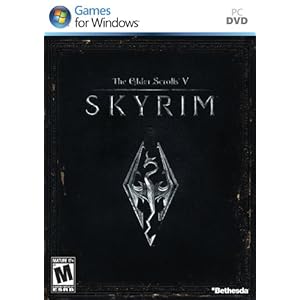
The Elder Scrolls V: Skyrim


Skyrim came out exactly one month ago, so now seems like as good a time as any to write about it. I haven't been playing it constantly that entire time, but I have spent quite a few hours with it. I haven't finished it, of course. Not in the sense of seeing all the things there are to see, or even just completing the main story quest. I'm maybe about a third of the way through it. As far as the other quest lines, I've joined three of the five major factions, and I've only finished doing work for one of them. I've done some other side jobs, but I still have a dozen unrelated side quests sitting open in my journal, and a couple dozen other miscellaneous objectives on top of that. I've only visited seven of the nine cities, and I'm sure the other two will give me plenty of more stuff to do one I check them out. And of course I won't really ever run out of stuff to do, since the game can keep generating easy little tasks even after you get through the more detailed ones. Most games that had this much content would be maddening, but there's just something about The Elder Scrolls that makes me relish visiting its gigantic, endlessly explorable world rather than getting tired of doing the same thing over and over again.

I was about as big a fan of Oblivion as anyone, but I can't deny that that game had certain problems. Its main plot had problems; it got pretty repetitive after a point, it wasn't always the easiest thing to know why you were doing what you were doing, and there's a certain sense of letdown when you realize you aren't the chosen one, but just a guy helping the chosen one out. It also had serious gameplay balance problems - it used the same skill system as Morrowind, where you had certain skills designated as major ones, and using them caused them to improve, which is how you would level up. But it was easy to accidentally build a character that could level up frequently without actually improving your combat ability much, and since enemies always leveled up to match you, serious difficulty problems would pop up. You should feel stronger by leveling up in an RPG, but it was often the bad guys who were beefing up more than you. Skyrim fixes this mostly by removing the distinction between class skills and other skills, so working on anything will give you progress toward leveling up, and dungeons are scaled based on a range rather than an absolute value, making some places certainly tough enough to match you, but others easy enough that you can get through them with no problem. If you spend all day improving your non-combat skills without raising your combat to match, you could still run into issues, but the balance seems better.

That's not the only improvement either; almost everything about Skyrim seems like it can be described as "like Oblivion, but better". As I said I haven't finished the main quest yet, but so far it feels suitably epic enough to be the primary focus of a game this big, and I've already done some things that were more interesting than anything that really happened in Oblivion's quest. The other factions also seem to have really interesting central plots this time, and are better integrated with the setting of Skyrim itself. Rather than their being a generically named guild chapter in every city, they all have headquarters in one location, and histories and reputations within those places that make them feel like part of the world rather than a trigger to generate quests. The Daedric side quests are back and as subversive as ever, and have a lot more variety in how you come across them. In general, it's impressive how much effort the game put into making sure you always have plenty of choice in what to do next. It's hard to go pretty much anywhere without picking up a bounty on some bandit or a lead on where to find something interesting.

I also really like the place of Skyrim itself. Oblivion drew complaints for being a pretty generic fantasy setting, and I always defended it as being a nice looking and pretty interesting place. Besides, as the central political and economic hub of the whole continent, it was all-encompassing and non-specific by design. But I can't deny that Skyrim is a more intriguing place. It has a real sense of local identity that Cyrodiil mostly lacked, and thanks to the technological innovations of the last nine years, they are able to present that identity more effectively than Morrowind did. The Nordic culture is heavily influenced by, well, Nordic cultures from real life, and is a cool blend of Scandinavian and fantasy influences. And the game also represents a big shift in the culture of the continent itself, taking place some two hundred years after Oblivion, and shaking up the entire political landscape. The world just feels alive when you hear people talking about the great war between men and elves and how the citizens are no longer happy with the empire's control over them, and just adding the concept of real open conflict to the setting makes it feel more important and dangerous, even if only affects the world in a significant way when you decide it does. And oh yeah, dragons are a pretty cool enemy.

I haven't even touched on all of the things they've added for you to do if you're interested in making your own equipment. Alchemy is back, and lets you mix potions without actually knowing their properties before hand, which feels more natural. Enchanting makes more sense, as you learn effects by taking them from already existing items, and it's a more intuitive system than there was before. And crafting is really significant. There's a purpose to hunting, as you can use the hides you take from animals and tan them to make leather. You can mine ore and smelt it into workable material, and then combine the leather and the metal to make weapons, armor, and jewelry. Which you can then enchant, of course. You can also chop wood for money and cook food to give it different effects, both minor activities but ones that enhance the idea that this is a world people live in and not just a playground for you to kill monsters in. Jeez, I just realized I haven't actually talked about combat. Or the perk system, which is the main focus of leveling up. God, this game is huge.

Anyway, the game engine is definitely improved on what they had before, but it's still basically the same engine, which means it's not the most elegant experience at all times. The combat system has the same general clunkiness as before, though I won't say it isn't greatly improved. The main addition is the dual wielding system, which lets you use any combination of one-handed weapons, spells, and shields in your two different hands, allowing for a greater variety of play styles. There's still bows and two handed weapons as well, and they're also effective ways to take on monsters and bandits. My personal approach is to sneak as much as possible, and pick off enemies with my bow before they know I'm there. When I do get into a scrape, I usually pull out one of the swords or maces that I've enchanted myself, and try to keep enemies off balance while I keep myself alive with a healing spell in the other hand. But I could have a spell in both hands, or a sword in one and an axe in the other, or anything else really if I wanted to. Every time you level up you pick a stat to improve (health, stamina or magicka; they've totally gotten rid of the other stats that those three used to be derived from), and a perk, which is either a bonus to or an extra ability related to one of your skills. It could be a reduction on the magicka cost of casting spells from a certain school, or it could be the ability to zoom in when aiming with your bow. It's a system that encourages you to level up and experiment with different skills, and helps reduce the occasional monotony of taking on the hundredth dungeon full of undead or spiders or necromancers or whatever.

As I mentioned it's the same engine, which means the same occasional technical hiccup, which might cause an NPC to act strangely or an object to not appear properly or any number of small issues that can pop up. I don't fault Bethesda for having some glitches in a game this big, and I also have to note that in the time I've played I've experienced the fewest number of issues that actually break the game from any Elder Scrolls game I've tried. There's been one or two crashes, and a single objective that won't resolve itself properly, but that's about it. And there really have been improvements to the engine - more subtle animations can still be awkward, but people do interact better, and the game just looks really, really nice. It's both the graphics and just the visual design of the world. When you're on top of a mountain looking out over a grand vista, or walking through a valley and seeing the Northern Lights play off a sky full of stars and Tamriel's two moons, it can be as breathtaking as any image you've seen in a game. And then a wooly mammoth might accidentally spawn in midair and plummet to its death. And that's Skyrim.

Friday, December 9, 2011

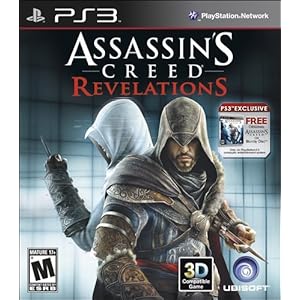
Assassin's Creed: Revelations


I honestly was less disappointed when I found out this game was going to star Ezio than I was when I learned the same about Assassin's Creed: Brotherhood. After all, with that game they had already established a willingness to reuse the same protagonist, and it makes a certain amount of sense to have a trilogy within a larger trilogy, that being the one about the series' meta-protagonist Desmond. I don't know that the game released next year will actually be called Assassin's Creed III, and I wouldn't be surprised if it features another new or returning central character, but I am reasonably confident that it will resolve Desmond's story without killing off potential for future games in the series. Revelations does a lot of work toward setting up that sort-of conclusion, both in the resolutions it gives to Ezio and Altair and the small steps forward it takes in the larger narrative. Also, that narrative has hinged on the end of the world happening in 2012, and of course it would be silly to have a game about that come out in 2013 or later.

Revelations was advertised as being a game to finish the stories of Ezio and Altair, and I'd say it does so, though in a slightly odd way. Despite them both appearing on the cover, you will spend the vast majority of the game playing as Ezio again, with only five missions as Altair, all relived through keys Ezio finds (and relived also by Desmond too obviously, in a weird Inception-style layering of realities), all taking place in the Assassin stronghold at Masyaf, and mostly being pretty limited from a gameplay perspective. But Altair actually gets a more purposeful send-off as a character, as we see snippets of his entire lifespan, struggling to keep the Assassins on the right path and make the proper preparations for his descendents to follow their own paths. There are some really strong moments in these missions, that finally made me care about a character who was mostly just a jerk in his own game. Conversely, we do see Ezio accept what the true purpose of his life is and get closure on some things, but there's less of a finality to his arc. Still, he also had some good moments.

Looking at the game itself though, while Brotherhood won me over with what it brought to the table in terms of new concepts and systems for the series, Revelations seemed a bit light on actual new gameplay content that was enjoyable. While the first game obviously established the vital climbing and combat mechanics, and the concept of the series, and the subsequent games added fun features like core combat improvements and an economy that allowed you to purchase better equipment and renovate businesses in exchange for more influence over the world and the ability to recruit and level up new Assassins who could help you on missions, there's not much new about Revelations that I really liked. I will say the hookblade is a very good addition - it doesn't have much effect on combat, but it does make getting around easier by letting you climb a bit faster and use suspended wires all over the city of Constantinople like ziplines.

Otherwise though, the additions were either a wash or actively irritating. Bomb crafting is interesting in theory, but there's really not much that they allow you to do that you couldn't do before in another way. It's not like you need more ways to kill enemies, smoke bombs already existed to allow for obscuring your movements, and there are other methods of distraction like poison or hiring citizens to help. Adding a control component to the assassin training missions provides a new source of revenue but is also a money sink on its own, and the new stuff with notoriety and defending your territory is almost a total disaster. Now instead of permanently taking over Templar strongholds, they can be retaken if you're a wanted man, and the only way to defend them without taking them back again is to engage in an undercooked and uninteresting tower defense-style minigame. Luckily you can avoid that altogether by keeping yourself off the radar, but now renovating businesses increases your visibility, and the methods to reduce it are decreased in number and less effective. It's just more of a chore to build up your power over the city than it was before, and I really don't see the benefit.

On top of the questionable additions to the available distractions from the game itself, the game itself seems a bit slighter than it was on the past. I'm not sure if my perspective is skewed or what, but it definitely felt like a shorter game to me, especially in the second half when the plot kicks into high gear and every memory sequence seems like it's over in an hour or two. There's not exactly a shortage of side content, and I know for a fact there's a number of optional missions I can finish as soon as I get back to the game. But the critical path through the story definitely felt a bit rushed to me, especially in the end, when the game teases what could be a big confrontation but it never comes. It's just like there was supposed to be one last twist and one last big Templar you'd have to track down and assassinate, and that final act doesn't really come. Really, you don't do much actual assassinating in general. Those silly scenes where you stab a guy in the neck and the environment turns into white nothingness and the victim gives a final confession or Ezio just blesses them are a staple of the series, and they're unfortunately in short supply in this game.

It did have some strong spots - the game has the best development of a human relationship in the series, and the underground tomb missions which focus on more specific platforming are better than they've been before, and make a nice effort to remove some of the sterility from the series' level design. I even liked the first person platforming levels you unlock by finding small objects in the city, which aren't terribly fun but are a nice break from the game's regular hustle and bustle and do a good job of establishing an interesting past history for Desmond, though they're light on any real surprises. And of course the multiplayer is back, and it's still fun as long as the other players aren't idiots. Of all the main games in the franchise, Revelations feels the most like a stopgap. It felt less connected to history, and had the smallest cast of characters, and the least momentum in the overarching story. But it did hit a few important beats, and it's still fun just to run around the city and mess up fools, and I'm still looking forward to what's next. It's a bit unfortunate that Ubisoft has felt the need to push out a game every year to keep the series relevant, but I'm not going to pretend I haven't enjoyed playing them every time.

Wednesday, December 7, 2011

Sons of Anarchy - Season 4


It's a shame last night's final episode of this season of Sons of Anarchy was so disappointing, because up until it aired, they were putting together a very successful and at times amazing season that could have ended up as something really special. Coming off a year when a lot of people were questioning the show, to come this close to bringing it all back in grand style and then failing at the last second is just kind of a tragedy. It's not even a bad episode of television in a vacuum - it's well acted and shot as Sons always is, with some powerful scenes and good humor sprinkled throughout. The problem is what the episode represents as far as the rest of the season is concerned - that is, it reveals that the dramatic moments they've been building toward have all been a lie, and the huge stakes they put up never really existed. This seemed like a season that could really be a game changer for the show, and while a few things happen that will definitely have consequences next year, perhaps significant ones, they really don't come close to matching what the show has been hinting at all along.

It sort of felt like this was a back to basics season, after the much delayed and drawn out visit to Ireland (which I enjoyed) last year caused some people to question the show. It's just the sons in Charming again, trying to stay afloat while making some deals, avoiding trouble with other gangs, and trying not to get caught by the cops. Over the course of fourteen episodes, more and more conflicts pile on, small and large, that threaten to cause the club to collapse under its own weight and take everyone connected down with it. They use the technique very effectively, to the point where you worry that there's actually too many conflicts and they won't be able to satisfyingly resolve them all. And that ends up being the case. In the end, I doubt in the long run this will ever end up being seen as much more than a filler season, and you never want an entire year of effort you put into something to end up feeling like that. I can sort of see what Kurt Sutter and his team were going for in doing this, but in the end they teased some inevitable story beats that they weren't quite prepared to deliver on yet, and the result was a letdown.

The main cast was great as always, and their supporting cast was perhaps better than ever, with lots of recognizable faces joining both sides of the law. The show definitely gets a bit over the top with the sex and violence now and again, with a couple issues this season being firefights that are just too big for me to believe the cops wouldn't get wind of them in time and the very casual way the club members seem to regard violence against women. But the show wouldn't be the same without its edge, and I'd rather they lean too far toward over the top than too far in the other direction, and you can't really say there's another show on TV that pulls off action scenes better. And while they shied away from some big moments, the ones that they did have were pretty darn special. I'm definitely watching next year, because the season was mostly very good and I'm really invested in most of the characters and I know they can do better than this and there are plenty of things I know the show will eventually do that I still want to see. But it's definitely hard to shake that feeling of disappointment.

Tuesday, November 29, 2011

Bored to Death - Season 3


I can't talk about this season of Bored to Death without first mentioning how completely bizarre and messed up the final scene is. I don't want to really say what happens, especially because the whole story of that point was reached is convoluted and the meat of a lot of the season. I'll just say that it involves the main character of this show deciding to do something that is at once dishonest, wrong even if he was being honest about it, and illegal. It was very unsettling, especially since the show seemed to be treating the concept like it was no big deal, just something that might happen in a slightly weirder reality than her own. It just seemed like a big leap to take, and I don't see the value in taking it.

And that messed up finale is just part of why I thought this season was a bit disappointing. When it was working, it was as funny as the show's ever been, with three really great comedic actors playing very well off each other and getting into some truly exciting and amusing capers. The supporting cast featured great guests both returning and new, such as Olympia Dukakis and Stacy Keach. When the show knew what it was doing, it was a heck of a lot of fun. But some of the time it just didn't seem to know what it was doing. Part of what was neat about the show in the first place was how it just played off hardboiled crime stereotypes by taking familiar case concepts and having them get solved by a pretty unlikely detective in the innocent, pleasant Jonathan Ames. That he often got to do so while getting high with a depressed independent comic artist and an eccentric older gentlemen added to the fun.

But that aspect of the show seemed somewhat sidelined this year, as both Zach Galifianakis and Ted Danson seemed to get a lot more to do than Jason Schwartzman despite him being the theoretical character. Danson's performance was definitely off the charts this year, but I like the show more when it's a play on detective stories and not a light-hearted drama about a man trying to come to terms with his selfishness and be a better father and lover. Several story threads lasted for multiple episodes, and there just wasn't enough space for what the show started as in the first place. I'm all for TV series evolving over time, but a lot of the stories weren't interesting enough to displace the core concept as much as they did. It's still a fun show, but there were a lot of small issues this season that got capped off by a major one. The show's ratings are abysmal on Monday night so I don't know if it will be back, but I'm fine either way at this point. I'd like to see more, but 24 episodes is nothing to sneeze at for something this odd.

Monday, November 28, 2011

Hugo


A lot of people were loudly skeptical when they heard that Martin Scorsese would be directing a 3D family movie, but for some reason I wasn't. The main things I thought were that his films are successful because they are well crafted, not because they're violent, and he is a strongly visual director, so he could probably handle the third dimension as well as anyone in the business. Both of these proved to be true when I saw Hugo, based on a book that weaves a small part of the real history of film into a nice story about a young boy who finally makes some friends.

Hugo Cabret is a young orphan who lives in the walls of a Paris train station, and is left to maintain the building's clocks on his own when his drunk uncle skips town. He's also trying to repair a broken automaton that his father found in a museum and was working on before he died, and his quest to do so introduces him to Ben Kingsley's character, the owner of a small toy shop in the station, and his adoptive daughter played by Chloë Moretz, who loves reading but has never seen a movie. He takes her to the theater, and shows her the automaton, and they eventually stumble into revelations that that bring the seemingly disparate elements of a broken robot and the love of film together.

Visually the film is pretty stunning, whether you see it in 3D or 2D, though I saw the former. The sets and costumes are impeccably gorgeous on their own, and the depth from the 3D further brings the world to life in a pretty incredible way. I was definitely more impressed than I was by Avatar. This movie proved to me that the argument that 2D film is inherently superior because it is more dreamlike is absolute garbage. The visuals in this movie make it seem almost like it's animation even though it was filmed with live actors, and they bring you into a fantasy setting that doesn't seem real, but much more imaginative and fun than that. I don't like the over-saturation of 3D in the theater market, because most films aren't made with it in mind and don't seem to really benefit from the process. But Hugo was made to be shown this way, and the effect is great at pulling you into this other place, in the same way that many people probably felt when they watched a movie for the first time.

In a funny way, that 3D thing does really well to tie into the idea of the dawn of filmmaking and the newness of the concept when the film takes place. It's a couple decades after the cinema had become commonplace, but the characters do a good deal of digging into the medium's origins, and a good portion of the running time is just devoted to celebration of the art form. Scorsese is a big proponent of film preservation and film in general, so it makes perfect sense for him to get attached to this concept, almost to the detriment of the main plot of the movie. There were some flaws with the movie that detracted from the overall good feeling I got from the experience. I thought Asa Butterfield's performance was a little uneven, and while I liked Sacha Baron Cohen's inspector character, he only seemed to be in the movie because the story needed an antagonist. I definitely liked him more when he was awkwardly trying to be friendly than when he was the villain rounding up orphans.

And for a family movie, I don't know how much kids would actually like it. A good deal of what's interesting about the film is referential to things they probably wouldn't understand, and it was neither terribly funny not terribly exciting most of the time. There were a couple really fun moments, but what I liked most about the movie was the setting it created, and pretty much every kid's movie is decent enough at that. But if you enjoy Scorsese as a filmmaker, and still have a sense of wonder, and an appreciation for the history of human entertainment, you'll probably like the movie a lot.

Monday, November 21, 2011

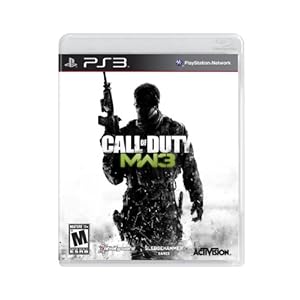
Call of Duty: Modern Warfare 3


I'm really curious how close this game is to what it would have been had Jason West and Vince Zampella not been fired by Activision and taken a lot of the higher level talent at Infinity Ward with them. Was the plan for the game already in place, or did the people left behind have to come up with the whole thing? If there was a plan, how detailed was it? I'm curious because I had fun with the game, but it doesn't do much besides meet the standards of the previous ones without bringing much new to the table. This is the fifth Call of Duty game in this style in as many years, and both the formula and the graphics engine are feeling a little old at this point. At full capacity, might Infinity Ward have brought their A game and raised modern military shooters to a new level? Or was Modern Warfare 3 always destined to be yet another solid Call of Duty game?

There's nothing really wrong with that, I'm just not sure that I need to play many more of them. Modern Warfare 3 has everything you'd expect and little you wouldn't. There's a campaign that will last you five to six hours which features lots of dramatic explosions and firefights. The Spec-Ops mode returns with plenty of new missions and a survival mode, because every multiplayer shooter needs a survival mode. And there's the traditional online which feels basically the same with a few tweaks and additions. If it's worth it to you, there's nothing really wrong with the package. It's just that it's a very familiar package by now.

One thing in the campaign's favor is that it actually manages to bring the overloaded plot of the Modern Warfare sub-series to a mostly satisfying conclusion, as long as you're okay with the series' practice of resolving story threads by killing off every character involved in them. It seems like shooters are always trying to outdo each other now, and MW3 definitely tries to build that excitement by going as big as possible, essentially portraying what a modern World War III would look like. On one hand you'll be playing alongside familiar characters from the first couple games, chasing down the series' biggest villain, but on the other you'll be hopping all over the place, fighting battles in familiar locations and very extreme conditions. You'll start by saving New York City's harbor from a Russian naval fleet, and then hop to various hotspots all over Europe with your squad of celebrity voice acted comrades. At times the plot justifications for each new location will seem thin, but when all you really want is to shoot bad guys and see exciting stuff happen all around you, it tends to work really well. I don't really buy that Russia would be able to cause this much trouble for the US and Europe all by themselves, but it's an easy thing to let slide. The series' ability to create unique, memorable moments is certainly a boon, as it makes the campaign seem a lot more noteworthy than the one in Battlefield 3, despite featuring similar gameplay and a less technically advanced presentation. The Uncharted series might be the only one that pulls off huge spectacle better in the world of action games.

Not everything is great, though. In what might have been a constraint due to the labor issue surrounding the game's creation, you sure spend an awful lot of time in the campaign driving or riding in vehicles instead of moving on your own. It's not that these sequences are boring, but most shooters use vehicles as a way to occasionally change the pace a bit, and here it seems like a design crutch for when they needed you to kill a lot of guys without finding a more clever way to do it. They did manage to avoid the sort of frustrating choke points that have frequently plagued the series in the past, but instead the game seemed almost too easy on regular, until the final mission which ended up being pretty annoying. You gotta get the bad guy! You only have three minutes! But there's a ton of guys between you and him and they can all shoot you with deadly accuracy the second you leave cover! Go faster! No, slow down and let yourself heal! There are better ways to make a conclusion dramatic than the way they handled it. It seemed odd that some of the biggest twists in the story involved a new character that we didn't have time to really learn much about, and it's hard to be shocked by anything the series does anymore. In the past the series has effectively used the deaths of characters to create memorable moments, but when you get the point where you basically assume everyone is a goner, it stops seeming special.

Also, I'll be honest - I haven't tried the other modes. Battlefield's larger, objective-based multiplayer is more interesting to me, and most of my time is being taken up by other games anyway. Some of the things they've added like ways to get bonuses in multiplayer without being skilled enough to earn a kill streak seem neat, and Spec-Ops was pretty fun from what I played before. I know some people only care about Call of Duty for the online, but I bought it because I wanted to see the end of the Modern Warfare story, and I'm pretty sure I got that. It wasn't exactly a unique or inspirational game, but it was a fun one, packing plenty of interesting moments and enjoyable gunfights into the amount of time it lasted. I'd like to see the series do something really different before I try picking it up again, but it's hard to complain about this as a temporary send-off.

Sunday, November 20, 2011

Robot Chicken - Season 5


I guess this was the year I got tired of Robot Chicken. This season won't finish airing until early next year, but the whole thing is already on DVD, and I rented it on Netflix so I know what's up. And yeah... I was watching it, and waiting for it to make me laugh, and it just didn't really happen. There's a few things about the show that have always been abrasive, and gotten in the way of what works about it. It relies on violence an awful lot, and that seemed particularly true this year, with many sketches lacking any real punchlines at all, resorting to just going through various action/thriller/horror cliches with out of place characters in hopes that the novelty would be enough. But it's not really novel anymore. There have been 100 episodes of this, and I'm not even counting the Star Wars specials. A lot of the other humor is just unusual swearing that never seems particularly memorable, or typical gross-out stuff. In the past the show has been clever when the writers really tried, but I'm not really seeing that effort anymore. And the frat mentality is there more than ever. One thing I did like was the season finale, which actually turned the intro featuring a cyborg chicken and his malevolent creator into a story, but even that couldn't avoid certain issues. Seriously, if I have to hear one more "my one weakness!" joke any time soon, I'm gonna flip out. I don't know if they plan on bringing the show back, but if they do, I don't think I'll be making sure to catch it every time a new episode's on.

Thursday, November 17, 2011

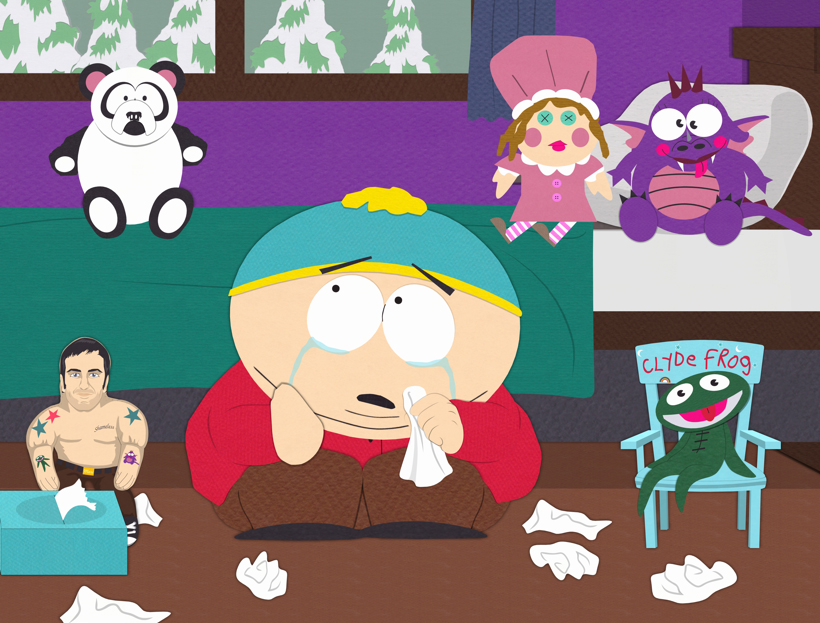
South Park - Season 15


I'm at a crossroads with South Park, as I am with a number of other shows. It used to be I could just pick a show I'm interested in and watch every single episode, but now that I'm working full time it's harder to justify that. There has to be something more to keep me watching, or else I might have to stop watching a show before it actually ends its run on television. I've already done it a few times, and I'm sure I'll do it again. It doesn't take a lot for a show to stay in my rotation - all it has to do is be consistently very entertaining, or compel me to stay interested in its plot or characters. South Park does very little in the way of ongoing character development or story elements, so it has to rely on the former, and I'm not sure South Park does that. With the news that the show will continue to keep running through at least 2016, should I keep watching, or should I stop while I'm ahead and be glad to have gotten 15 mostly enjoyable years out of it?

The problem with the show now is that in its heyday, South Park was special because it was shocking and original. Both of which are hard to maintain after being on the air for over a decade. It's not that the show is afraid to tackle delicate current events, now - it was pretty much expected for them to react to the Penn State scandal, and they did so last night with a character who constantly cracked inappropriate jokes about it. It's just we're so used to their lampooning of pop culture what's in the news that it's not really fresh anymore. It eventually falls to our affection for the characters to keep us watching, and they're still an entertaining group, and there were actually a few episodes that teased at doing something different with them, like the cliffhanger where Stan's parents separate (again) or the one where Cartman has to move on from his doll collection. But while I enjoyed most of this season's episodes, I'm not sure if I still care enough to keep watching, especially when I know there definitely isn't any sort of end goal in sight. It's not like it's a terrible sacrifice to give up a half hour on fourteen Wednesday nights every year though, so I guess we'll see how I feel later on.

Tuesday, November 15, 2011

Squidbillies - Season 6


Another year goes by, and Squidbillies trucks along as strong as ever. It's hard to really compare different seasons of the show, because the division is meaningless. A new season just means another batch of episodes, and each episode is pretty much the same concept. Early will be an asshole, the people around him will be hurt because of it, and there will be some slight satire of certain cultural or political concepts involving the south. It's a basic formula, and it works because it's consistently funny and that's all it has to be. I'm coming to appreciate how good of a character Early is - he's possibly the most despicable television protagonist there is, hateful and ignorant and moronic and violent. And yet he's just so damn amusing that you love him anyway. It's partly the writing, which always finds new twists on some combination of those characteristics, and it's partly Unknown Hinson's consistently brilliant voice acting. I don't think there's a sentence in the English language he couldn't at least make partly amusing if he wanted to.

This was also a good season for the sheriff, although most of them probably are, because he tends to get the most good material besides Early and maybe Rusty. Granny definitely gets a lot more jokes, but they're usually pretty easy ones based on stuff we already know about her, while the sheriff's always optimistic take on things seems fresher for some reason. There's nothing much I particularly want to point out, other than this Sunday's season finale about transporting illicit cargo with high speed truck chases might have made me laugh out loud more than any other episode of the show, which I find consistently entertaining but rarely elicits actual chuckles for me. Mostly I just smile at the wordplay and cleverly deployed violence. For what it's worth, Squidbillies has been the better of the two shows that David Willis works on for a couple years now. It's a similar situation to Seth MacFarlane's Family Guy and American Dad! - the former is more popular with America and is maybe saddled with certain expectations, while the latter is able to do its own thing and is much more consistently funny for it. Squidbillies is not anything close to a world changing show, but it's a really enjoyable one, and that can be enough.

Saturday, November 12, 2011

The Heart, She Holler


Well, that was pretty great.

The Heart, She Holler was a six episode miniseries on Adult Swim, created by PFFR, the same people who brought us Xavier: Renegade Angel and Wonder Showzen. So two things about it were pretty much be guaranteed: it would be totally disturbing, and pretty damn funny. And Holler was definitely both. It begins when the head of the Heartshe family, rulers of the town Heartshe Holler, dies, and leaves his inheritance to his son, who he had previously kept secret, hidden in a cave behind a wall. That son is played by Patton Oswalt, and after he learns how to dress and say "hot dog" and gets his penis swapped with his father's through a misunderstanding, tries to run the town while coping with his own insecurities and the meddling of his power hungry sisters; one who can read minds and has other mysterious powers, and another played by Kristen Schaal who will sleep with anything that movies and his pretty impressive physical strength.

That that summary only begins to describe the insanity of The Heart, She Holler should say plenty. There's plenty of gross moments, including repeated references to incest and bizarre imagery like a wall socket being connected to some sort of intestine, but the show doesn't just rely on shock value to get laughs. It's mostly a bunch of insane rambling, but it's clever insane rambling, and running jokes like the former patriarch's seemingly infinite supply of instructive video will VHS tapes and the tons of jabs at religion and insular southern towns keep it from relying on disgust to drive the story. The whole thing barely lasts over an hour, and by the end I was wishing there was more to see, especially because of the distinct lack of closure in the ending, even though describing what came before as a plot would be very generous. It's well cast, funny, and just has the right amount of horror to definitely be a PFFR creation. If you're really into alt comedy, it's definitely worth seeing.

Tuesday, November 8, 2011

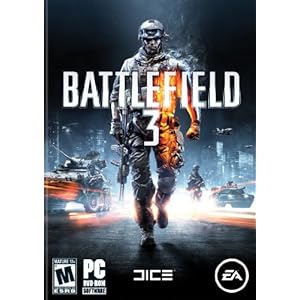
Battlefield 3


Since Battlefield 2 was released in 2005, the series has seen plenty of games get released, but it is only now that we're getting a new numbered one. Battlefield 3 seems to be both a return to the series' roots, and also a culmination of the changes it's gone through since 2 came out. It combines a lot of the strengths of the original games with some of the improvements by offshoots like Battlefield: Bad Comapny, resulting in a product that seems like the end result of years of tweaking and experimenting, and is being positioned and marketed to take on big bad Call of Duty for leadership in the modern military shooter market. I don't think 3 will do better than its competition, but at least it's a pretty fun game.

Originally, Battlefield was all about online multiplayer, allowing up to 64 players to split up into teams and take each other on in huge maps filled with a variety of outdoor locations, peppered with various structures for hiding in and vehicles to drive. The first game took place during World War II, but the second main release brought things to the modern day and added in squads, which allowed for closer teamwork and a more direct sense of having a goal in these gigantic marathon battles. The online in 3 is pretty much like this, though they've taken a number of additions from the Bad Company games like more frequent and incremental unlocks rather than getting a new weapon every once in a while, and the Rush mode which can be a nice breather from Conquest. The game feels more up-to-date than Battlefield 2, with some streamlining in effect like the removal of a commander for each army and the paring down of the number of available classes, and a more rewarding progress system without any of the annoyances of other popular contemporary features like kill streaks that unfairly reward players that are already better. Yes, players who have played for a long time are going to have better guns, but it doesn't seem significant enough to really impact gameplay.

I haven't sunk more than a few hours into the multiplayer, but it definitely seems to live up to the legacy its predecessors cemented in my mind of being one of the most fun online shooters on the market. Some technical issues still need to be worked out, but the Battlelog web browser is a quick way to look up stats and other players, customize your options, and find matches, and the actual in-game stuff runs pretty well. If there's one thing that might impede the gameplay slightly, it's actually the quality of the graphics. On one hand they're very impressive, but on the other I'm wondering if the fidelity of the animations and lighting actually prevents me from spotting and taking on opponents in a timely manner. It's possible I just continue to suck at games, but more than once I felt that I would have been better served if the environment around the enemy wasn't so nice looking. There's also a co-op mode, which I haven't tried yet. It seems to remix encounters from the single player campaign, but I don't know how interested I am in that when the regular online is so consistently engaging.

Speaking of the single player, those graphics might be their greatest asset. Whatever flaws the story mode might have, at least it looks really nice while you're experiencing it. I can't really recall an experience that convinced me better that I was actually in a war zone, and it would have been better if I wasn't constantly staring at the back of someone else's head with the word "follow" written over it. From what I can tell, I might be one of the only people who really enjoyed the campaign at all. Its one cardinal sin in my mind is that it almost entire fails to take advantage of the fact that it's the campaign for a Battlefield game. For all their faults, the Bad Company campaigns felt like they belonged in the world of Battlefield. Encounters took place in relatively open areas, and could play out in a number of ways. You frequently had full control of vehicles and a couple decisions to make about how approach a situation. Battlefield 3's campaign plays like a Call of Duty campaign almost exactly. There are no sections with respawning enemies, but you're generally led from set piece to set piece, watching some cool things happen, taking part in relatively static battles, and once in a while getting to use a vehicle to experience something slightly different, but only in one mission do you really feel like you have much control. It's not that any of the missions were spectacularly bad, I just don't see how they benefited from taking this course of action. There were even specific dramatic story moments that felt extremely similar to moments from past Call of Duty games. I generally had fun playing the campaign, but there was something ultimately disappointing about it. And if DICE doesn't actually make a sequel to Mirror's Edge with this engine like they were clearly teasing at a certain point, I'll be kind of upset.

How you feel about Battlefield 3 sort of depends on what you want out of it. The campaign seemed to lack a certain something for most people, and if you were hoping for it to be something special you might be let down. But Battlefield has always been a series with a focus on multiplayer, and I know plenty of people will dive into that without even taking a single look at the single player. And I think from my experience with the online, it's certainly a worthy follow-up to Battlefield 2, maybe not overhauling the experience but refining it and making sure not to ruin it. As someone who enjoys a solid six hours of action and thinks the series does online firefights as well as any, Battlefield 3 isn't exactly a revelatory experience, but it's definitely one that I think was worth the investment. Even if having to download Origin to do so was kind of annoying.