Showing posts with label Christopher Lee. Show all posts

Monday, November 28, 2011

Hugo


A lot of people were loudly skeptical when they heard that Martin Scorsese would be directing a 3D family movie, but for some reason I wasn't. The main things I thought were that his films are successful because they are well crafted, not because they're violent, and he is a strongly visual director, so he could probably handle the third dimension as well as anyone in the business. Both of these proved to be true when I saw Hugo, based on a book that weaves a small part of the real history of film into a nice story about a young boy who finally makes some friends.

Hugo Cabret is a young orphan who lives in the walls of a Paris train station, and is left to maintain the building's clocks on his own when his drunk uncle skips town. He's also trying to repair a broken automaton that his father found in a museum and was working on before he died, and his quest to do so introduces him to Ben Kingsley's character, the owner of a small toy shop in the station, and his adoptive daughter played by Chloë Moretz, who loves reading but has never seen a movie. He takes her to the theater, and shows her the automaton, and they eventually stumble into revelations that that bring the seemingly disparate elements of a broken robot and the love of film together.

Visually the film is pretty stunning, whether you see it in 3D or 2D, though I saw the former. The sets and costumes are impeccably gorgeous on their own, and the depth from the 3D further brings the world to life in a pretty incredible way. I was definitely more impressed than I was by Avatar. This movie proved to me that the argument that 2D film is inherently superior because it is more dreamlike is absolute garbage. The visuals in this movie make it seem almost like it's animation even though it was filmed with live actors, and they bring you into a fantasy setting that doesn't seem real, but much more imaginative and fun than that. I don't like the over-saturation of 3D in the theater market, because most films aren't made with it in mind and don't seem to really benefit from the process. But Hugo was made to be shown this way, and the effect is great at pulling you into this other place, in the same way that many people probably felt when they watched a movie for the first time.

In a funny way, that 3D thing does really well to tie into the idea of the dawn of filmmaking and the newness of the concept when the film takes place. It's a couple decades after the cinema had become commonplace, but the characters do a good deal of digging into the medium's origins, and a good portion of the running time is just devoted to celebration of the art form. Scorsese is a big proponent of film preservation and film in general, so it makes perfect sense for him to get attached to this concept, almost to the detriment of the main plot of the movie. There were some flaws with the movie that detracted from the overall good feeling I got from the experience. I thought Asa Butterfield's performance was a little uneven, and while I liked Sacha Baron Cohen's inspector character, he only seemed to be in the movie because the story needed an antagonist. I definitely liked him more when he was awkwardly trying to be friendly than when he was the villain rounding up orphans.

And for a family movie, I don't know how much kids would actually like it. A good deal of what's interesting about the film is referential to things they probably wouldn't understand, and it was neither terribly funny not terribly exciting most of the time. There were a couple really fun moments, but what I liked most about the movie was the setting it created, and pretty much every kid's movie is decent enough at that. But if you enjoy Scorsese as a filmmaker, and still have a sense of wonder, and an appreciation for the history of human entertainment, you'll probably like the movie a lot.

Sunday, October 30, 2011

Movie Update 27

Three movie posts in a row? What the hell is this?

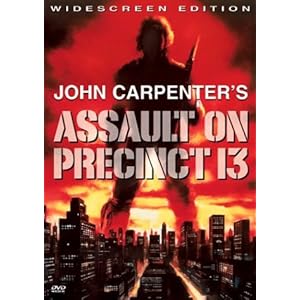
Assault on Precinct 13


A pretty early John Carpenter film, which can be seen as a super violent action movie before super violent action movies were really a thing. It has elements of westerns and zombie movies, and tells the story of a few police officers and criminals defending a closed-down police station from a fraternity of gangs on the warpath. There are definitely bits of the movie I liked a lot, as it manages to build suspense and have some solidly exciting scenes despite a low budget. There are definite issues with the script though, which is a bit lean in some places and is filled with tough action dialogue that I could barely tolerate, especially for the lead good guy criminal. Stop being cute and act like a human being for five minutes, man.

Going My Way


A Best Picture winner starring Bing Crosby as a priest who comes to a new church and helps make it a nicer place, mostly by using his musical talent to keep it going and form a choir with its population of young boys. There's not really a lot of depth to the movie, but I found it mostly enjoyable. On occasion the musical numbers (it's not really a musical, but does have a lot of singing) seemed to go on a bit long, but in the end it's a nice tale of spirituality and kindness and whatever. I like Bing. Bing's a pretty cool dude.

Last Year at Marienbad


When people talk about incomprehensible foreign art films, this is basically exactly what they're talking about. Marienbad is a French movie about a man who tries to convince a woman that they had met and had an affair a year earlier at another place, and either he's making it all up or she just forgot somehow or she's deliberately pretending she doesn't know what he's talking about. The movie never really explains itself, and I don't think there really is a straight answer anywhere. It's not that the scenes don't follow or are made up of gibberish, it's just that it's really difficult to tell when things are taking place or where or what's real or if any of it is. I appreciated the great artistry that went into filming it, but I also can't say I really liked it. There's just no way to make heads or tails of it.

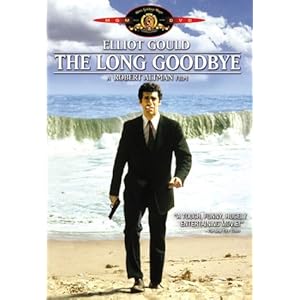
The Long Goodbye


My favorite classic film noir might be The Big Sleep, starring Humphrey Bogart as Philip Marlowe. Robert Altman and Elliot Gould revived the character in the 70s with The Long Goodbye, moving him into that decade and highlighting the anachronism of a 40s hardboiled detective living in a then-modern LA. Some people don't like the way the movie plays with the genre or the deviations from the original novel, but I thought it was a mostly entertaining movie. It's also funny to see a very early appearance by Arnold Schwarzenegger as a thug who doesn't have any lines. Not a traditional detective story, but I think it's an interesting one.

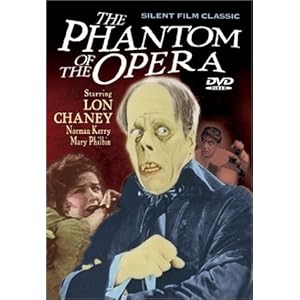
The Phantom of the Opera


You know, I always got the impression that the Phantom was supposed to be a sympathetic figure, like his horrible visage masked a kindness and he was only secretive because of a life of torment, or something like that. But he really isn't. He kidnaps a woman and basically tells her he'll kill everyone if she goes back to her boyfriend instead of staying with him. Not cool, dude. This version of the story from the 20s is probably the best known film version, and it's pretty watchable, though not terribly exciting now. Lon Chaney's makeup is pretty good, but there's not much about the movie that's really scary. Not much of the good imagery from other silent horror classics. Still, probably worth checking out.

The Private Life of Sherlock Holmes


I guess there's some disappointment that when Billy Wilder makes a Sherlock Holmes movie that begins by teasing that its story will be surprising and possibly controversial, and the ends up just being a pretty normal Sherlock Holmes movie. In fact, the entire opening sequence where he lies about his sexuality to get out of a jam and which is the only thing that's truly original about the story, ends up being kind of a waste of time as it only barely plays into the rest of the film. It's not a big deal though, because it's a well paced, interesting mystery for Holmes and Watson to solve, with plenty of clues that seem odd at first but end up coming together to make a strange sort of sense. No Moriarty here, but we do have Christopher Lee as Mycroft, which is pretty delightful. Not an outstanding movie but a fun one. Not sure about the new Guy Ritchie sequel, though. Is it just me, or are none of the jokes in the previews actually funny?

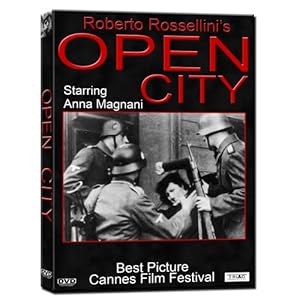
Rome, Open City


Italian neorealism! Catch the fever! Open City is remarkable for its depiction of the late Nazi occupation in Italy only months after the war actually ended, and for how unflinching it is in depicting the period. They didn't experience some of the worst horrors of the war, but it sure wasn't fun to resist the Third Reich at any point during their reign. The film suffers a bit from Italians Yelling a Lot Syndrome, but it's a well crafted piece of historical fiction, and I'm still impressed by it following so soon after the actual events it tries to reflect. A solid way to help kick off an important film movement.

Sunday, September 20, 2009

The Man with the Golden Gun


I'm not sure how I felt about this one. It was a little unusual in some ways, I mean, just look at the kill count. Christopher Lee plays Scaramanga, a villain that I enjoyed for the most part but seemed to lack some of the ambition of his peers. Nick Nack is one of the series' more memorable henchmen, but more because of his novelty than being an interesting character. The movie is just sort of subdued, except when it isn't. Bond returns to Asia, but instead of doing it with a lot of their ladies he mostly gets attacked by martial arts schools. A welcome car chase is marred by the reappearance of the bumbling Southern cop from the last movie, a stunt sequence I'd be sure was a reference to The Dukes of Hazzard if the movie didn't come out five years before the show started, and a ridiculous transformation of a car into a car-plane.

I definitely thought I liked it more than the first Moore film when I was watching it, I'm just now struggling with reasons why. I guess it's just different from recent movies, a nice breath of fresh air to meet someone who just wants to make money and chill on his private island instead of blow up the planet or destroy society for some insane reason. Also, being honorable enough to want to duel with 007 is a much better reason to open yourself up to death than deciding to slowly lower your opponent to his doom without paying much attention to him instead of just shooting him in the fucking face. Maud Adams is a rare case of playing more than one Bond girl, as she reappears later in the series, but here plays Scaramanga's angry mistress and has some good, memorable scenes. The more traditional Bond girl is the garden variety Ditzybot 1.0, but she looks nice in a bikini so she gets a pass. Also, you know Moore's a pretty good Bond when he can pull of a love scene that's interrupted by an angry dwarf without it killing the momentum.

James Bond stats
Theme song: "The Man with the Golden Gun" by Lulu
Foreign locations: Beirut, China, Thailand
Bond, James Bond: 16:15, 22:15 (fake name), 46:45 (third person)
Martini shaken, not stirred: Not ordered
Ladies seduced: 2
Chases: 2
Kills: 1
Non-lethal takedowns: 6

Saturday, May 2, 2009

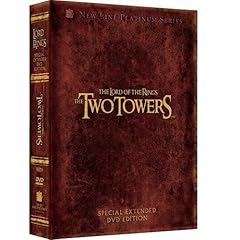
The Lord of the Rings: The Two Towers


Just looking at Amazon, they're taking preorders for the Blu-ray version of the trilogy, which is cool I guess, but it also seems like they've discontinued manufacture of the DVD sets, which is... weird. Oh well. The Two Towers is a frequent pick for the worst of the three films, and mine as well, though I've seen some claim that the extended edition elevates it to the best, which I find a bit odd. It's certainly better, though that's true for all three films. In any case, it probably made the most severe alterations to the plot of any of the three, some aspects of which were justifiable, others less so. The whole structure is rejiggered to make the battle at Helm's Deep the focus, with a lot of time spent building to it when they just sort of went there and fought in the book, and the film ends shortly after, whereas the break was originally after a few other plot points that migrated to the third movie. Things like that are acceptable so the story has a normal dramatic arc to it. What's stranger is pretending to kill off Aragorn during an innocuous warm-up battle and having a legion of Elves show up in time to help instead of Éomer and the Riders of Rohan. It's not that having Elves and changing who Gandalf shows up with really hurts the story, you just wonder why they bothered when previously the only changes were trimming fat that affected the pacing. The battle itself was pretty well executed, and besides a couple dumb moments like Legolas skateboarding down a stairway on a shield, one of the best large scale clashes in recent cinema. I liked how they were able to add small things like the contest between Legolas and Gimli, even if the resolution of it was cut out of the theatrical version.

It was smart to edit that stuff together with Frodo and Sam's journey instead of keeping them separate, not only because it would have been strange that way, but it allowed them to make Helm's Deep the climax instead of the fight with Shelob, which in turn allowed them to shift that into the third movie as well, and keep the timeline straighter. Looking back, I'm not sure I support the decision to make Gollum a computer generated character. Serkis' performance is impressive and shows through the effects, and there are moments where the work they did is still extremely convincing, but for the most part whenever he's on screen I'm noticing that he's not really in the scene, and paying attention to the work that was done and not his presence as a character. It's still going to be a while before that stuff is totally convincing. I just got a feeling of déjà vu like I've written this before. Making Faramir more like his brother initially and unwilling to just let Frodo and Sam walk away with the ring is another choice that I mostly support, because after taking out Shelob there's really not a whole hell of a lot for them to do. I'm not sure they really captured his character as well as they could have, because there's more to him than just being the less favored son. Still, they did what they had to to make the story work, and sacrifices will sometimes have to be made to do that. Movies in the middle are usually a tough situation, and I thought they did well enough here when they were mostly putting things in place for part three.

Friday, May 1, 2009

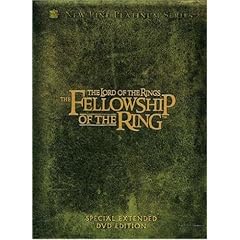
The Lord of the Rings: The Fellowship of the Ring


I rewatched the movies in unison with rereading the book. I read The Hobbit years earlier, but seeing The Fellowship of the Ring in theaters was my first experience with The Lord of the Rings, and it totally grabbed me. One of the main complaints I heard about it was the overly long and slow beginning, with the extended version lasting over an hour before they even leave The Shire. I enjoyed that, though. Part of what makes the books interesting is how much detail Tolkien put into the world, to a nearly ridiculous degree. They might not have needed to spend so much time establishing the setting in the movie, but since it was filmed as a trilogy from the beginning they were able to take their time and show whatever they wanted. I think the extended introduction before the adventure really begins helps make the film work as an introduction to the series for new fans while at the same time appeasing long-time devotees who fear any changes at all. Besides chopping out a couple sections and ignoring details that would affect casting (Frodo sets out at about age fifty to destroy the ring, some seventeen years after receiving it initially), it's probably the most faithful of the three films.

I think the book had a slightly different feel than the latter two, and the same is true of the movies. The last two thirds of the story are more intertwined and fuzzy about the break point, plus share a more epic war-movie feel to the battles. The Fellowship of the Ring is more of a smaller-scale cross country trip, almost like a chase movie. Nine dudes travel together and fight small skirmishes against manageable hordes. I actually kind of like the smallness of the fights, you really remember every cool thing that happens, giving them more of a memorable personality than thousands clashing against thousands. The fellowship itself is only whole for about a sixth of the series' running time, but I still mostly identify the story with the image of them all together. Boromir is one of the story's best characters, but he's not around for long, and his death more or less marks the point where the tone changes and things get dark and serious. I still think the third movie is my favorite with this second, but it still gets extra credit for getting me into it. Plus it's a good thing it performed so well at the box office, because if it set the tone by not doing so well, that could have been a ton of money wasted on three huge films, and we certainly wouldn't be getting an extremely exciting pair of Hobbit movies from Jackson and Guillermo del Toro. Also, can you believe this came out seven and a half years ago? Time is a bitch.

Wednesday, October 22, 2008

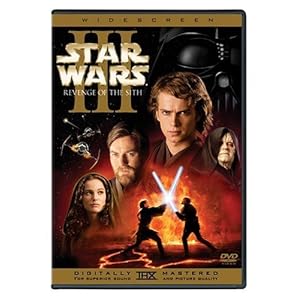
Star Wars Episode III: Revenge of the Sith


For some reason, when it came out, Sith got a decent amount of good press, and I'm not sure why. It's certainly darker and more violent, but that's not exactly what critics go for. It was critical for Anakin's inevitable turning to the dark side to work for the trilogy to be close to redeemable, and unlike a lot of people apparently, I don't think it did. It has to be believable that he'd turn, and making his motivation protecting his wife works. He should have been smart enough to see how he was manipulated, but it's understandable after seeing how emotional and selfish he can be, despite his characterization in Episode I as the nicest little boy in the galaxy.

But the scene of the actual transformation is awful. For one thing, it's somewhat laughable. Palpatine and Windu trying to convince him of the other's wrongness while moaning in their struggle, Palpatine's goofy-ass "No! No!", it's hard to take seriously. And it culminates with Anakin causing Windu's death because killing Palpatine would be wrong, even though he's the guy who made him kill Dooku. Tell me if that makes any sense. Yeah, he really helped Palpatine because he thought he needed him to save Amidala, but it was still a weak scene. Why's he sending the Jedi to arrest him anyway if he needs his help? Did he figure he'd visit him in his cell and learn the secrets of life there?

Besides the botching of the most important scene in the trilogy, Episode III is a combination of enjoyable violence, fan service, and too much post production. For some reason, the sound mix seems a bit off. Like, they rushed through adding the sound effects or something. And the over-reliance on visual effects is ludicrous. It's okay to declare that every clone trooper will be computer generated when they're all helmeted automatons, but when you're superimposing the actor's head onto a fake body, and it's obvious and looks terrible, what's the point? Make a costume, dude. It's fine. A lot of the movie just doesn't go right. Why is McGregor playing such an obnoxious cock now? How could anyone write romantic dialogue this lame? Why are all the robots starting to sound like idiotic children? It's really pretty sad. On one level it's satisfying to see how the world becomes what it was back in 1977, but I just wish it could have been better.

Tuesday, October 21, 2008

Star Wars Episode II: Attack of the Clones


When it came out, I thought Attack of the Clones was better than the first prequel, because I was 15 and it had MORE ACTION. But it's really not true. Is there some rule that people named Hayden have to be bad actors? Panettiere is pretty crappy on Heroes and Christensen is the same here. I hesitate to blame the prequels' badness on him because I honestly don't dislike that guy, but what else can you say when he's the star? I lay most of the blame at Lucas' feet, but a great Anakin could have done a lot of salvaging of the emotional core that makes these movies even close to relevant to the other ones. Without them being the story of Anakin's downfall, they're really just typical brainless science fiction. I'm not sure what I'm trying to say here, really. I've heard that Christensen has been pretty good in other movies, and no one really seems to do their best on a green screen sound stage with Lucas' ability to direct actors being unknown beyond saying "faster and more intense!", so I'll go with my nerd instincts and blame it all on George.

I really don't hate any of these movies that much. Besides The Clone Wars, I mean. I can enjoy a silly movie with entertaining action scenes. And that describes Attack of the Clones pretty well. It's just disappointing to see the heart get slowly sucked out of a beloved series. Making Yoda digital is probably what really got the ball rolling. Yeah, seeing him flip around with a lightsaber like a mad man is hilariously entertaining, but at what cost? Why is doing so many extraneous tumbles through the air anyway. I prefer the old days when the fights weren't quite so elegant but every move had a purpose besides looking neat. Luke was trying to beat Darth Vader, not do the better triple salchow. The overreliance on computer effects is really what gets me more than the silly things that change the series' tone. Besides some background elements, they're rarely convincing, and it just pulls you out of the experience. And as the movies go on, they're pretty much all that's left.

Thursday, September 4, 2008

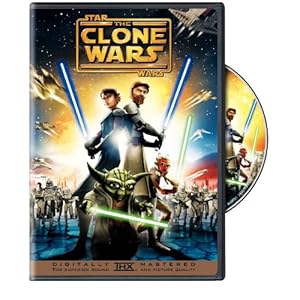
Star Wars: The Clone Wars


I usually don't buy tickets for movies I know will be bad, but I was bored, and I still kinda like Star Wars. Unfortunately, there just isn't much left here of the charm and wonder that makes Star Wars fun. I think the problem with all of the new movies is that George Lucas has too much control. Obviously he should have a lot of say; it's his series and his money that lets it continue. He's had a lot of good ideas in his life. He's also had a lot of fucking stupid ideas too. When they were making the original trilogy, he had friends like Stephen Spielberg helping him keep it on the right track, and the latter two movies weren't even directed by him. But now, he's more or less completely in charge, and nobody's telling him his ideas are fucking stupid anymore. He was still getting some help on the live-action prequels, but at this time all he has left are people that do whatever he says. Case in point: Ziro the Hutt, also known as the worst character ever created. A slimy Hutt cooperator isn't a terrible idea, but making him not only speak English, but sound like Truman Capote too is. If this had just stayed as a bad idea, it wouldn't be an issue. But no one slapped Lucas in the face and said "George, that's a fucking stupid idea. The fact that Hutts clearly understand English (Basic, whatever) since they don't need a translator but still don't speak it obviously suggests there's some reason for this, and you're just throwing that away. Also, Truman Capote? Are you fucking serious?" Instead, they just said "Whatever you say, George!" and went about hiring someone who could do a Capote impression to do the voice and animating Ziro to look like he was saying the lines. This breakdown in the proper course of events is the perfect example of why Star Wars sucks now.

But the movie wasn't just bad because of Ziro, it was generally boring and childish. I realize Star Wars is made with kids in mind, but with that being the case they should at least stop trying to pretend it's for adults too by throwing in all the conspiracy and war stuff. Not that the conspiracy makes any sense. As far as I could grasp from the prequel movies, Palpatine hired Dooku and the Trade Federation to start a separatist movement against the Republic, so the Senate would give him total power over the military, allowing him to use it to take it all over for himself. He and Dooku used another Jedi to commission the Clone Army and then killed him, although you wouldn't know this unless you were a huge Star Wars nerd or looked it up like I just did, because the Jedi in question only warrants a passing mention in the films despite this part being pretty important to the plot making sense. Still, it makes some sense. A convoluted plan, but it works. What doesn't make sense is why Palpatine and Dooku actually seem to care whether their fake droid army does well. Which they clearly do in this movie and probably will throughout the upcoming series that this movie kicks off. The whole plot of the movie is about the bad guys trying to trick the Hutts into thinking the Jedi are out to get them and win their allegiance, giving them a significant advantage in the war. But why are they trying to get an advantage at all? Why did they let this war go on for THREE FUCKING YEARS before calling in Order 66 and killing off the Jedi?

Ignoring the fact that the Clone Wars property is a huge collection of toys, comics, books and tv shows built on nonsense, the movie just isn't that well put together. It really does feel like an extremely long episode of a show instead of a movie, and the entire third act had me waiting for it to end. The action scenes weren't really exciting. We've seen a whole lot of clones and robots shooting at each other, and they haven't figured out how to make a lightsaber duel work yet with this animation style. The cheeky sniping between Anakin and his new, fairly irritating apprentice does nothing for me. Did they really think it would be clever for her to call him Skyguy or something? Also, the battle droid dialogue is getting out of control. They were kind of silly in Episode 1, but at this point you have to wonder why they programmed their soldiers to be retarded. They got a laugh out of me once, when one screamed a mournful "Why?" after an ally threw him off a cliff to his doom, but other than that they were painful to watch. The kids behind me in the theater were laughing it up, though. And I don't really feel the need to take that away from them. What was I expecting, when Lucas himself called putting this in the theaters "almost an afterthought"? He says he's going to produce 100 episodes of the series, regardless of ratings. It's that kind of insanity that makes me respect the guy for just doing what he wants, regardless of his success. I might check out the show when it airs, because there are worse things in the world than a half hour of cartoon violence.