Showing posts with label Sterling Hayden. Show all posts

Monday, November 14, 2011

Movie Update 29

Well, here we are again.

The Castle of Cagliostro
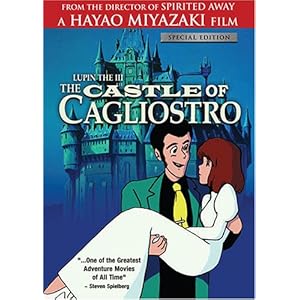

Hayao Miyazaki's first film as a director, before Studio Ghibli was a thing, is based on the Lupin III television series he worked on, which was based on a manga created by Monkey Punch, which was inspired by the Arsène Lupin character created by Maurice LeBlanc. The film's plot is also based on one of the original Lupin stories. So yeah, there's a lot of adapting going on here. Cagliostro is a lighthearted action adventure about Lupin and his buddies stumbling on the world's biggest counterfeit currency operation in one of its smallest countries, and trying to both thwart their plans and rescue a princess at the same time. I've only seen a bit of the show, but it doesn't take much of that to get familiar with the principal characters, and they all show up here and have fun little parts to play. It's a simple movie, but there's a nice energy to it, a reasonable amount of excitement in the twists and turns, and like all works by Miyazaki there's a nice feeling to the animation, which isn't the most fluid ever but does what's required to set the right tone. It's kind of a standard adventure movie, but it's a well executed one.

Killer's Kiss


Not Stanley Kubrick's first feature film, but the first that's readily available for public consumption. It's also his weakest that I've seen. There's nothing very bad about the movie, but there's just not much to it. A boxer meets up with a dancing girl, and they try to leave the city and start a life somewhere, but her crook of a boss isn't a fan of the idea. It's a pretty bare-bones noir story, with the only thing that really makes it work being Kubrick's great photography. There's lots of great little shots that stick out as distinct for the era, including use of reflections, some stuff with shadows that I haven't really seen before, and a memorable conclusion in an unusual setting. There's not much to the characters though, and the tacked-on ending doesn't really work. Its only real use is to show the potential Kubrick had for his work later on.

The Killing
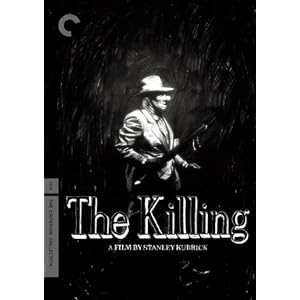

The very next year Kubrick made this, his first really good movie. It actually feels a bit less distinctly his than Kiss, but it's certainly a lot more fun to watch, and might actually be the most purely enjoyable movie he ever made. In one of the few instances I can think of of him using an actor more than once, he has Sterling Hayden as the main character, a criminal trying to pull off one last job, robbing the take at a horse track, with a complicated scheme that involves multiple people both inside and outside the place. It's a pretty good plan, though there's also a lot of moving parts, and of course things get screwed up and the situation eventually gets pretty hairy. There's a lot of build up, and the pay off when it all starts falling into place is pretty great. Stylistically, there's not much in the movie that wouldn't be in another noir movie from the period. But it's also just a really good example of the genre, and sometimes that's all you need to be successful.

The Tree of Life
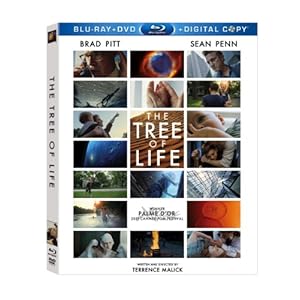
This is a film about life, and growing up, and pretty much everything that entails. I said before that I imagine a film by Terrence Malick entirely in his reflective/observing-nature's-beauty mode might get tedious, and that's somewhat true here, but the film is so beautiful and poignant that it's hard to be really bothered by the slow bits. The film isn't exactly in chronological order, but what it's basically about is Sean Penn remembering his youth growing up with his parents and two brothers, and also experiencing some sort of vision of the birth of the universe and what possibly lies beyond it. It's a staggeringly gorgeous movie at times, especially in the scenes showing the early moments of existence, with visuals that avoid computer animation in favor of more natural means. The more normal stuff looks great too, though it's mostly just people walking through houses or the woods. Brad Pitt plays his father, and does a really great job making him into a terrible dad that should really be feared and despised without being over the top about it. Just the way he touches his sons on the neck is enough to establish that loving parenting doesn't come naturally to him. I don't think the movie needed a name like Penn to play the adult version of the main character though - he doesn't really do much acting besides walking around and looking at things. The Tree of Life is a bit ponderous and in love with itself at times, but what it does right is memorable and unique enough to make the film worth watching, especially if you're a fan of film as a visually artistic medium.

Sunday, October 30, 2011

Movie Update 27

Three movie posts in a row? What the hell is this?

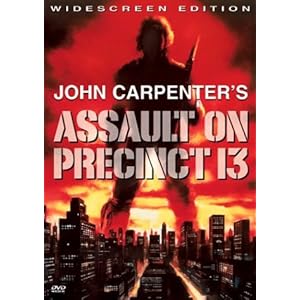
Assault on Precinct 13


A pretty early John Carpenter film, which can be seen as a super violent action movie before super violent action movies were really a thing. It has elements of westerns and zombie movies, and tells the story of a few police officers and criminals defending a closed-down police station from a fraternity of gangs on the warpath. There are definitely bits of the movie I liked a lot, as it manages to build suspense and have some solidly exciting scenes despite a low budget. There are definite issues with the script though, which is a bit lean in some places and is filled with tough action dialogue that I could barely tolerate, especially for the lead good guy criminal. Stop being cute and act like a human being for five minutes, man.

Going My Way


A Best Picture winner starring Bing Crosby as a priest who comes to a new church and helps make it a nicer place, mostly by using his musical talent to keep it going and form a choir with its population of young boys. There's not really a lot of depth to the movie, but I found it mostly enjoyable. On occasion the musical numbers (it's not really a musical, but does have a lot of singing) seemed to go on a bit long, but in the end it's a nice tale of spirituality and kindness and whatever. I like Bing. Bing's a pretty cool dude.

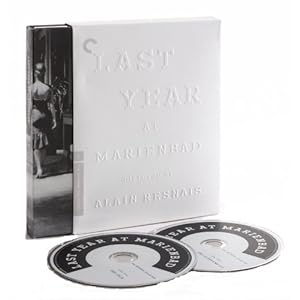
Last Year at Marienbad


When people talk about incomprehensible foreign art films, this is basically exactly what they're talking about. Marienbad is a French movie about a man who tries to convince a woman that they had met and had an affair a year earlier at another place, and either he's making it all up or she just forgot somehow or she's deliberately pretending she doesn't know what he's talking about. The movie never really explains itself, and I don't think there really is a straight answer anywhere. It's not that the scenes don't follow or are made up of gibberish, it's just that it's really difficult to tell when things are taking place or where or what's real or if any of it is. I appreciated the great artistry that went into filming it, but I also can't say I really liked it. There's just no way to make heads or tails of it.

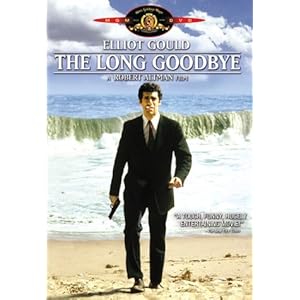
The Long Goodbye


My favorite classic film noir might be The Big Sleep, starring Humphrey Bogart as Philip Marlowe. Robert Altman and Elliot Gould revived the character in the 70s with The Long Goodbye, moving him into that decade and highlighting the anachronism of a 40s hardboiled detective living in a then-modern LA. Some people don't like the way the movie plays with the genre or the deviations from the original novel, but I thought it was a mostly entertaining movie. It's also funny to see a very early appearance by Arnold Schwarzenegger as a thug who doesn't have any lines. Not a traditional detective story, but I think it's an interesting one.

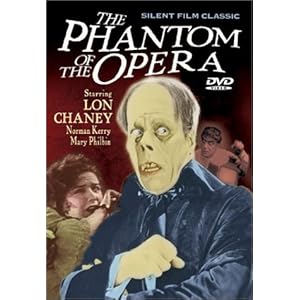
The Phantom of the Opera


You know, I always got the impression that the Phantom was supposed to be a sympathetic figure, like his horrible visage masked a kindness and he was only secretive because of a life of torment, or something like that. But he really isn't. He kidnaps a woman and basically tells her he'll kill everyone if she goes back to her boyfriend instead of staying with him. Not cool, dude. This version of the story from the 20s is probably the best known film version, and it's pretty watchable, though not terribly exciting now. Lon Chaney's makeup is pretty good, but there's not much about the movie that's really scary. Not much of the good imagery from other silent horror classics. Still, probably worth checking out.

The Private Life of Sherlock Holmes


I guess there's some disappointment that when Billy Wilder makes a Sherlock Holmes movie that begins by teasing that its story will be surprising and possibly controversial, and the ends up just being a pretty normal Sherlock Holmes movie. In fact, the entire opening sequence where he lies about his sexuality to get out of a jam and which is the only thing that's truly original about the story, ends up being kind of a waste of time as it only barely plays into the rest of the film. It's not a big deal though, because it's a well paced, interesting mystery for Holmes and Watson to solve, with plenty of clues that seem odd at first but end up coming together to make a strange sort of sense. No Moriarty here, but we do have Christopher Lee as Mycroft, which is pretty delightful. Not an outstanding movie but a fun one. Not sure about the new Guy Ritchie sequel, though. Is it just me, or are none of the jokes in the previews actually funny?

Rome, Open City


Italian neorealism! Catch the fever! Open City is remarkable for its depiction of the late Nazi occupation in Italy only months after the war actually ended, and for how unflinching it is in depicting the period. They didn't experience some of the worst horrors of the war, but it sure wasn't fun to resist the Third Reich at any point during their reign. The film suffers a bit from Italians Yelling a Lot Syndrome, but it's a well crafted piece of historical fiction, and I'm still impressed by it following so soon after the actual events it tries to reflect. A solid way to help kick off an important film movement.