Showing posts with label flashback. Show all posts

Monday, August 22, 2011

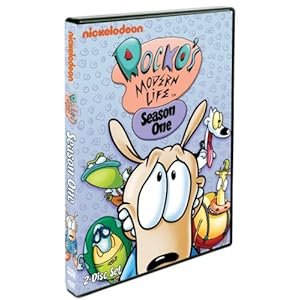
Rocko's Modern Life


When I was a kid, there were a number of different options for what channel to watch cartoons on, but my most frequent pick was the shows on Nickelodeon. I didn't like all of them, but I sure watched them all a lot. My favorite was pretty easily Rocko's Modern Life, which had some of the racier material of something like The Ren & Stimpy Show (I missed some dirty stuff but still enjoyed images like a commercial causing the TV to sprout arms and literally wash the characters' brains with soap) but still followed more traditional comedy beats that were palatable ton eight year old's brain. I was excited to find out the whole series (minus one episode that got lost somewhere) was streaming on Netflix Instant, and even happier to realize that the show totally holds up.

Actually watching the episodes in the basic order they originally aired, it's interesting to see the show change a bit over time. Initially, they stick very closely to the suggestion of the title, of a show about the silliness of the modern American lifestyle. There's hardly a subject the show didn't touch on, from garbage day in the pilot to grocery shopping, television, camping, shopping malls, road trips, public transportation, corporations, and everything in between. There's an amazingly cynical undertone to the show, especially early on, something I didn't really pick up on as a kid but is completely visible now. There are lots of instances of the show using metaphor to disguise commentary too, like an episode where Rocko's angry next door neighbor Ed Bighead hides the fact that he likes being a clown, a story that is very transparently actually about closeted homosexuals. Many early episodes consist of little more than Rocko banging his head against an inconvenience or banality of living in the 90s, and it's pretty interesting from an older perspective.

I always liked the show more as it went on though, and that stayed true on this rewatch. The series really starts clicking when Filburt graduates from the background to a major character, as it causes a nice dynamic to emerge between him, Rocko, and Heffer, Rocko's best friend. The three characters all have their own quirks and catchphrases, and the show gets a ton of mileage out of throwing them into any situation they can think of and letting them bounce off each other. Plus there's just the fun, odd visual of a friendly wallaby, nervous turtle, and gluttonous steer pal around. Unfortunately only 52 episodes were produced (resulting in about a hundred stories, as most episodes had two), which seems about standard for any kid's show that wasn't a massive breakout success, but there's so much good stuff in that time that it's hard to complain. Very few missteps, and even those aren't really terrible like some shows can get. I'm sure a big part of the fun I had seeing the show again was just nostalgia, but I genuinely think that either way, Rocko's Modern Life is one of the funniest and smartest series ever made for kids. The only question is whether it would even culturally make sense to children now, or farther down the line.

Monday, March 15, 2010

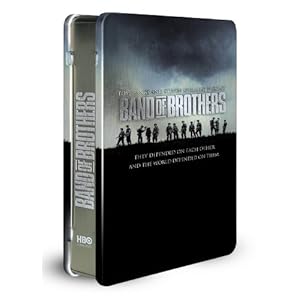
Band of Brothers


Steven Spielberg and Tom Hanks' The Pacific just started airing last night, so it seemed like a good time to revisit its counterpart in the European theater, Band of Brothers. It's a miniseries that war movies wish they could be, telling the stories of a very important company throughout their struggles without any sacrifices made in production value over its more than ten hours of running time. At times it's quite violent, though it doesn't really cross the line to gratuitous, and three of the episodes feature no combat whatsoever. A lot of the best moments just look at the friendships that formed between the troops and how they tried to cope with the constant danger they lived in, though that's not to say the battles aren't impressively done. The frantic camerawork, the well-considered but brutal situations they're fighting through, the strong visuals and amazing sound work make every fight exciting and harrowing no matter how many times you watch them. I feel like the presentation of the cast could have been a bit clearer, because names and ranks fly by at a rapid pace and even after seeing it three times I still can't match every single name with a face. For the most part you remember the main guys pretty well, and they effectively convey the "brothers" theme through the whole thing. Sometimes random troops die and that's just war, but every time someone you recognize gets killed or seriously injured it's like a dagger through the heart. I don't know how anyone can watch this and see the interviews with the surviving members and not feel immense respect for these soldiers. I hope The Pacific can successfully hit the right notes too.

Sunday, February 7, 2010

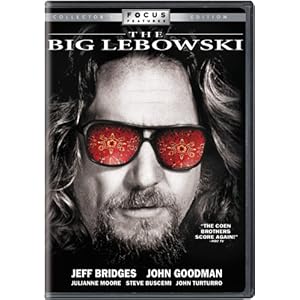
The Big Lebowski


I was watching this again with friends last night, for the first time in too long. While there are films I would name as superior artistic achievements, I really can't think of any that I love more. Few movies hold up to repeated viewings as well as this one, and there are only a small handful of flaws that keep it from being perfect. There's something special about it, like you could try to replicate its success with the same amount of talent both behind and in front of the camera and never find the same magic in a hundred years. Instead of pontificating on why it works, I'll just start listing little details you might not notice the first couple times but help show why it's such a cult favorite. It really is the epitome of that sort of thing, failing when it was in theaters, but it's hard to find someone in my age group who hasn't seen it at this point.

- There's a lot of stuff with shirts that's fun. Most people have noticed that Donnie's bowling shirts never actually have his name on them, but fewer know that between their first and second scenes, Jackie Treehorn's two thugs decided to switch what they were wearing.
- It's fun to think about how people became friends. Walter and the Dude get along but really don't have much in common, leading us to think they were put in a situation where they were forced to find common ground, like they went to college together and were roommates or something. Neither one seems to care much for Donnie, but you can see how they saw his bowling talent and befriended him so they could use him on the team, and him being so weird accepted the only friends he could get.
- A bit more mysterious is how the Jesus and Liam became bowling buddies. The best theory I've heard is that the latter is the former's parole officer.
- Not really a fun fact, but Philip Seymour Hoffman is fantastic in this movie. And it's the only time I've ever seen something make Tara Reid useful.
- When he's discussing the toe with Walter in the diner, the Dude gets angry and dumps some change on the counter to pay for his coffee. It's easy to miss that he picks up a joint he accidentally grabbed with the money before he shuffles out of the place a bit too quickly.
- Walter's inappropriate references to Vietnam are great, but I might like his flashbacks even more. It only happens a couple times, but he'll forget where he is for a minute.
- Have you ever made note of how many times the movie could have ended if the Dude just stayed out of things? Eventually he gets in too deep, but if Walter never told him to go see the other Lebowski, or if he didn't take that specific rug from the place, and so on.
- It's gotta be common knowledge for fans at this point, but it's great how much of the Dude's dialogue is taken from what he's heard other people say and how all the elements of his dreams come from somewhere else in the film. Perhaps the best instance of this is when he tells Larry he's going to castrate him.
- How sad is it that Donnie's bowling buddies are the only ones at his funeral. Does he really have no family at all? I assume they knew him well enough to contact them if he did.
- The entire arc of Jackie's pornographic doodle is great. For one thing, it's a great drawing. For another, why is he drawing that while he's on the phone? What the Dude does is one of his smartest moments, but he gets nothing out of it, and of course it's the only thing in his pockets after he's arrested besides his Ralph's card.

I'm running out of steam here, so I'll wrap it up. Like I said, there are some issues with the movie and I'll touch on those. When the Dude gets thrown out of the cab and Bunny zooms by, the shot lasts too long and the Dude's expression of bewildered dismay ends up looking artificial. It's a very small problem, but again, we're talking about one of my favorite movies ever. Another thing is that I think there's only one scene in the movie that doesn't feature the Dude, the very brief snippet where we see the nihilists ordering breakfast. It's not really necessary because the other scene shows Bunny's toes intact, and it would have been nice if you could say there is no scene in the film without its protagonist. It's a stylistic thing, and when you're that close, you might as well go for it. These are both minor quibbles of course, small bumps in what is still one of cinema's most enjoyable experiences. I don't doubt that I like the movie just a bit too much, but I'm okay with that.

Tuesday, November 24, 2009

Star Wars: Clone Wars


Clone Wars is good in all the ways that the current Star Wars: The Clone Wars is not. It doesn't aim so obviously at children. It's tightly focused, imaginative action and fun instead of generally boring and loaded down with a moral message they spell out for you at the beginning, and only actually get across half the time. It represents the excitement the franchise is capable of and actually seemed to serve a purpose instead of screaming "cash in". And it's honestly more enjoyable just to look at than the newer series or even the prequel movies themselves with their millions in computer effects. Honestly, the only thing the makers of the new show have done better than this is cast a less annoying actor for Anakin. Made by Genndy Tartakovsky and the Samurai Jack team, Clone Wars takes a similar art style and applies it to something the creators loved, a fictional universe that at the time was still in the process of being worn down the nub it stands as today. I don't want to overemphasize here, but it's simply the only good thing I've seen the franchise do on film since 1983.

Over two seasons, Clone Wars jumps from place to place and showcases various characters fighting against the switcheroo menace that now dominates the series. The first block is twenty bite-sized, three minute chapters that sort of tell a story but mostly just explore some cool things that could happen during such a war, with standouts like an utterly silent mission carried out by a special forces clone team and Mace Windu taking down a large group of droids by himself, mostly without even a lightsaber. The second season is about the same in running length but divided into fewer, larger chunks, and is more plot-based in nature. After depicting Anakin's knighting ceremony, it jumps forward to near the end of the war when his hair has become a full-blown mane and shows some events that lead directly to the third film, like Chancellor Palpatine's capture and the encounter that turns General Grievous from a menacing badass into a wheezing, moustache-twirling braggadocio. All in all, it's fairly remarkable looking for televised animation and generally pleasant to watch. The DVDs are stupidly out of print right now, but they can still be found and are worth tracking down if you want to rekindle your affection for some of these characters.

Wednesday, October 14, 2009

Casino Royale


Finally, the last one of these. And hey, it's the best one in the series. We go back to the beginning of Bond's career, to his very first kills which earn him his 00 status. From there it's the opening credits, which depict Bond fighting a lot of dudes instead of ladies made out of strange substances dancing, helping clue the audience in that this is a bit of a different Bond than we're used to. I've been told that Craig's take on the character is closer to the one found in the original novels by Ian Fleming; cold-hearted and ruthless instead of a playful scoundrel. In some ways he's actually a better person than the one we're used to, though. The old guy would do anything and everything to get with almost any girl he met, while this one stops romancing a married woman after getting the information he needs, and only has sex after he's fallen in love. He's pretty brutal when it comes to his job, but he still has some sort of moral compass, or so it seems. And you can't give him total credit for leaving the first encounter early, since it was necessary to stop an airport bombing. But you get my point, right?

Elsewhere, the movie still holds up for the most part. All the poker scenes in the second act could have been a big momentum killer, but they're exciting enough on their own, and when interspersed with all the stuff like angry Ugandan militants with machetes and self-applying a defibrillator, it's a pretty darn good segment. The reintroduction of Felix Leiter was welcome (Wright is the first guy to have the role in consecutive appearances), and the development of the relationship between Bond and Vesper is the best in... well, probably ever. After a torture scene that is brutal without being explicit yet still entertaining, the third act has some slightly clumsy dialogue before the final betrayal and large action scene in a collapsing building. The whole sequence is pretty effective, and completely sets up the mindset and character arc for Bond in the next movie. It's nice to see the character be used like a person instead of just a vehicle to some snappy jokes and outlandish action, and there really isn't much about the film that doesn't succeed. And with that, this stupid project finally comes to a close.

James Bond stats
Theme song: "You Know My Name" by Chris Cornell
Foreign locations: Prague, Madagascar, Bahamas, Miami, Montenegro, Italy
Bond, James Bond: 2:20:00
Martini shaken, not stirred: 1:14:15 (full recipe), 1:31:15 (unspecified), 1:33:40 (poisoned), 1:43:30 (named the Vesper)
Ladies seduced: 1
Chases: 3
Kills: 11, plus explosion victims
Non-lethal takedowns: 4

Quantum of Solace James Bond stats
Theme song: "Another Way to Die" by Jack White and Alicia Keys
Foreign locations: Italy, Haiti, Austria, Bolivia, Russia
Bond, James Bond: Not uttered
Martini shaken, not stirred: 51:15 (six)
Ladies seduced: 1
Chases: 4
Kills: 13, plus explosion victims
Non-lethal takedowns: 14

Monday, October 12, 2009

Die Another Day


So, this is where the filmmakers went too far and turned James Bond from an outlandish action hero into the star of something monumentally stupid. Die Another Day has a few decent moments, but in general it's just insane. Even more of an unbelievable science fiction movie than Moonraker, practically every ten minutes it tops its own ridiculousness. It actually starts out not too bad. I'm not sure why Bond and his bodies had to surf to their mission start point instead of a more simple method, but they steal a helicopter and a briefcase of diamonds, hoping to interrupt an arms deal by a corrupt North Korean Colonel. After a betrayal and an action sequence featuring a bunch of hovercrafts (probably the film at its most reasonable), Bond gets captured and tortured for over a year before being traded for one of the Colonel's henchmen. Later in a hospital on a boat in Hong Kong, things take a turn for the worse. Bond has been restricted by MI-6, but he decides to escape his enclosed room by willing himself into cardiac arrest. That's right. He just thinks about his time in Korea and his heart stops. He then wakes up, takes out the doctors, and swims to shore.

What follows is a parade of overly double entendre-heavy one-liners and technologies each more ridiculous than the last. People changing their identities with gene therapy, because plastic surgery is too old fashioned! Cars that turn invisible! Virtual reality training simulations that also apparently support erotic fantasies! A satellite that can channel the sun's energy and cut a swath of destruction across the earth! Also, why is Iceland an icy wonderland in this movie? I mean yeah, there are glacial areas there. But they couldn't sustain a frozen palace. When you include the sequence where Bond appears to kitesurf off the edge of the world, you get the feeling the screenwriters meant to place that act in the North Pole and got confused. When you add the general low level of acting (do people actually like Halle Berry?) and how nobody can seem to have a fucking conversation without throwing eight dick jokes out there, and it's a disappointing way to celebrate forty years of Bond. The scenes with John Cleese as the new Q are generally entertaining, but the film can hardly go five minutes without something dumb happening. The best thing you can say about the movie is that it's at least not boring.

James Bond stats
Theme song: "Die Another Day" by Madonna
Foreign locations: Korea, Hong Kong, Havana, Iceland
Bond, James Bond: 53:55
Martini shaken, not stirred: 50:05, 1:11:00
Ladies seduced: 2
Chases: 2
Kills: 16 real, plus explosion victims, 7 virtual
Non-lethal takedowns: 11

Original continuity James Bond stat totals
Bond, James Bond: 22
Martini shaken, not stirred: 16
Ladies seduced: 53
Chases: 46
Kills: More than 219
Non-lethal takedowns: 176

Saturday, October 10, 2009

The World Is Not Enough


You getting tired of these yet? I sorta am. But we're in the home stretch. TWINE is another solid if unspectacular film in Brosnan's repertoire, entertaining without changing the world or really asking you to think much. It's notable for being Desmond Llewelyn's final film as Q, with John Cleese already there ready to replace him. He was apparently planning to return once more, but was killed in a car accident. Can you believe that? The guy was old for 35 years and that's what it takes to get him. The movie brings back Robbie Coltrane's Russian character, and makes him into a bit of a buffoon. Sophie Marceau plays one of the very few major female villains in the series, and does an okay job of it. Denise Richards meanwhile plays the least convincing nuclear physicist ever. I'll give her credit for looking awesome in a tight t-shirt and daisy dukes, but it's seriously one of the poorer major performances in the series.

You can sort of see a transitional arc over Brosnan's four Bond films in terms of the style of the action. Goldeneye was a bit over the top but still sort of gritty and somewhat believable. Tomorrow Never Dies was still not what I'd call silly, but more unbelievable and movie-like. This film is even more outlandish, with crap like being chased by flying snowmobiles on parachutes down a mountain and helicopters with hanging buzz saws destroying a dock around him, but still not too moronic. As for the next movie, well... we'll talk about that later. The plot starts out decently although degrades by the end with one of the harder to justify villainous goals, and serves to present some action sequences that are rarely better than decent. Honestly, I can't think of much the movie truly does well, but it's hard to dislike also. It's dangling on the edge of the cliff leading to irritating stupidity, but its fingertips are strong enough to never fall in. And with a follow-up like it has, it's hard not to come out looking all right.

James Bond stats
Theme song: "The World Is Not Enough" by Garbage
Foreign locations: Spain, Azerbaijan, Kazakhstan, Istanbul
Bond, James Bond: 31:25, 1:07:50
Martini shaken, not stirred: 43:25
Ladies seduced: 3
Chases: 2
Kills: 20
Non-lethal takedowns: 7

Thursday, October 8, 2009

Tomorrow Never Dies


Much like Live and Let Die was the Bond blaxploitation movie, Tomorrow Never Dies could easily be called James Bond: Hong Kong Action Edition. It takes place largely in Vietnam, was actually filmed in Taiwan, features Hong Kong's biggest female action star as the first Asian Bond girl since You Only Live Twice (I think), and takes a lot of cues from that style of film. Thankfully there's no scenes with Bond doing kung fu, but Michelle Yeoh has a full-on fight with a bunch of dudes in an old, dusty shack that she afterward transforms into a high-tech command outpost with the push of a button. The last sequence where they raid a stealth boat trying to incite war between Great Britain and China so Johnathan Pryce can control the media there (cool plan, bro) is filled with lots of machine gun fire, explosions, people bloodlessly collapsing to the ground and a couple more gruesome ends.

But before that, there's a lot of traditional Bond movie stuff. I like how the early throwaway girl is already in his bed when we first see him, it's just like the filmmakers are saying "This series is 35 years old, you know what's up." It's a brief film for the Brosnan era, not reaching two hours, and some segments feel rushed, like when the entire briefing from M and Moneypenny takes place while in a car headed to the airport. Bond does some stuff at a party Pryce is hosting, including romancing a married woman for the first time in the series (though they have a previous history) and beating up some thugs who try to question him. After a sequence featuring an unusual hit man in one of the franchise's only instances of being funny for an extended period without being silly, followed by a remote controlled car chase that is totally silly, Bond moves on to 'Nam where we finally get to the stuff I was talking about earlier. Did I mention the tag-team moves using handcuffs, the stunt going down the side of a skyscraper, or the motorcycle chase through crowded streets involving jumps and helicopters? Because they happen. Tomorrow Never Dies is far from the most intelligent Bond movie, but it mostly makes up for it with generally competent action.

James Bond stats
Theme song: "Tomorrow Never Dies" by Sheryl Crow
Foreign locations: Russia, Hamburg, Vietnam
Bond, James Bond: 31:25
Martini shaken, not stirred: 33:00
Ladies seduced: 3
Chases: 2
Kills: 25, plus explosion victims
Non-lethal takedowns: 19

Tuesday, October 6, 2009

GoldenEye


We're finally into the Bond movies I've definitely seen all the way through. The gap between the last film and this one was the longest in the series' history, and they even talked about rebooting it like they would end up doing 11 years later. They probably should have, because there's no reason it had to be tied to the existing continuity. Desmond Llewelyn as Q is the only returning actor, and the hiatus between films did him absolutely no good. He's always been an old guy, but he never looked like this. Pierce Brosnan is a solid Bond, but it's weird how the opening sequence supposes something that happened nine years earlier, when the character was in transition between Moore and Dalton. Judi Dench takes up the role of M, with them needing to explain she's a successor to the old one thanks to the switch in gender, and it's weird how she refers to an actor 18 years her junior as a "dinosaur of the Cold War". Despite these little things, it's a good film, the best in the series in a while.

It's in a slightly weird position, stuck right before CGI really took off in films, and it's a little strange to see so much slightly obvious work with miniatures for the first time in the series, right before the shift into computer effects. As they enter the 90s, the sex scenes become more explicit, especially a scene where Famke Janssen (the only significant female villain in Brosnan's films that he doesn't bone) kills a guy in coitus. There's also an increase in violence; Bond's kill total jumps into the twenties as he is seen firing a machine gun wildly into a crowd as several go down at once for the first time. Robbie Coltrane is a cool Russian guy, and Sean Bean's character is interesting. I mean... yeah, he's the villain. He betrays 007. Sorry, the movie's 14 years old. It's cool to see him "die" in the beginning only to come back as an adequate, fairly rape-y antagonist. If you've ever noticed, Bean gets a lot of roles where he either dies or disappears early or gets fucked over in some way, to see it subverted before it ever became a thing is neat. Anyway, Brosnan's first Bond film was his best, and still pretty good.

James Bond stats
Theme song: "GoldenEye" by Tina Turner
Foreign locations: Russia, Monte Carlo, Cuba
Bond, James Bond: 20:25
Martini shaken, not stirred: 20:05
Ladies seduced: 2
Chases: 2
Kills: 26, plus explosion victims
Non-lethal takedowns: 7

Sunday, May 31, 2009

Samurai Jack


Samurai Jack was an interesting show, because it was made to be watchable by kids but still has a lot that someone older can enjoy, if they appreciate classic action cinema. I watched it again recently, and it still mostly holds up, especially later on. It's chock full of unique character designs, interesting landscapes, impressive fight animation, and homages to great moments that most kids probably wouldn't recognize. Like most Cartoon Network originals, it only lasted a few years, and never really built much on the story after the initial set up, but most episodes are enjoyable. There's a lot of variety, as they mix equal elements of science fiction, fantasy, and martial arts, with plenty of further tangents like a film noir episode starring a robot with feelings.

Genndy Tartakovsky has had his hands in lots of animation, and you can tell his involvement by a focus on visual humor and storytelling over a lot of dialogue, and Jack is sort of the epitome of that as any sort of verbal interaction often takes a backseat to constant action. It can get monotonous if you watch it in big chunks, but as a twenty minute diversion it can be fun to just turn your brain off and watch some bright colors flash around. The art has a unique style, with almost no outlines, and it has a very flat look, but still manages to have dynamic scenes with some creativity. They do a lot of screwing around with split screens and slow motion, with the balance of style and substance leaning heavily towards the former. The quality of the art also improves pretty drastically over the course of the series; it's hard to detect when you're just watching it through, but seeing some of the first episode again after getting through the third season was pretty jarring. Genndy hasn't really done anything since Star Wars: Clone Wars, the superior hand drawn predecessor to the current computer generated series, but I'm interested in whatever comes next.

Sunday, May 3, 2009

The Lord of the Rings: The Return of the King


This is the one that got all the awards and the highest praise and is my personal favorite, but I'm not sure if it's really deserving of all that. It certainly wasn't head and shoulders above the other two enough to win eleven Oscars when they averaged three. All those awards were probably appreciation for the feat of the trilogy as a whole, which I'm fine with, since the Academy so often seems to pick the better story over the truly deserving winner. I still really love the movie, and it's the biggest and grandest of the trilogy. It also happens to be the only film I saw for the first time after reading the book version first. There's fewer changes than the last time, though still some notable ones. Some bits are cut, like the Riders of Rohan being escorted around a blockade by strange men of the forest and most of the real dramatic thrust of Eowen and the development of her relationship with Faramir. There's one key detail that I feel they lost a lot from by having to cut, and it's removal was sort of necessary after cutting the Barrow-Downs from the first movie. Since the Hobbits just get their swords unceremoniously handed to them by Aragon instead of finding them in a tomb, they would be less justified in explaining why Eowyn was really able to kill the Witch King. It's not because "Hur hur no man can kill you but I can because I'm a woman", it's because Merry's sword had some magical essence and was able to break the spell that made the king invulnerable when he stabbed him with it.

I'm also not a huge fan of how Denethor and Gimli are handled. Throughout the movies Gimli is more of a comic relief than he ever was in the book, and it's brought to a head here when his presence in the Paths of the Dead turns them into a joke rather than a spooky setting. Look, he's trying to blow away the ghostly hands and wincing when he steps on any of the absolutely insane number of skulls that litter the place! Seriously, where are the rest of the skeletons? And Denethor is transformed from a depressed, grieving father who has seen doom coming for a long time into a crazy old man who is able to run about half a mile while completely immolated so he can jump off something and look all cool. Wow, I'm really complaining a lot here. I really do like a movie, and moments like Pippin's song as men of Gondor ride to their deaths and the riders charging into the Battle of Pelennor Fields are some of my favorites in any film. They really went all out with the effects for the battle to make up for the main characters not really being there, and it's still an exciting spectacle to watch. The only real change in Frodo and Sam's part of the story is Sam getting sent away for a while, which is another case of adding dramatic tension so there's more of it, but it doesn't have a major effect on the story. When the two stories finally converge at the end is suitably dramatic and epic, and you really feel the love the members of the fellowship have for each other. After the final conflict ends, the movie takes its time ending, and more or less culminated with the departure at the Grey Havens. I was surprised at how much that scene moved me this time, when it hadn't as much before. I can't think of why it would affect me differently now, all I know is that it did. Peter Jackson's adaptation of J.R.R. Tolkien's greatest work is far from perfect, and I can't say that most of its departures were that well considered. Still, it was an admirable effort, a labor of love, and definitely worth watching.

Saturday, May 2, 2009

The Lord of the Rings: The Two Towers


Just looking at Amazon, they're taking preorders for the Blu-ray version of the trilogy, which is cool I guess, but it also seems like they've discontinued manufacture of the DVD sets, which is... weird. Oh well. The Two Towers is a frequent pick for the worst of the three films, and mine as well, though I've seen some claim that the extended edition elevates it to the best, which I find a bit odd. It's certainly better, though that's true for all three films. In any case, it probably made the most severe alterations to the plot of any of the three, some aspects of which were justifiable, others less so. The whole structure is rejiggered to make the battle at Helm's Deep the focus, with a lot of time spent building to it when they just sort of went there and fought in the book, and the film ends shortly after, whereas the break was originally after a few other plot points that migrated to the third movie. Things like that are acceptable so the story has a normal dramatic arc to it. What's stranger is pretending to kill off Aragorn during an innocuous warm-up battle and having a legion of Elves show up in time to help instead of Éomer and the Riders of Rohan. It's not that having Elves and changing who Gandalf shows up with really hurts the story, you just wonder why they bothered when previously the only changes were trimming fat that affected the pacing. The battle itself was pretty well executed, and besides a couple dumb moments like Legolas skateboarding down a stairway on a shield, one of the best large scale clashes in recent cinema. I liked how they were able to add small things like the contest between Legolas and Gimli, even if the resolution of it was cut out of the theatrical version.

It was smart to edit that stuff together with Frodo and Sam's journey instead of keeping them separate, not only because it would have been strange that way, but it allowed them to make Helm's Deep the climax instead of the fight with Shelob, which in turn allowed them to shift that into the third movie as well, and keep the timeline straighter. Looking back, I'm not sure I support the decision to make Gollum a computer generated character. Serkis' performance is impressive and shows through the effects, and there are moments where the work they did is still extremely convincing, but for the most part whenever he's on screen I'm noticing that he's not really in the scene, and paying attention to the work that was done and not his presence as a character. It's still going to be a while before that stuff is totally convincing. I just got a feeling of déjà vu like I've written this before. Making Faramir more like his brother initially and unwilling to just let Frodo and Sam walk away with the ring is another choice that I mostly support, because after taking out Shelob there's really not a whole hell of a lot for them to do. I'm not sure they really captured his character as well as they could have, because there's more to him than just being the less favored son. Still, they did what they had to to make the story work, and sacrifices will sometimes have to be made to do that. Movies in the middle are usually a tough situation, and I thought they did well enough here when they were mostly putting things in place for part three.

Friday, May 1, 2009

The Lord of the Rings: The Fellowship of the Ring


I rewatched the movies in unison with rereading the book. I read The Hobbit years earlier, but seeing The Fellowship of the Ring in theaters was my first experience with The Lord of the Rings, and it totally grabbed me. One of the main complaints I heard about it was the overly long and slow beginning, with the extended version lasting over an hour before they even leave The Shire. I enjoyed that, though. Part of what makes the books interesting is how much detail Tolkien put into the world, to a nearly ridiculous degree. They might not have needed to spend so much time establishing the setting in the movie, but since it was filmed as a trilogy from the beginning they were able to take their time and show whatever they wanted. I think the extended introduction before the adventure really begins helps make the film work as an introduction to the series for new fans while at the same time appeasing long-time devotees who fear any changes at all. Besides chopping out a couple sections and ignoring details that would affect casting (Frodo sets out at about age fifty to destroy the ring, some seventeen years after receiving it initially), it's probably the most faithful of the three films.

I think the book had a slightly different feel than the latter two, and the same is true of the movies. The last two thirds of the story are more intertwined and fuzzy about the break point, plus share a more epic war-movie feel to the battles. The Fellowship of the Ring is more of a smaller-scale cross country trip, almost like a chase movie. Nine dudes travel together and fight small skirmishes against manageable hordes. I actually kind of like the smallness of the fights, you really remember every cool thing that happens, giving them more of a memorable personality than thousands clashing against thousands. The fellowship itself is only whole for about a sixth of the series' running time, but I still mostly identify the story with the image of them all together. Boromir is one of the story's best characters, but he's not around for long, and his death more or less marks the point where the tone changes and things get dark and serious. I still think the third movie is my favorite with this second, but it still gets extra credit for getting me into it. Plus it's a good thing it performed so well at the box office, because if it set the tone by not doing so well, that could have been a ton of money wasted on three huge films, and we certainly wouldn't be getting an extremely exciting pair of Hobbit movies from Jackson and Guillermo del Toro. Also, can you believe this came out seven and a half years ago? Time is a bitch.

Monday, April 27, 2009

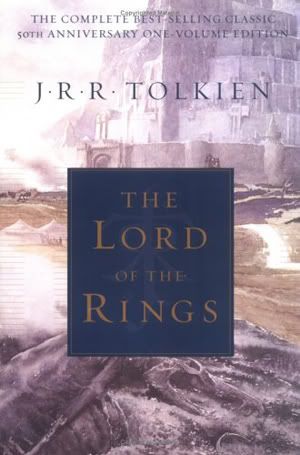
The Lord of the Rings


I'm going to discuss this as one work because that's how it was originally intended and I don't want to write three posts about it.

Anyway, The Lord of the Rings is very dense where The Hobbit was a bit more lean, and it can be taxing to read if you rush through it. It's best read at a leisurely pace over a long time if you're willing to spare it, otherwise it's easy to get lost in the endless descriptions of scenery and references to the kingdoms and people of times past. Even taking my time reading it, mostly with a baseball game on in the background, I occasionally found myself stuck on the same page for a while or realizing that I had gone for a while without actually absorbing what had happened. Still, if you're willing to put the time into it, there's a very interesting tale that's as much a history as a story (check out the hundred pages of appendices for proof). It's not the simpler child-friendly storytelling that The Hobbit was, but it still feels like a big expansion on the same world. In some ways the movies are an easier way to experience the plot, and some of the changes they made make more sense in the modern way stories are told, but everything in the books seems to work in the way Tolkien intended.

One example is the drawn out ending. People criticized the third movie for seeming to end multiple times, although I don't blame them for taking a few minutes to wrap up as much as possible for their twelve hour trilogy. However, that doesn't really compare to the book - there are over 80 pages in between the ring's destruction and the final line. The climax isn't even the last violent conflict in the story. The books really ignore good normal story structure a whole heck of a lot. There are multiple times where the power of the ring's seduction is compromised by people who aren't even affected by it. It's hard to say how much was really contrary to standard practice at the time because I'm not sure how long the standard way has been in place.

Another note of interest is that for a lot of the time, the focus doesn't even seem to be on Frodo and the quest. The first "book" is pretty much all hobbits all the time as they have some mysterious adventures that were actually pretty interesting yet mostly cut from the films, although starting with the second part, more pages are dedicated to Aragorn and humanity's last stand against the hordes of evil than the ring's secret journey towards destruction. It's where a lot of the "epic" feel comes from, and definitely had more influence on the future of fantasy literature than a desperate trek in foreign lands with a traitor for a guide. You get the feel that Tolkien really loved all his characters, and had a special affection for the plight of mortal men, cursed with weak wills and short lifespans. The Lord of the Rings is really about men and their kingdoms in the end, with his fascination with elves covered more in The Silmarillion, which I'm going to attempt to read soon. He's not an easy guy to read, but his dedication to his work is pretty admirable.

Friday, January 9, 2009

The Hobbit


I was born on the fiftieth anniversary of The Hobbit's original publication. That's kind of cool, right? Anyway, I got this seventieth anniversary edition last Christmas complete with the originally intended dust jacket and illustrations by Tokien himself, and getting a nice box set of The Lord of the Rings this Christmas prompted me to actually reread the damn thing. At least one of the previous times I read it a section in the middle was missing from the copy, so taking in the whole story and having it firmer in my mind while del Toro and Jackson prepare to put it on the big screen is nice.

The perspective that Tolkien chose to take with the narration is an interesting one. It's written from the point of view of someone who came along long well after the story happened, telling it as he heard it. There are references to how Hobbits are rarely found nowadays, when they used to be more in the open and friendlier with "big folk". Though in ways the narrator is also omniscient, mentioning frequently what Bilbo is thinking about at various times. Considering that the character later writes the story down himself as an autobiography, and that a discrepency in the first version of the chapter where Bilbo finds the Ring is explained in later works as a lie in his original account, it's not really clear whether we're supposed to be actually reading Bilbo's work or not. Why he would write as if he were a man talking about himself in the third person isn't really apparent, so you really just have to live with it.

Beyond those confusing aspects though, it's a very competent and obviously extremely influential work of fantasy fiction. Bilbo and the other characters move along from unlucky situation to unlucky situation, and as it goes on they gradually go from getting rescued by various helpful outsiders to Bilbo saving himself and the others on his own, and he develops from a timid, normal Hobbit to quite a brave, if slightly unusual hero. It's definitely quicker paced than The Lord of the Rings, and moves through the story swiftly, describing the setting adequately without getting too bogged down. All the different Dwarves seem sort of like a waste of character names, as only a few even seem to have actual distinct personalities and they're generally much more incompetent then we're lead to believe most members of such a proud and industrious race would be. And it could easily have benefited from more Gandalf, but I guess his mysteriousness is part of the fun. There's also quite a bit of singing, pretty much every time they find a place to sit for a few minutes there's a new song with a familiar rhyme scheme. They're not bad poems, but Tolkien probably could have found a better outlet for it. Anyway, The Hobbit is a nice little book but you probably knew that already.

Wednesday, December 3, 2008

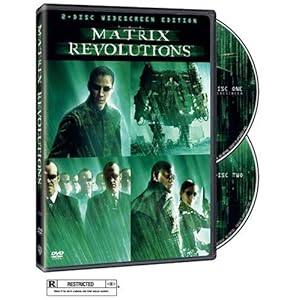
The Matrix Revolutions


Structurally, the finale of the Matrix series seems very odd. The action sequences are bigger than they've ever been, but it seems like the main characters don't actually do a whole hell of a lot. It's not that easy to even come up with a point for the first half hour - they could have easily skipped the whole Trainman part and just had the stuff with the Oracle without much changing. It's like the Wachowski Brothers looked at the script and said, "This needs to be two hours. Let's add a few more scenes in the Matrix, even though this is supposed to be a dichotomy with the second movie or something." That whole part is basically a retread - one last gunfight, one last Trinity jump kick, one more scene with the Merovingian. And that's basically all the main supporting cast gets to do for the rest of the movie.

The main conflict takes place in the real world, as Keanu goes to confront the machines while their army launches an assault on the humans' last city. The big battle largely features people we don't care about - a bunch of nameless goons in poorly-thought-out walking tanks and mildly developed bit characters running around here and there, while Will Smith's wife and a snarky crew race there hoping to help. The whole thing goes on for about twenty minutes, after which this has happened: the robots are still coming. One of the most enjoyable sequences in the movie happens before all this though, on the other ship with Neo and Trinity; where Bane, a human whose mind has been taken over by Smith, attempts to kill his nemesis. It's the only fight in the series that doesn't feature stylish martial arts or science fiction vehicles, just a couple of guys knocking each other around and using anything in arm's reach to gain an advantage. The guy playing Bane has a spot on Smith impression, and while he could have taken business a little smarter than he did, it's an important sequence for showing how Neo's powers have extended beyond the computer simulation they started in.

Unfortunately, the other scenes with Smith aren't so great. He transforms from the cold, brutal, efficient machine he was before into a typical maniacal bad guy, complete with silly menacing laughter. He seems to become more human as he struggles harder to eradicate them as a species. That's probably intentional, but that doesn't make it enjoyable characterization. The final battle between him and Neo is pretty mixed. It has some good moments, and it's interesting to see an over the top anime-style fight put to actual film, but it gets silly pretty often and, again, ends up feeling a bit pointless. The story's resolution is satisfactory for what they built up, although I could have done without the very obvious Christian imagery. The series went a while with Neo being a non-specific savior, it seemed weird for them to suddenly tie him directly to one Religion. In the end, Revolutions wasn't the redemption most were hoping for after Reloaded. They're both pretty watchable sci-fi action, but they don't come close to the simple quality of the original.

Tuesday, December 2, 2008

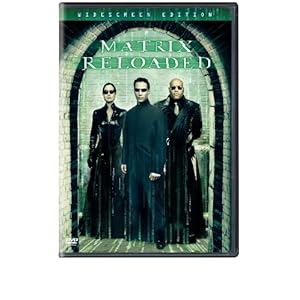
The Matrix Reloaded


I forgot to mention in the last post that the movie has good music too. Solid mix of original orchestral stuff and licensed techno and rock. Anyway, the first sequel had insane expectations that it failed to live up to. I still think it's an entertaining action movie, but it's sadly devoid of a lot of the elements that made the original good. A big problem is that most of the action seems pointless. The sense of fear and tension is missing. The first time around, Agents were scary and powerful, and the good guys were very vulnerable, just doing enough damage to give themselves time to escape. Now, Neo's practically omnipotent, and he treats them like playthings. It's not just him either; Morpheus holds his own against an upgraded model much better than he did against Smith. The danger's just gone. Neo can resurrect people and fly away from any fight, but he sticks around anyway to show off his moves. The ghost twin things chase after our heroes with an SUV and assault rifle; the gunner can fire a burst into any vehicle and cause it to flip over, but he empties hundreds of round at the good guys and nary a scratch. Every time a car crashes and spins through the air, we get treated to a slow motion glory shot from the best angle. The movie spends twelve minutes on the freeway chase, in which the following happens: they get away.

What's funny is that the advanced visual effects have aged worse than the first movie's tricks. The "burly brawl" starts out decently enough, with some interesting choreography as long as you ignore a few obvious stand-ins and the fact that the only thing they seem to be doing is grabbing Neo's shoulder, but as soon as the Smiths really start coming in the fight becomes a slow motion computer-fest as an extremely fake looking Keanu Reeves smacks around a bunch of extremely fake looking Hugo Weavings, accompanied by domino and bowling sound effects. Any time Reeves is replaced by a digital model to do something fantastic, it looks incredibly dated, and they bring the camera way too close to their sad creation. The movie is simply less believable than its predecessor. And outside the fighting, the movie's not that great either. Lots of people like to complain about the rave/sex scene, and for good reason. From when the drums begin to the final shot of Keanu's butt covered strategically by Trinity's leg, about five minutes pass. That's not a terrible amount of time to waste, but in those five minutes, we learn nothing, and the bits of dialogue only reinforces plot details we already knew.

When the movie came out, it was part of a multimedia attack featuring a video game and collection of anime short films. It was cool at the time, but now you see how it weakens The Matrix Reloaded as a film on its own. Why should we care about this dumb kid Neo rescued since the last time we saw him? Why are we just glazing over this apparently important stuff that Will Smith's wife is doing? All the other humans we meet don't really add much to the story. There's a whole fleet of hovercrafts with crews that jack into the Matrix, so how come we met none of them last time around? It kind of seems like the Wachowskis took their tight little science fiction story and wanted to make it more epic. The story works on some level, it just doesn't seem like the logical extension of the first film. I personally didn't mind the philosophizing and blunt exposition that cropped up, but it probably could have been presented more naturally. Also, the cliffhanger was fairly poorly executed. Bane is set up as a villain for the third movie, but at the time Reloaded ended he certainly wasn't memorable enough to get away with revealing him for a split second upside down. There are twists right before the break that really shake up what we believe in an interesting way, but it certainly wasn't a middle on par with some other famous trilogies.

Monday, December 1, 2008

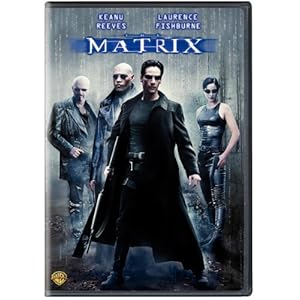
The Matrix


For a while I called The Matrix my favorite movie, and the only reason I don't anymore is that I have a difficult time declaring a favorite anything. It's legacy was marred by the sequels, but watching it again, it still holds up as a really good action movie with a story worth thinking about. The "bullet time" effect shots aren't as impressive as they used to be and the way that they're lingered on seems kind of silly and self-indulgent now, but they don't detract too much from some otherwise excellent fight scenes. Everybody and their dog is complaining about shaky cam filming now, and it's nice to see an American movie again that shows the action in a way that you can actually tell easily what's going on. People don't like stunt doubles anymore, so it seems the compromise is to move the camera around really fast and cut quickly so it's hard to tell if it's really the actor or if he's even doing anything. The Wachowski Brothers on the other hand, say what you will about them ripping off anime and Philosophy 101, decided to take the time to train the main actors enough so they could convincingly pull off some pretty nice martial arts choreography. Nobody's confusing Keanu Reeves with Jet Li or anything, but it works well enough, and they don't go overboard on the wires either, a technique that I've come to dislike.

The movie isn't only good at Kung Fu, either. It has a really good gunfight and a really good chase that's intertwined with a really good science fiction robot monsters thing. It's still tense after all these times I've seen it. The movie's almost ten years old, but it really has aged better than many expected it would. Just the central story, the revelation of what's really going on behind the scenes, the whole crew of the Nebuchadnezzar and their camaraderie, the solid betrayal and interrogation scenes... the movie is just good. I enjoyed the sequels enough, but they're not close to the original's incredible watchability. Neo is the role that Keanu Reeves was born to play, sort of like Arnold with The Terminator. They're not very good actors, but this is a role he just seems to fit perfectly. There's not many people you could buy as a disconnected hacker (there's his woodenness) and as badass savior of humanity (he's good at looking kinda stoic). And this is where Hugo Weaving declared himself as king of the movies for nerds genre, playing a great villain with moments of both unnerving coldness and immense rage. I have no qualms with saying I love this movie.

Saturday, October 25, 2008

Star Wars Episode VI: Return of the Jedi


Return of the Jedi is what made me like Star Wars and will always be special to me, even if I can see how the predecessor was superior as a film. I like stories with good endings, and Jedi puts a nice bow on the series, with the destruction of the bad guys and redemption of the most important character. A lot of people hated the Ewoks, and I can see why, but at least they had the balls to show them getting killed. From the opening on Tatooine to the speeder bike chase to the final battle in three locations, Jedi is packed with some of the series' best action scenes, which are better than a lot of the vastly more technically complex and visually busy ones in the prequels. The emperor's also a much more effective villain when he's sitting in a chair and pressing every button the good guy has than when he's cackling and spinning around with a lightsaber. He really knows how to twist the knife.

To be honest, I'm about tapped out on things to say about the Star Wars movies. Marquand seems like an okay director, but he never really did much else. Seeing all the hanging threads get resolved was good. I really hope the children of the future don't watch all the movies in chronological order, because the prequels really just ruin all the great moments from the sequels, including one of the best twists ever. Will people even really want to show them to their kids, after so many claimed that the new ones raped their childhoods? Maybe not. That catfish guy who flies in the Millenium Falcon with Lando is pretty weird. I now find it weird that Mon Mothma and Admiral Ackbar just show up and act all important in this one. Why haven't we seen or heard of them before? Carrie Fisher used to look really good in a bikini. The redone musical number in Jabba's palace for the special edition is completely moronic. I checked out the original ending on Youtube, and I'm not bothered that they replaced the Yub Nub song. I think I did a pretty good job of padding this out. I'm done now.

Friday, October 24, 2008

Star Wars Episode V: The Empire Strikes Back


Is it a coincidence that what is generally regarded as the best Star Wars film was not directed by George Lucas, and that he doesn't even have a screenplay credit? It does make you think a bit. I'm not a huge fan of cliffhangers myself, but Empire is a good film that improves on the first one in a lot of ways. Without an obvious goal to shoot for, the movie is more about developing the characters than moving them all towards a big climax, and it really succeeds at doing that. Han and Leia's love story is not only 100 times better executed than Anakin and Amidala's, it's one of the best I've seen on film, period. Their bickering is comedy gold, and things like "I know" cement Han as the series' greatest personality. Harrison Ford's the quintessential hero, the perfect balance of blazing his own path and always managing to do what's right, and the sense of humor just adds to his likability. Carrie Fisher brings a respectability to the role that you might not expect from a princess, and holds her own against him quite well. They really have a great chemistry.

Luke's journey gets more interesting too as he begins training as a Jedi. In the first movie he was an idealistic, somewhat naive kid going on an adventure in space. The whole movie is somewhat a coming of age tale, with a nice, happy ending. Empire really shows the darker side of the war, and Luke facing his demons with Yoda, abandoning his training, facing off with Vader and finally learning the horrible truth is the best example of this. Yoda seems like a silly joke of a character at first like Jar Jar or something, but before long he's telling Luke how afraid he's going to be. It's all good stuff. It's not as action-packed as the sequel, but as a piece of film making it really is superior.