It's a shame last night's final episode of this season of Sons of Anarchy was so disappointing, because up until it aired, they were putting together a very successful and at times amazing season that could have ended up as something really special. Coming off a year when a lot of people were questioning the show, to come this close to bringing it all back in grand style and then failing at the last second is just kind of a tragedy. It's not even a bad episode of television in a vacuum - it's well acted and shot as Sons always is, with some powerful scenes and good humor sprinkled throughout. The problem is what the episode represents as far as the rest of the season is concerned - that is, it reveals that the dramatic moments they've been building toward have all been a lie, and the huge stakes they put up never really existed. This seemed like a season that could really be a game changer for the show, and while a few things happen that will definitely have consequences next year, perhaps significant ones, they really don't come close to matching what the show has been hinting at all along.
It sort of felt like this was a back to basics season, after the much delayed and drawn out visit to Ireland (which I enjoyed) last year caused some people to question the show. It's just the sons in Charming again, trying to stay afloat while making some deals, avoiding trouble with other gangs, and trying not to get caught by the cops. Over the course of fourteen episodes, more and more conflicts pile on, small and large, that threaten to cause the club to collapse under its own weight and take everyone connected down with it. They use the technique very effectively, to the point where you worry that there's actually too many conflicts and they won't be able to satisfyingly resolve them all. And that ends up being the case. In the end, I doubt in the long run this will ever end up being seen as much more than a filler season, and you never want an entire year of effort you put into something to end up feeling like that. I can sort of see what Kurt Sutter and his team were going for in doing this, but in the end they teased some inevitable story beats that they weren't quite prepared to deliver on yet, and the result was a letdown.
The main cast was great as always, and their supporting cast was perhaps better than ever, with lots of recognizable faces joining both sides of the law. The show definitely gets a bit over the top with the sex and violence now and again, with a couple issues this season being firefights that are just too big for me to believe the cops wouldn't get wind of them in time and the very casual way the club members seem to regard violence against women. But the show wouldn't be the same without its edge, and I'd rather they lean too far toward over the top than too far in the other direction, and you can't really say there's another show on TV that pulls off action scenes better. And while they shied away from some big moments, the ones that they did have were pretty darn special. I'm definitely watching next year, because the season was mostly very good and I'm really invested in most of the characters and I know they can do better than this and there are plenty of things I know the show will eventually do that I still want to see. But it's definitely hard to shake that feeling of disappointment.
Wednesday, December 7, 2011
Sons of Anarchy - Season 4
Tuesday, October 18, 2011
Drive

The best word to describe Drive might be "specific". It is very specific in its style and the tone it tries to create, and you have to have a very specific mindset to enjoy it appropriately. Because despite what you might assume based on the trailers, it is very much not a typical thriller or car chase movie. I would call it moody and intense before I'd call it exciting, and I would say it's much more plainly violent than action-packed. Tension is built through the careful application of suspense, of waiting for something terrible to happen until it finally does, rather than with fast editing and big special effects. There are all of two scenes in the film that could be called legitimate car chases, and only a brief third one that I would really call action at all. The scenes are masterfully done, telling you a lot about the main character and delivering moments that really quicken the heart-rate, but that's about as far as it goes on that direction. The rest of the movie is more of a character study, broken up by flashes of brutality that let you in on how badly the driver's world gets turned upside down when he steps outside his normal routine.
That driver is played just about perfectly in my opinion by Ryan Gosling, who portrays a nameless, quiet young man who hides his capacity for ruthless self-preservation under a calm, if slightly disquieting demeanor. Gosling, his costar Carey Mulligan, and director Nicolas Winding Refn spent a lot of time trimming out dialogue where they thought the film didn't need it, and the lack of speech is a big part of the creation of the character. He doesn't say much unless he has to, and even then his sentences are as short as possible. It makes him seem unusual, almost like he might have some sort of slight social disorder that prevents him from being normal. It's most pronounced in his scenes with Mulligan, a neighbor with a young son and a husband in prison that he develops feelings for, who also doesn't talk much, making their relationship a very simple and sweet one. Some people have said that Gosling is just too pretty to pull off a tough guy role, but I think his looks actually benefit the character. They help explain why someone might find him charming and attractive even though his conversations consist of little more than a few words and a smile, and they also make the revelation of his darker side more stark and surprising. The rest of the cast supports him very well, most notable Bryan Cranston as his talkative mentor and Albert Brooks as a gangster who's menacing in just how indirect the threats he makes are.
I haven't said much of anything regarding what the movie is actually about. It's pretty simple, really - Gosling does stunts for movies and works in a garage by day, and occasionally works as a getaway driver for crooks at night. He gets involved with a job that goes bad, and failing to extricate himself and his new friends from danger peacefully, is forced to resort to much harsher means of protecting them. It's a basic crime movie plot, which succeeds in driving the action without getting in the way of Refn's direction, which is what made me truly love the film. The film is dripping with style, from the expertly crafted moments of violence to the uniquely slow paced character moments to the memorable way they shoot LA at night to the singularly memorable soundtrack, which features songs that sound like they were produced 25 years ago but match perfectly with the character's identity. Drive is a movie where I can see why a lot of people would not respond well to it, and I can only feel sorry that they aren't able to enjoy a movie that's not quite what they expected. It's so sure of itself in every aspect, and so mesmerizing to watch that even tiny moments that don't completely work are easily forgiven. It's one of the best movies I've ever seen in a theater. That's a significant caveat, but one that shouldn't detract from the message that I thought the film was brilliant, and it's still in my head a couple days after seeing it.
Wednesday, December 1, 2010
Sons of Anarchy - Season 3

Not everyone has seemed to like Sons' third season as much as the first two, but personally I enjoyed it a lot. It probably helped that I ended up watching most of it very quickly, only managing to catch the final two episodes on their original air dates, which helped smooth over any pacing issues. And I can understand where people's problems lie. The show isn't perfect, occasionally having to warp believable plotting or character decisions a bit to accomplish a necessary task in the story in a limited time. And with how rarely I actually enjoy tumultuous romantic relationships in television, I really didn't like how they shoehorned in some of that drama here because they apparently felt it was still necessary. But for the most part I really had fun with this season, and especially its willingness to change location for a while.
It probably takes them at least an episode or two too long to get there, but the most important thing to happen this season was the gang's excursion to Ireland, which has story effects both immediate and otherwise. Obviously they have an immediate reason to be there, but it also becomes clear that the thing that's been hanging over this entire series, what really happened to Jax's father, is heavily influenced by the gang's previous time in the country. The shift in setting for a bit brings a shift in style, including a really cool redone theme song over the opening credits, and I liked how the show spent a bit of time with the main characters out of their element and let us in on how some of the other criminals in its world live. The Irish side of things was interesting enough that I feel like it could even sustain its own show, although probably not one with quite the same audience as Sons of Anarchy.
Ireland is really just part of the season though, as of course there's plenty of other stuff going on constantly for the characters to worry about. It wouldn't be Sons if things weren't just one second away from blowing up in everyone's faces. It culminates in the finale when a ton of plot threads that have built up over most of the show's run come together in one of my favorite sequences on television this year, offering a moment of pure fun and surprise that most shows don't attempt. Season two ended on a major cliffhanger and season three felt like a continuation of it more than its own entity a lot of the time, so I liked that they closed off a lot of things here, while also providing a definite direction for the fourth. I expect them to jump forward in time at least a bit this time, but it's hard to really say with this show. How much time has actually passed? Maybe a year? Not that it really matters, but the characters probably need a few moments to breathe at this point.
Saturday, November 20, 2010
Sons of Anarchy - Season 2

Sons of Anarchy's second season was a nice follow-up to the first. I sort of wish Jax' perceived split with the group at the end had more immediately impact on the story here, but his issues with the club's direction still manage to fester and grow while they boil under the surface, as there's a more immediate threat that the Sons have to deal with. The League of American Nationalists come to town when the President Ethan Zobelle opens a cigar shop on main street. They're a white supremacy group, and along with his second in command Weston played by Henry Rollins, Zobelle looks to use a lot of clout and underhanded tactics to supplant the Sons as the primary gun supplier in the area. He came at the right time with Jax and Clay constantly butting heads, and it's a struggle all season long for the club to deal with this new threat when they aren't united internally.
There's a lot of good character progression this season, as everyone in the club gets their chance to be sympathetic despite their criminal leanings. Some very bad things happen to a few of them, and the way they handle it while maintaining outward appearances is always compelling drama. Katey Sagal's performance is again key, and what she goes through while at the same time her relationship with Tara is evolving is pretty great stuff. It really is all about the characters, even in such a tightly plotted show like this, where five minutes rarely seem to pass without something significant happening. Because even though it would be enjoyable just for the crime drama plot and often impressively done spurts of action and violence, what makes the show awesome is that I honestly like and care about all of the characters. It doesn't matter if they're a grizzled, cantankerous veteran like Piney or a dimwitted but ballsy prospect like Half Sack, the show does a great job of making them into people instead of tools, no matter what evils they're committing to save themselves or just make some money. And by the last couple episodes it's just fantastic moments coming one after the other, with some genuinely thrilling and hard hitting scenes as good as anything from the great dramas that came in the last decade. I wasn't the biggest fan of the note things actually ended on, but if anything that just makes me more eager to catch up with the almost-finished third season.
Sunday, November 7, 2010
Sons of Anarchy - Season 1

Sons was created by Kurt Sutter, one of the producers and more frequent writers on The Shield, which is one of the reasons I decided to make it my next show. I've heard that it started out anywhere from weak to only decent before blossoming as it went on, though to be honest I mostly enjoyed it from the beginning. The first season definitely improved as it built up its story and cast, but that germ of quality was always there. It's about a motorcycle club in Northern California that does illegal gun running to make money and pressures law enforcement to keep them out of trouble and businesses to avoid their home town of Charming to keep it small and away from federal attention. It could have been just another mob show on bikes, but they do enough to keep it unique, and the Hamlet-inspired story makes it a bit deeper than it might seem at first.
It's funny seeing the timing between Sons of Anarchy beginning and Grand Theft Auto: The Lost and Damned coming a bit later, because they must have been developed around the same time. They definitely remind me of each other despite taking place on opposite coasts (theoretically), and leads me to believe they're both fairly accurate depictions of these kind of gangs. I've read how the motorcycle clubs are fundamentally different from other kinds of organized crime in that most organizations use violence as a means to the end of profit, the clubs are violent because it's fun and just happen to make money while they're doing it. The cast of Sons is mostly made up of the various gang members, and they do a really good job of making the group likable while never compromising on them being very bad people. Obvious standouts are Ron Perlman as Clay the club president and Katey Sagal as his wife Gemma, who despite her increasing age still has a power over the men her husband commands. Protagonist Jax is her son and Clay's step kid, vice president of the club who begins to question the gang's methods and beliefs after his son his born and he finds a manifesto written by his long-dead father about how the club went bad. It's a slow burning storyline, but it builds pretty brilliantly over the 13 episodes until the finale, which should have pretty major ramifications that will be interesting to watch play out. Not perfect, but very fun to watch.
Wednesday, June 30, 2010
Blade II

While I was in the middle of reading all those Marvel comics recently, I had the idea to go back and see all of the recent movies that I missed based on characters from that universe. Basically the last decade. Blade II was Marvel's first sequel film, and I ended up liking it more than I anticipated, mostly thanks to the strong visual sense of director Guillermo del Toro. I could take or leave most elements of David Goyer's plot and the new characters (except the vampire with the wrap-around mustache played by Ron Perlman, who's awesome regardless of how stupid his role is), but it was still an entertaining, gory action movie. Boiled down, there's a new strain of vampire that feeds on its own kin, and they decide to team up with Blade to find a way to stop them before they take over the world. But just in case you're wondering, things aren't what they seem.
The movie's success rides a bit on whether you like the new super vampires. The only reliable way to kill them is exposure to sunlight, which means not many scenes of Wesley stabbing dudes in the chest and them exploding after the plot begins. There's still some pretty damn competent fight scenes, they just tend to all end in the same way. The bad guys have this weird sideways opening jaw thing that's pretty grotesque, and the film definitely revels in scenes where they get chopped up and dissected. It's not really disturbing though, it's too far separated from human anatomy to cause revulsion and just results in some interesting practical effect stuff. The plot takes some predictable turns - he gets betrayed, he gets hooked up to a machine that drains his blood, he kills a lot of guys... and then it's over. There were a few issues here and there, like some truly dreadful CGI that was supposed to make certain shots especially impressive but eight years later just sucks out all the believability, and there's a pointless flourish at the end that thinks it's a lot more clever than it is. Blade leaves a vampire alive at the beginning, and then he shows up again in the final scene so Blade can remind the audience of the connection and then kill him. But what was the point of that? Did Blade know they were making a movie about him and wanted a callback at the end? What if that vampire drained and killed like three people since he let him go? Pretty dumb! But I enjoyed this movie about as much as the original.
Tuesday, May 18, 2010
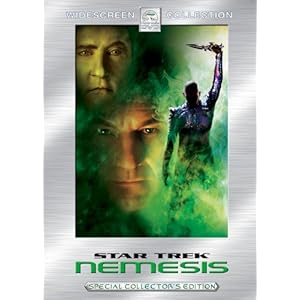
Star Trek: Nemesis

There's at least one thing Nemesis has over Insurrection - a sense of danger and excitement that at least makes it seem more like a science fiction movie than two hours of nothing. A lot of what it does is pretty dumb on further reflection, but it's got that being-a-movie thing down pretty well. It's a pretty slick movie too, benefiting from the relatively modern technology a fair bit. Like the recent Trek film, it features Romulans heavily, although they aren't exactly the bad guys this time, though in a way they're responsible for the villain. For some reason they're the least capable slave drivers of all time, having forced an entire species called the Remans to work their mines for them, but when a clone of Picard that they abandon plans for manages to start an uprising, they're able to create one of the most advanced starships I've ever seen in the Trek universe, built to stand up to the Enterprise with ease. Not sure how they managed that in captivity, but they forcibly take over and pursue Picard, needing his DNA to save bad-Picard from a degenerative condition.
And I mean, that's the movie I guess. There's some stuff with Data, and he becomes pretty important to the movie's resolution, mostly because Brent Spiner and his buddy wrote the movie. There's some solid action, including big standoffs in space and a number of phaser battles, although they seemed to take a fair bit from the Star Wars films, especially the Remans' inability to hid the broad side of a barn. Ron Perlman plays the bad guy's second in command, recognizable only by his gruff voice under all that alien makeup, and I enjoyed his role despite the pointlessness of it in the last third of the film. There's a fair amount of ripping off of the second Trek movie, and it doesn't really do anything as well as that movie did. I'd love to say the ending affected me, but it honestly didn't for some reason. Maybe it's because the tiniest bit of planning would have prevented the tragedy of some of the events, maybe it's because nothing the movie does to set up its grand moments is actually justified by the story in any way. I don't know. It's a stupid movie, made at least a little watchable by its flashier elements.
Sunday, November 1, 2009
Alien Resurrection

Joss Whedon is one of my favorite writers of speculative fiction. I haven't seen much of Jean-Pierre Jeunet's work, but he did direct Amélie, one of my favorite films of the decade. So what went wrong here? I'm not quite sure. I feel like there's the core of a solid Alien movie in here - not as good as the first two, but still passable. Cloning Ripley, while resulting in a plot development that doesn't actually make sense to me, is a fine way to bring back the character back in a new way and actually advance the time period again, unlike Alien 3 which didn't feel new. The ship of smugglers were a nifty notion, and are pretty much a prototype version of the crew in Firefly. And there are some interesting situations and disturbing scenes that work better than anything in the last movie did. It just doesn't come together into something I'd want to watch again. It might just have been that it was before Whedon really discovered his chops as a screenwriter and Jeunet figured out what kind of movies he really wanted to make. Resurrection ends up being an interesting failure.
Man, I had some momentum until that paragraph break. It was getting kind of long though, it had to be done. Um... Whedon has talked about how it wasn't necessarily changes to the script that he thinks hurt the movie, just that the overall execution of what was written on the page was totally off. And I can sort of see that. There are a lot of lines or exchanges that could have been better with a different actor or just a different way of saying them, and the movie just feels clunky, like the people in charge of different areas just were never in sync. I'm not saying the story they had would have been a good film if these problems were corrected, it's just that it compounds the problem. An awkward and unwieldy film. Some moments totally work, but most of it just doesn't, and I'm confident that the latter half of the Alien quadrilogy can be, and probably should be safely ignored in the future.
Wednesday, January 7, 2009
Hellboy II: The Golden Army

Guillermo del Toro's second stab at the Hellboy series isn't exactly a great film, but it's mostly enjoyable throughout and filled with the same visual inventiveness that was hinted at in smaller doses in Pan's Labyrinth. Whereas the first film felt basically like another super hero movie, albeit a bit of a quirky one, this movie is much more of a straight fantasy. From the background that's explained with stop motion puppets to the incredible makeup (Hellboy himself being among the least impressive) to some larger CG creatures, the movie looks astounding. It's not as technically correct as some bigger films, but just in terms of visual imagination and pulling it off in an interesting way, it's extremely successful and just fun to watch. Besides the special effects, the action scenes are pretty good too. They seem a bit sped up in places, but the villain has a cool style and whenever he's wrecking peoples' shit it's entertaining.
Not everything else about the movie is as good, though. The story actually has quite a few niggling problems. The main cast is solid, especially Ron Perlman as the titular character. He and Selma Blair are okay together, and it's nice that their relationship has advanced in a human way, but the problems they face are a bit too sitcom-esque at first. And Abe's character arc also comes off a bit hokey. Near the beginning Hellboy's existence is revealed to the world, and the negative reaction from the public seems forced and unnecessary to the story. It's really not a very subtle script, but the end result is generally pretty watchable. Doug Jones' dedication to getting into tons of makeup to play multiple parts is admirable as always, though. Seth MacFarlane makes a surprising appearance voicing a new, slightly goofy German character, that ends up being pretty likable. Hellboy II's the kind of movie that's best enjoyed when not taken completely seriously.
Tuesday, November 25, 2008
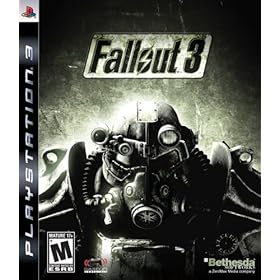
Fallout 3

I haven't played any of the other Fallout games, but from what I can tell, Bethesda's first stab at the series takes the skill system and trademark sense of humor and transplants them effectively into Oblivion's engine. Coming out two and a half years later Fallout 3 isn't the big step forward I was hoping for, but it's still a great game when you play it. It still has some of Oblivion's glitches and awkward moments, but it does do a fair amount of things better. Characters look better, and there's way more variety in the voice actors. The speech and bartering system relies on numbers and chance instead of a conceptually moronic mini-game. There are little additions like an indicator if a container is empty so less time is spent searching for items. And they finally got the auto-leveling enemies thing right, in a best-of-both-worlds sort of scenario. The way it seems to work, wandering around outside will always produce enemies at a similar skill level to you, so it doesn't seem too easy. But once you've been to a specific location like an underground tunnel, the enemies will always stay at the level they were when you first went there, so going back for whatever reason lets you take care of them easily without having to worry about constantly getting beaten. It's a pretty good system, maybe the best that can be done with this sort of extremely non-linear game.
On that end, Fallout is in ways better and worse than the Elder Scrolls games. Doing only the side quests that naturally came my way while playing, I beat the main story in about 22 hours. I don't think that's much less than Oblivion, and Fallout's story is certainly more interesting. They really did a lot with the humor, making it a bit more enjoyable to just be in the world, and it has a number of quests that are more creative than anything else I've seen them do. Tranquility Lane springs instantly to mind. And there's a bit more freedom in proceeding through it, with multiple ways to complete certain objectives and a lot of options in the dialogue that make it replayable. But the whole world around the main quest is a bit more barren, and that's the part of Oblivion I liked the most. I know there's a number of significant things I haven't done yet, but it seemed like fun diversions just weren't as easy to stumble across. Only the Wasteland Survival Guide came close to having the depth of one of the Elder Scrolls' factions, and it's not even just the quests - wandering around a deserted wasteland and ramshackle towns built on destroyed pieces of the old civilization is a bit more depressing and purposefully empty than an intact fantasy empire. Fallout 3 is designed to be more focused and narrow than Oblivion, and I liked that game for its breadth.
Not that Fallout isn't very good at what it does. There was some concern about the combat system, but I think it works pretty well. The V.A.T.S. system to target specific weakpoints is useful, although I tended to go for the head pretty exclusively. The normal aiming isn't very good for a shooter, but it's functional enough that you don't feel helpless when you can't use V.A.T.S. and it can actually be satisfying to use it by itself. I didn't try too much melee combat, but it seemed to function a lot like Oblivion's without any blocking. The karma system seems a little deeper than the average good-or-evil gimmick more and more games seem to be having, and unlike most of the others, it actually gives a compelling reason to be neutral. The writing is better than some of their earlier work, and overall it's a bit more polished as a product. I've been comparing the game to Oblivion for the entire review, but in the end it's probably worth checking out if you're interested, even if you've never touched an Elder Scrolls game.
Sunday, January 27, 2008
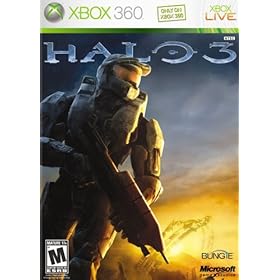
Halo 3

Halo: still pretty good. The third installment continues the series tradition of good shooting, incremental gameplay improvements, and an interesting story for a shooter. Unfortunately, it also keeps alive some of its faults, like some repetitive tasks and environments, minor steps backward in some areas and the continued inclusion of the highly uninteresting Flood. I get the desire to mix things up so you're not fighting Covenant the whole time, but seriously, the Flood is boring. I like the story aspect of the Elites changing sides, but unfortunately that takes away the most interesting opponent in the series. Brutes are tough but not as smart, making combat a little less strategic in some cases. Having the Arbiter around most of the time is cool though, it's nice to have an ally who's actually worth something. I didn't like how you're arbitrarily limited to two grenades of each type now. Yeah, now there are four types so you still have a max of eight, but when you don't find the last kind until late in the game, you're left holding six most of the time and wondering why you can't fit a couple more normal ones in the same suit.
In general though, Halo is still a really good time. They expanded the vehicle sections, adding multiple new types to play around with. Some of the best fun in the series comes from cruising around, pursuing enemies on large battlefields with explosions happening everywhere. There are new and returning weapons also, and I think they struck a pretty good balance. The game's a little short, but that's okay, I prefer that to pointlessly padding out levels with infinitely copy-pasted corridors. I mentioned repetition, but that's mostly held in check except for the aforementioned Flood and the gigantic walking fortresses known as Scarabs - you encounter them a little too often, although taking one down is pretty cool. Graphically, it's not as flashy as some other current generation games, but it looks nice. There are some really great looking lighting effects, at least. The music is as interesting as ever, and voice acting is decent, although I never like changing voice actors between sequels (is Julie Benz too famous now thanks to Dexter?) and some of the dialogue tries to be cool but is just a little silly. The story is suitably epic and really pretty detailed if you get down into it, and they do a nice job of concluding the trilogy, although I wish there was a real end instead of an obvious sequel hint. Guys, you can make a new story without leaving ends untied. Multiplayer is pretty cool, although I don't really care about online play that much. I don't love Halo, but it's a very solid, entertaining series.
Tuesday, January 8, 2008
Halo 2

Halo 2 is basically a repeat of the first game; a fun, solid, but probably a little overrated shooter, which fixes some of the original's problems but has some of its own. It seems like there's a step backward for every step forward. You now have the ability to dual wield certain weapons, but doing so prevents you from using melee attacks without dropping the second gun or grenades or grenades at all, limiting your diversity in combat. Dual wielding allows for some interesting new strategies and combinations, but overall most of the weapons are less effective that they were before. I liked messing up dudes with the energy sword, but I'm a little annoyed by the Covenant's insistence on their own technological superiority when all of their gear manages to both have finite ammo AND overheat rather quickly. The only thing that seems advanced about it is its impressive curvy and purple design. You can also play around with more vehicles, which are usually pretty fun, although those sections tend to be a little easy.
My biggest complaint about the first game was the tedious, repetitive level design, and they made good strides forward correcting that, with some interesting structures and well-put together set pieces. It tended to limit the scope of some levels, and especially later on it feels a bit like a boring old corridor shooter instead of having the interesting depth of a large, wide-open war zone, and they couldn't seem to help repeating the same level pieces over and over once you get deeper into the new Halo installation, but I thought they did a decent job overall. They elaborate much more on the story, showing things from the Covenant's point of view, and you actually spend a significant amount of time playing as one of them instead of the Chief, though there isn't much difference in gameplay besides the interesting cloaking ability and increased difficulty in discerning friend from foe. Most people hated the cliffhanger ending, and I can definitely see why, as it seems like they're setting up the last mission instead of the sequel, but I knew that was coming so I wasn't bothered. A huge part of Halo's love comes from the multiplayer. I've spent some time with it in the past, and it's enjoyable, I just never like playing deathmatches as much as other people do. Halo's not as fresh as its prequel was for the genre but it's still a good entry in it.