I've built up a huge backlog of movies I haven't talked about yet. This post doesn't even cover all of them.
Blowup
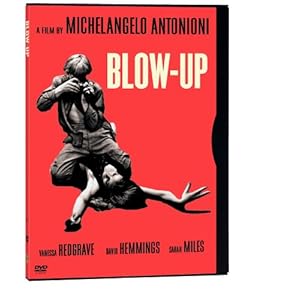
Italian director Michelangelo Antonioni made his transition to English-language films with this, a combination of a look at the culture of "swinging London" in the 60s and a The Conversation-esque plot about a photographer who slowly realized that he accidentally shot evidence of a murder. That part of the movie takes a long time to really get going though, and a lot of the focus is definitely on just seeing what this guy's life of shooting models and buying strange antiques for his apartment is like. Much like the director's previous L'Avventura, I appreciated the visual style of the film more than I enjoyed watching it. It's also notable for being one of the movies involved in the industry's transition from a restrictive code to a rating system, which is something.
A Hard Day's Night
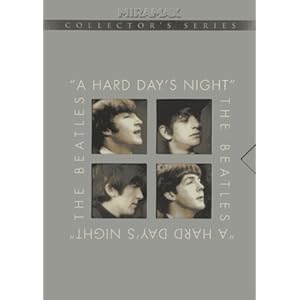
This is sort of an early prototype of a mockumentary. It stars the members of The Beatles as themselves, on the road during a tour. They crack jokes, use a variety of techniques to escape from their ravenous hordes of young female fans, and pretend they're playing a lot of the songs from the album of the same name. There's not much substance to the movie, it's just a fun little romp with some talented guys at the peak of their popularity. Of course, they're more talented musicians than they are actors, but none of them are bad enough to really make the movie hard to watch, and they're not exactly going for Shakespeare here.
Nosferatu
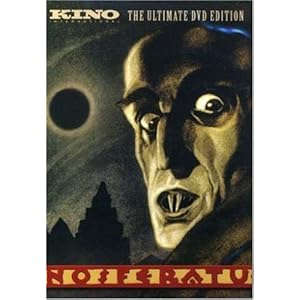
F.W. Murneau cements his status as my favorite silent drama director with this, an unofficial adaptation of Dracula set in his native Germany that is easily the earliest example of actual horrific imagery in a film that I can think of. Max Schreck as Count Orlok in full vampire makeup is a truly creepy and interesting sight. The movie drags a bit in places, but mostly it's 80 minutes of remarkably watchable 1920s filmmaking. I don't know how much of the plot was taken directly from Dracula, but it's a cool little story.
Raise the Red Lantern
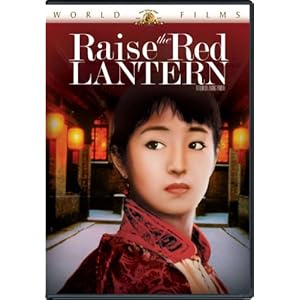
Zhang Yimou has been known recently for directing historical action movies like Hero, but before that he worked on period dramas. I disliked To Live when I saw it in school, but I wonder if I might appreciate it more now, because I really loved Raise the Red Lantern. Anytime a movie can get banned in its own country for how it depicts life, it will probably be interesting. It stars Gong Li as a young woman who is forced to leave school and become a wealthy man's fourth mistress when her father dies. It made me once again glad that I wasn't born as a woman more than forty years ago. The film's strongest asset is its cinematography, which makes brilliant use of color throughout, and helps make the interrelations of the several wives of one man fascinating. Just a gorgeous movie, and Li is fantastic in it.
Rebel Without a Cause
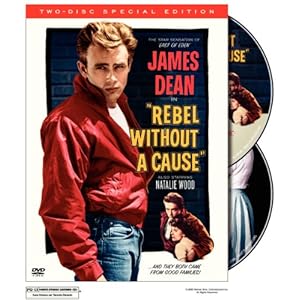
I didn't like this very much. I guess it does say something about teen angst, but that's just not a subject that really interests me, and the rest of the movie isn't entertaining enough to make up for it. James Dean did have a real screen presence, but he honestly wasn't the best actor in the world, either. I don't know. I found myself unaffected by the whole thing. Some good scenes, but it never came together in a way I appreciated. It's a real tragedy how none of the three leads lived to see 45, though.
Sophie's Choice
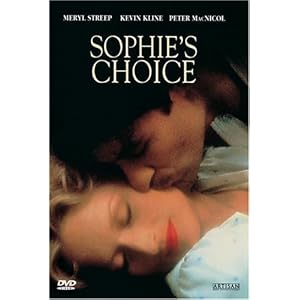
At times this movie felt too obsessed with being a tragedy, like it got in its own way somehow. I liked all three central performances a lot, especially Meryl Streep's, who had to do some of the most emotionally devastating scenes any actress would ever have to do, on top of having to do some of them in a language besides her own. Really amazing work. A lot of the horrible stuff in this movie is self-inflicted though, and I wasn't quite sure it justified itself in these instances. The only thing worse than an unearned happy ending is an unearned sad one. Again, I mostly thought it was good, I just had a few problems with it.
Swing Time
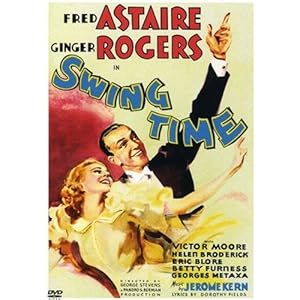
Fred Astaire and Ginger Rogers made a bunch of musicals together, and this is the most famous. I felt like the industry still hadn't fully figured out how to do the genre yet though, less than a decade after the first talkie. There's some really good dancing and a couple of the songs are good, there's just something a little awkward about the whole production. It also has one of those really annoying romantic comedy plots that can only continue going forward because one or more characters refuses to actually discuss the situation honestly for no real reason. I find that stuff to be less realistic than movies about aliens or something, if they're written better.
Yankee Doodle Dandy
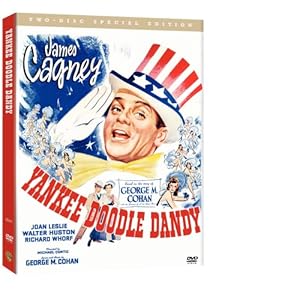
America: the Musical. Yankee Doodle Dandy is a combination biopic and musical that does both pretty well. Dandy was Michael Curtiz' film directly prior to Casablanca, and while it doesn't reach the heights of one of the best movies ever made, it's still worth watching. James Cagney was known for playing tough guys, but here he does brilliant work playing George M. Cohan, a man who made the theater his life and composed a number of famous patriotic songs like "You're a Grand Old Flag" and "Over There". The movie was timed perfectly, coming out only a few months after the attack on Pearl Harbor, and reminding people how cool America is I guess. Lots of solid song and dance numbers, and it's a nice little story about one of the country's musical heroes.





AAAAAGGGHHHH
17 years ago


