These were expiring, so I watched them. Yep.
Ball of Fire

A screwball comedy directed by Howard Hawks, featuring Gary Cooper playing off type as an awkward, stuffy intellectual and Barbara Stanwyck playing very much on type as a club singer and mob boss' girlfriend who helps him and his fellow encyclopedia writers come out of their shells. Ball of Fire is mostly an enjoyable movie, though there's definitely something very weird about it. The professors are all pretty likable guys, but it's just a little uncomfortable seeing them all fawn over a young and attractive woman, even if it's innocent. The shift from her using them to avoid the police to actually getting romantically interested in Cooper is pretty abrupt as well. As I said though, it's mostly a fun movie.
Deathtrap

Sidney Lumet movies are often based on plays or feel like they could be, taking place in a small number of locations and not being particularly visually flashy. That's definitely the case with Deathtrap, though I think the entire thing being limited mostly to a single house works in its favor. Deathtrap was a play about writing a play based on a murder, and the fact that the movie version isn't a play itself does do a little to remove some of the inherent cleverness of the structure. But the story still works, and the performances by Michael Caine and Christopher Reeve are really good. I can't say as much about the other characters, but it's both an amusing and incredibly tense movie at times, with some great twists and surprises.
The Life and Death of Colonel Blimp

It was a big surprise for this movie to be in color, though apparently that was a thing for its makers Powell and Pressburger while most directors from the 40s were still working in black and white. The movie is based on British cartoons about a blowhard English military man, though it tells an original story about how such a man might come to be like that over a lifetime of fighting in wars. Roger Livesey and Anton Walbrook give a pair of great performances, first as young soldiers, then as middle aged veterans of the first World War, then as old relics at the beginning of the second. There's also an amusing bit with Deborah Kerr playing three different women who all look the same at various points in his life. The movie is concerned with many things, but the main one I thook away from it is how a lifetime of experiences can affect a person and make them who they are. A great and refreshingly civil war movie.
Odd Man Out

Carol Reed's The Third Man is a classic of the noir genre, though I can't say I enjoyed Odd Man Out nearly as much. It has an interesting subject, with James Mason playing an IRA leader who gets wounded and stranded in the middle of Belfast (though the film is not actually explicit about either of those references). There are some interesting moments sprinkled throughout, though I was mostly kind of bored while I was watching it, which shouldn't happen with a movie about hiding from the police and troublesome politics. I didn't think it was bad, I was just rarely actively intrigued by what was happening, and with a genre that thrives on intrigue, it was disappointing.
Monday, January 16, 2012
Movie Update 36
Thursday, July 21, 2011
Movie Update 11B
I couldn't fit all the labels I wanted into one post yesterday, so here's even more movies. The label issue was so severe I couldn't even neatly divide the films into themes! Labels!
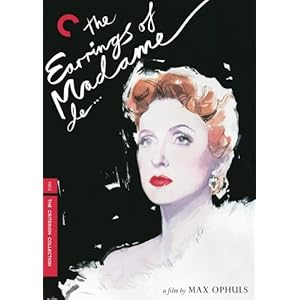
The Earrings of Madame de...

A fancy French movie about fancy French people. There's nothing really wrong with this movie, I just didn't find a whole lot to love about it. The cast is solid, including Vittorio De Sica as an Italian man that the leading lady falls in love with, who I know better as the director of The Bicycle Thief. This movie doesn't really have the power of that one, but tells the story of a married woman who becomes attached to a pair of earrings she sold after her lover buys them back for her. My favorite part was just the way the film played with the idea of never actually giving you her name. Otherwise, it's a nice little romantic drama, mostly worth the time it takes to watch.
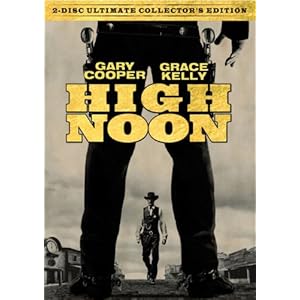
High Noon

High Noon is sort of the 24 of the 1950s. I liked it a lot more than I really expected. It has a similar problem to the last Gary Cooper movie I saw, where he was too old for his love interest, in this case Grace Kelly before Alfred Hitchcock got to her. In this case it didn't really hurt the film though, because his character is more likable and the story isn't about their relationship. It's about a lawman ready to retire, but dragged back into conflict before he can, as the whole town seems to turn against him during his darkest hour. The film is mostly in real time, as everyone anticipates the arrival by train of a criminal he had originally put away, apparently back for vengeance. He tries to rustle up a posse, but doesn't get the support he anticipated, and there's a fantastic sense of concern and dread as he runs out of options while the clock slowly ticks towards his likely demise. It's a pretty realistic movie, with an ending that has heroism without being too dramatic or fantastic. One of my favorite Westerns.
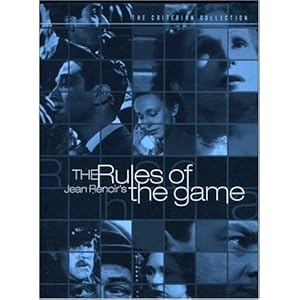
The Rules of the Game

I'm not sure anyone from the 30s had a better idea of how to shoot a movie than Jean Renoir. This is another fancy French movie about fancy French movie, although it's one I found more to latch onto in. It's an ensemble piece about the fickle lives of aristocrats, as they bounce from lover to lover without realizing the pain they cause. Renoir himself is among the cast, and they do a solid job of quickly selling their relationships and setting up the entanglements that eventually lead to the surprising and effective ending. Pretty darn good movie.
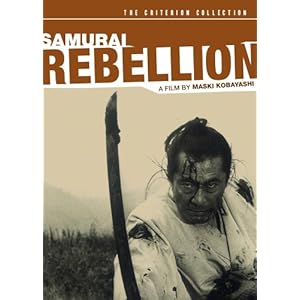
Samurai Rebellion

This one just seemed a bit too slow to me. I love Masaki Kobayashi's work (unfortunately I'm already almost out of films he made that are actually available), but Rebellion wasn't quite up to the power of Harakiri or the breathless scope of The Human Condition. It actually probably has roughly the same pace as Harakiri, and might even be quicker. But that film was coated in a pervasive, almost oppressive tension that seemed likely to snap into chaos at any second, and while Rebellion has a sad story, there just isn't that feeling. Toshiro Mifune was probably getting a bit old at that point to carry a whole movie on charisma alone (though he still handles the swordplay well), and Tatsuya Nakadi does a lot with his few scenes, but the character he plays is intentionally pretty neutral. It's a solid, no-nonsense samurai film, one that could have benefited from being pushed a little in either a darker or more fun direction.
Thursday, June 23, 2011
Movie Update 8
I watched half of these in a single day when they were about to expire from Netflix streaming. That was pretty wacky.
L'Avventura

Although I didn't particularly enjoy watching it, this was a pretty interesting film. The focus on the actual composition of the images a lot of the time seems unusual for the period, and the way the plot changes away from what you'd expect it to do over time does as well. A woman goes missing during a get together, and her fiancee and friend grow close as they look for her. Monica Vitti is certainly a beautiful woman, and she manages to keep the movie from getting boring mostly by herself. Apparently Italy can do low-key stuff after all.
Cleo from 5 to 7

It starts out pretty great with an overhead color shot of a tarot reading, but I thought the rest of it didn't quite live up to that inventive beginning. Still, a pretty good movie despite the lack of real action. Cleo is a singer who is afraid that upcoming test results will show she has cancer, and the film follows about an hour and a half of her life in real time as she meets with a few people and deals with the possibilities of the future. Very simple, but mostly watchable nonetheless.
Jules and Jim

A French film about a friendship between a man from France and one from Germany, which is disrupted and poisoned over many years by a woman who enters their lives and turns out to be a pretty significant nutcase. It's amazing how generally enjoyable the movie is to watch despite the amazing amount of dysfunction that's put on screen. It's almost hard to believe that the book it's based on was at least somewhat autobiographical. But still, a well acted, interesting film. Francois Truffaut plays around with a lot of different techniques, and his use of things like freeze framing is pretty innovative. The kind of movie that makes you glad foreign cinema exists, because I have trouble imagining it getting made here.
The Kid

The first full length film directed by Charlie Chaplin is a pretty enjoyable one, though I don't think it had the skill of some of his later work, and there just aren't a ton of comedic set pieces of much note. The tramp finds an abandoned baby in an alley, and instead of doing the proper thing, he ends up trying to raise it himself. Years later he uses the kid as an accomplice to commit crimes for petty cash, and forces him to fight another child. Later when the proper authorities try to return the child to its mother, he kidnaps him and tries to keep him from his biological family. I know it's a comedy and there's a very sweet, loving relationship between the tramp and the kid, but hey, that's what happens in the movie.
King Kong

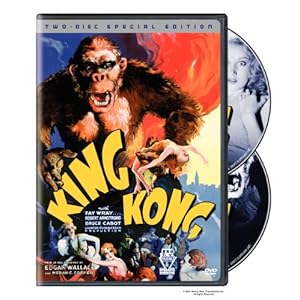
The original film, which it turns out Peter Jackson was quite faithful to. After seeing that this seems like kind of a student project summarizing a bigger story, but it is pretty noteworthy for the effects, which must have been pretty impressive in 1933, because I haven't seen much from a long period after that that looks significantly better. The combination of stop motion and compositing has a lot of obvious flaws today, but still manages to sell the dangerous adventure everyone goes on pretty well. There are some aspects of the movie that it could do without, like casual sexism and racism, but it's pretty darn watchable for when it was made. And the ending really is pretty affecting, even if Jack Black managed to deliver the final line better than the first guy.
Love in the Afternoon

The first film from Billy Wilder I didn't truly like. I mean, it's not bad at all, and it's remarkably successful for what it is. The problem is that it's a romantic comedy that's not very funny or romantic. When it goes for laughs it usually works, but the film is mostly preoccupied with the central relationship between Audrey Hepburn (who I can confirm is gorgeous but probably as responsible as anyone for the trend towards ultra-skinny women) and Gary Cooper. The problem is I don't know why I should be rooting for them. Cooper seems like a fine actor, but he's too old here for me to understand why she's attracted to him, and his personality doesn't help at all, with him being an aloof womanizer for the vast majority of the picture. Just kind of a weird movie.
Pickpocket

Not quite as good as A Man Escaped, but Robert Bresson shows a lot of the same skill at creating a ton of tension and excitement out of very quiet protagonists performing perilous yet otherwise simple tasks. Several of these movies were kind of existential, and this definitely fits that. There's a certain dryness to the movie, but it lends it an air of realism that works well with the simple plot. A very well put together film, with a few lasting images throughout.
Rebecca

This is pretty easily the earliest Alfred Hitchcock movie I've seen, and for some reason my expectations weren't that high. In some ways, it's very much a product of its time. But I ended up loving it about as much as my other favorite Hitchcock films. The story takes a while but eventually goes to some pretty unexpected and shocking places, Judith Anderson is totally creepy, and George Sanders is as always amazingly slimy. Really good stuff.