Showing posts with label James Woods. Show all posts

Friday, October 14, 2011

Movie Update 23

Jeez, why wouldn't I want to write about these movies? They're all pretty quick, with the longest only lasting 91 minutes.

Black Girl
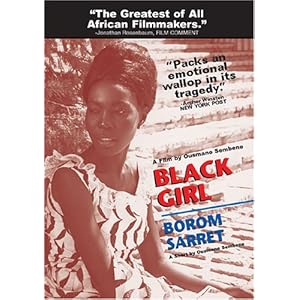

A movie in French about a girl from Senegal who is hired to be a nanny for a white family, but when she is brought back to their regular home in France, realizes how poorly they think of her. Her job changes to a more demanding and less interesting one, and the mother kind of treats her like crap, constantly demanding things of her, berating her, and not even letting her wear nice clothes in the house. Eventually she gets fed up with the treatment and takes drastic action. It's less than an hour, and the plot is slight even for that time, as a lot of it is just shots of her cleaning or cooking while narrating how much her life sucks. But there's something likable about the film, in the simple way it was shot, that makes it work.

Earth
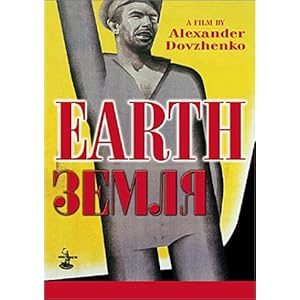

Another silent propaganda film from Russia like The Battleship Potemkin, though less plot-driven and more focused on creating mood and imagery. It's very dreamlike, and a unique viewing experience, though one that I was mostly bored by. I can't really see this movie succeeding in actually getting a lot of people passionate about its message. It's certainly an important film in terms of developing styles other people would borrow from, but there's not much else I took from it.

Videodrome


A bizarre little horror film by David Cronenberg, starring James Woods as the executive in charge of a small TV station that specializes in sex and violence. He is shown a pirated program that he becomes fascinated by, and is drawn into its world before realizing the true intent behind its creation, which is strange and sinister. I wasn't really scared much by the movie, but more intrigued by its practical effects, which are still effectively gross today, and by its weird, twisty plot. Based on limited experience, I don't think I like young body horror Cronenberg as much as older psychological Cronenberg, but it's an enjoyable movie anyway.

Viridiana
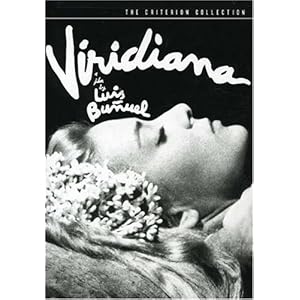

It's interesting to see the kind of movies that would get banned 40 or 50 years ago and wouldn't cause much of a hoopla at all these days. There's definitely some messed up things that happen in Viridiana, but the way they're portrayed is pretty subtle, or at least non-graphic enough that it would be hard to justify censoring it. It's about a woman who's about to become a nun, but gets drawn away from that life and eventually takes in several disabled beggars to help with an estate. You can read an anti-altruism message into it, but I'm not sure if that's really an agenda Luis Buñuel has or just something that happens in the movie. Like many black and white movies from the 60s, it's also really nice to look at.

Bonus Movie! Un Chien Andalou
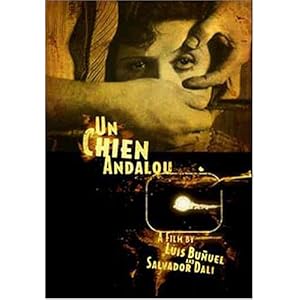

Buñuel's first and probably most famous film is this, a short he wrote with Salvador Dali and directed. I had already seen the famous eye scene before, but this was my first time watching the whole thing. It's incredibly watchable for a surreal silent movie made with the intent of not having any of it actually mean something, with a big part of it probably being that you only have to sit through fifteen minutes of it. Lots of great off-the-wall images and cute visual trickery strings together a bunch of nonsense scenes with little connecting them beyond title cards that probably hinder understanding more than they help it. Definitely something anyone who's into film history should see.

Tuesday, May 10, 2011

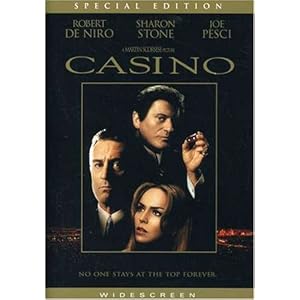
Casino


Casino seems to be generally viewed as a rehash of Goodfellas, with director Martin Scorsese revisiting similar ideas with a similar cast, and not doing much to set it apart from his most recent gritty classic. Casino is basically just the same movie with more of everything - more violence, more swearing, a longer running time. So is it wrong that I actually like Casino more than Goodfellas? Yes, it's a somewhat excessive movie in some places, but isn't that the point? It's a movie about excess. It's based on the true story of America's most notorious criminal network during their most overtly violent and influential period operating in one of the world's biggest stages for pure capitalism. Las Vegas is bringing in obscene amounts of money, a ton of it is being stolen right off the top, and people got murdered left and right to keep them quiet. It would be disappointing if the movie wasn't over the top. And I enjoyed the hell out of it for most of its nearly three hours of running time.

The story stars and is heavily narrated by Robert De Niro and Joe Pesci playing mob guys from Chicago. De Niro is Ace, a Jewish money guy who gets tapped by the family to run one of their casinos, and Pesci is Nicky, an enforcer who's there to back him up. Both the actors and the characters have a lot of history together, and the movie returns to the unstable relationship they had in Raging Bull, though this time it's Pesci who's the crazy one. The Chicago accent prevents him from seeming like a total rip-off of his own character in Goodfellas, and if anything he's even more out there with his short temper and tendency towards extreme violence. Lots of people end up getting stuck in holes in the desert, and he's responsible for a lot of them. As time marches on and the feds keep building their case against them, they struggle to avoid killing each other as they continually blame each other for all the problems they have. Compounding the issue is Sharon Stone as Ace's wife, an out-of-control hustler/junkie who is even more manic that Pesci, those less prone to stabbing you for messing with her. She has a sleazy ex-boyfriend played by James Woods who does a lot to sell his scumbag nature without much screen time, and he instigates a lot of their marital troubles. Mob movie regular Frank Vincent is also around as one of Nicky's guys, and he does a solid job.

The three central figures are interesting, and while I eventually got kind of sick of Stone's overwrought performance, the combination of business and personal problems that pile on top of them over the course of the story add up to a hectic, exciting, wild ride. And it might be a pretty good movie with just that, but this is Martin Scorsese we're talking about, and this is probably the single greatest display of style and invention I've seen from him. There are long tracking shots that mix with extremely quick cuts that are narrated over by two different characters and all sorts of little touches and interesting moves that you don't really see anywhere else, and they all add up to a film that is almost too fun to watch. The soundtrack is filled with tons of period music that both tells you where you are in history and fits perfectly with the action, and it's hard to go five minutes at any time without seeing something new. It might be style over substance, but it also might be one of the best examples of that ever put on film. I like mob stories because they make you feel things you shouldn't for very bad people, and Casino does that almost as well as any movie you can name. I wasn't blown away by Goodfellas, and while I can see why people would be and why they would prefer it to Casino, I just can't agree with sentiment. The Godfather is the best crime movie ever made, and Casino is one of the most entertaining. The violence is hard to watch like violence should be. The family drama is painful like family drama should be. It's just a visceral, thrilling experience the whole way.

Friday, January 7, 2011

Once Upon a Time in America


Once Upon a Time is Italian filmmaker Sergio Leone's final film, and one of his only works that isn't a western. It is beautiful, violent, poignant, and disturbing all at once, and it would be an easy contender for best crime epic of all time if it weren't for those pesky Godfather movies. It tells the story of a Jewish gang of bootleggers in Prohibition-era New York, focusing on Robert De Niro's character of Noodles, and James Woods' Max to a lesser extent. It starts in the middle of Noodles' life, with his friends getting killed and him barely escaping himself. It then jumps to him as a much older man, revisiting his old haunts after something has called him back, which serves as a way to frame the events that came before. It cuts back to the gang as a group of kids, including a very young Jennifer Connelly as the kid version of a dancer he falls in love with, and then shows the events that eventually lead to the film's beginning.

I make specific mention of the interesting structure of the story's timeline because of how thoroughly it was butchered in the original American release of the movie. The film in its intended form is almost excessively long at about three hours and forty minutes, but it uses all of that time for a reason. I can understand why a studio would want to cut down a movie's length for commercial considerations, and a few minutes here or there is usually acceptable. But they basically cut this movie in half, including a lot of the childhood scenes which are vital to setting up the character relationships that would carry the entire emotional weight of the story, and on top of that reedited the whole thing into chronological order, removing something that was important to the way the whole thing was told. At that point you're not even watching the same film anymore. I haven't actually seen this cut so I can't really comment on it, but all accounts are it takes a good piece of work and destroys it, and Leone was so hurt by what they did that he never made another movie before he died. It's really a shame, because America is probably his masterpiece and the original release prevented it from ever really taking off, preventing it from being put in the annals along with The Godfather and Goodfellas and turning it into something film buffs whisper about.

But I guess I should get back to talking about the actual movie. Leone learned while making his Spaghetti Westerns how to combine a stately, visually-focused film style with violent subject matter to elevate it above simple crass entertainment, and that translates very well over to mob movies. There's some absolutely wonderful imagery here, and the way it is combined with some really conceptually ugly scenes lends the whole thing a certain dark beauty. People get killed quickly and for little reason, and sexuality is depicted with a shocking frankness, and the main characters are most certainly not good people, as they make sure to show you repeatedly. But you still manage to find some measure of sympathy for them, in part because the time jumping shows how a youth of recklessness and crime can end with a broken old man filled with guilt and regret. It's the kind of thing you lose when, say, you reedit the entire film into chronological order.

Performance-wise, the movie is quite good. De Niro was sort of out of his period as a true genius of the craft, but he's still solid in both time periods. Woods is pretty excellent, managing the balance of a character who the protagonist both loves and is persistently troubled by, and he mostly manages to sell an ending that I otherwise thought was out of step with what I had come to expect from the story. William Forsythe is another of the game, and his gap-toothed grin and droopy eyelids add a little something to every scene he's in. Both women who play Deborah have the ability to make you believe a guy who could have almost any girl he wants would want her instead. Joe Pesci has a very small role, probably as a favor to De Niro, and he's as restrained as I've ever seen him. He and Burt Young are both good in a pivotal part of the plot that doesn't take up much time, but is still pretty essential to bridging the gaps in the story. There isn't quite the expansive cast of colorful characters you might see in another take on the same idea, but all of the ones who are important are very well drawn. It's not a perfect movie, and it really is just a bit too long in some areas. But it's the kind of work that really should be seen by more people, the way it was intended.