Showing posts with label Michael Gambon. Show all posts

Saturday, December 10, 2011

Harry Potter and the Deathly Hallows Part 2


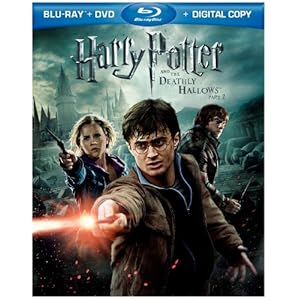
Remember when I said watching Part 1 when it was on disc meant I could go see Part 2 in the theater and be really fresh on it? Heh. Anyway, the final film in the long-running Harry Potter series finally brings the story to a conclusion, answering a few questions and putting an end to the reign of the evil Lord Voldemort once and for all. I hope that isn't a spoiler. Having now seen both of the films that were made from the final book after it was chopped in half, I definitely think they should have been one movie. I understand why Warner Bros would want to increase their profits by splitting them up, and avoid a running time that was too long. But they could have easily cut the two films into a single three hour one, and I think it would have been a better movie.

Part of the fallout of splitting the story up is that Part 2 has a pretty odd structure. It has a low key little beginning sequence where Harry talks to a few people and establishes his goals for the rest of the film, then cuts to a partly comedic, partly exciting sequence where he and his friends break into a bank to retrieve one of the doodads they need to defeat Voldemort. It's a solid first act, but then the film skips the second one entirely and jumps straight to an extremely long and drawn out climax for the whole series, when the gang returns to Hogwarts to find the last pieces of the puzzle and fight off the evil army, with help from the other students and pretty much every friendly character from the series' history. There's an ebb and flow of excitement and drama during this part that prevents it from straining too hard or forcing its momentum to a grinding halt, but I can't say it entirely avoids feeling off from time to time. The larger cast outside of the main three kids gets more attention here than they did in Part 1, and it was nice to see a lot of these characters get a last moment or two even if they never got developed in the movies nearly as much as they did on the page.

Besides some of the night scenes being too dark to actually tell what was going on, I didn't have many problems with this long sequence until near the end, after all has been revealed and the game is finally on. A couple things just didn't quite work. The Deathly Hallows themselves were a last minute narrative device already in the books, and they come off even more so here. They were already explained in Part 1, but that needed to be reiterated here in Part 2 for those who might have forgotten, and the explanations are brief and incomplete. They seem less like well-considered keys to victory and more like cheap explanations for why the good guys are able to win without actually having to be smarter or stronger than their opponents. And the final battle itself is just a bit clumsy - it's bigger and more spread out than it appeared in the book, which doesn't really do it any favors and seems like a poor reaction to the less than perfect ending J.K. Rowling crafted in the first place. I don't know if I'm presenting my issues well, but the main thing is just that this series has great production values, but the final scenes presented in this film don't quite live up to the decade of preparation that led up to them. I think David Yates did a solid job bringing the second half of the series to life, but he rarely rose above that mark. It was ultimately an entertaining movie though, befitting a likable if imperfect franchise.

Monday, February 21, 2011

The King's Speech


The King's Speech seems like it might be prestige-for-its-own-sake Oscar-bait, but sometimes movies like that are actually really good. Such is the case with The King's Speech, which tells the story of King George VI's troubles with his speech impediment and how an Australian therapist named Lionel Logue helped him overcome it, as well as how they became friends in the process. The script nudges history around here and there to make the story fit a traditional narrative structure a bit better, making the time of his therapy cover a broader period of history and ignoring some of the less-noble aspects of some of its characters, but much like in the film's main rival in the Oscar race, The Social Network, some adjustments to the true account of what happened are acceptable if it makes for a more entertaining film. And The King's Speech does damn well at that.

The script is quite good, keeping a nice pace as it sets the characters up and then ramps up both the intensity of the training and the political circumstances Prince Albert has to worry about on parallel tracks, always building up to the climactic scene where the two come together. It was a surprisingly funny movie, with some pretty snappy banter between the two men, with some of the dialogue taken directly from Logue's journals. Despite the humor, there's also plenty of more dramatic material where required, exploring what caused the king to develop a stammer in the first place and also selling the grave situation of Hitler's rise looming in the background. The direction is also noteworthy, as Tom Hooper filmed the movie with a lot more verve than was necessarily required with this kind of movie. Nothing about is exactly mind-blowing or unique, but it helped keep the movie from ever seeming dull.

And of course, the performances are all generally brilliant as well. Despite having to stammer his way through the whole movie, Colin Firth gives a pretty commanding lead performance as the king, and he does so well with the impediment that you almost forget he's acting. He also convincingly pulls off struggling under the weight of his growing responsibility - there are a lot of aspects to the role, and he nails all of them. Geoffrey Rush is also great as Logue. It's not nearly as difficult a part, but without good work by both men then the interesting dynamic between the two would never have worked. Helena Bonham Carter is good as the king's very supportive wife, and Michael Gambon and guy Pearce are both regal and menacing as his somewhat less supportive father and brother. It's not that they don't believe in his ability, it's just that they don't understand the difficulty of his situation, and it's a delicate balance that they get right. So The King's Speech manages to be a fairly uplifting underdog story while still having the weight of something darker, due to the terrible things that we all know are waiting for the characters just a few years after it ends. The formula is pretty easy to see, but formulas can be fine when they're pulled off so well by everyone involved. I certainly wouldn't have any qualms about it winning Best Picture.

Tuesday, December 28, 2010

Television Update 7: Holiday Specials

There seemed to be an unusual amount of special episodes of shows I watch around the Holiday season this year, so I thought I'd go over them. To get here, the episode didn't have to be Christmas themed, but it did have to be separate from the standard season airing schedule for the show.

Doctor Who - "A Christmas Carol"

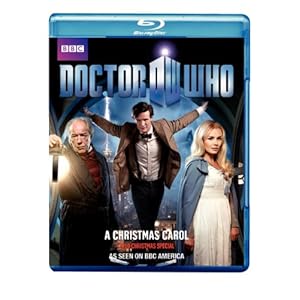
Hey, an episode of Doctor Who actually aired in America on the same day as in England! It's a Christmas miracle! While Russell T. Davies' Who Christmas specials tended to at least acknowledge the existence of the Holiday, they also tended to be about everything except it. Now that Steven Moffat's in charge of the show, he's put the Christmas back in Christmas Special with one of his better episodes, and definitely the most holiday-themed Who I've seen. The episode is obviously a take on a story that's been retold countless times, but Moffat and the cast make it work surprisingly well. Michael Gambon plays a man in control of a planet's dangerous cloud layer who takes family members for collateral on loans, and is very much a future version of Scrooge. Needing his help to save a ship full of people including Amy and Roy, the Doctor takes the role of the various Christmas ghosts and creatively uses the TARDIS to try to change his mind. The time travel twists on the classic story freshen it up quite a bit, and there's a lot here to justify Moffat's conception of the show as fairy tale more than science fiction. A very fun, very British hour of television.

Futurama - "The Futurama Holiday Spectacular"


This special is a lot like the Anthology of Interest episodes from the past, showing three silly short films within the Futurama framework, although this time there's nothing to frame the different stories and everyone dies at the end of all three, making them decidedly out of continuity. They're all based on a different holiday and also have sneaky environmental themes attached, providing a Christmas story about seed contamination, a Robanukah story about the depleting Petroleum reserves, and a Kwanzaa story about honey bees disappearing. It's far from one of the best episodes the show has done, with many of the jokes falling flat and yet another Al Gore appearance feeling a bit redundant at this point, but I'll give it a pass because each segment made me laugh out loud at least once. A bit scattershot, but they were probably constrained by the short running time for each bit, needing to hit multiple themes in each one, and finding a way to kill off the cast at the end each time, so the end result is respectable if not outstanding. A decent hold over until the next season starts.

Robot Chicken - "Robot Chicken: Star Wars Episode III"


There was actually a proper Christmas episode that aired before this, but it appears to be part of the regular fifth season which is starting up soon, while this is definitely a special. While the Family Guy Star Wars tributes have a clear purpose to go on for three episodes, retelling the story of the original trilogy, the Robot Chicken Star Wars episodes have been all over the place with all six movies, making a third seem less necessary. And at an hour long it could have easily dragged. Luckily the writers saved it with a real concept this time, going forward chronologically through the whole series, following Emperor Palpatine's ascent to the throne. It's still just an excuse for a lot of random gags and jokes, but the general progression makes it more interesting than it could have been. Their take on Palpatine is still pretty funny, and a lot of the sketches are among the best and most elaborate they've ever done. It's still definitely just more Robot Chicken in places, but I liked the episode more than I expected.

Tim and Eric Awesome Show, Great Job! - "Chrimbus Special"


The Awesome Show's apparent ending earlier this year was a surprise heartbreak, though they've changed that sentiment in the last couple months with a new tour (that I missed getting to go to), a new hour long episode, and an announcement of a coming movie as well as the possibility of more seasons if they feel like it. That's all great news, and the holiday "Chrimbus" episode was hilarious as expected. Chrimbus is a warped version of Christmas much more focused on the receiving aspect of the holiday than the giving side, and it's an opportunity for more awkward audience reactions, mildly disturbing song and dance numbers, and one off sketches. The episode works as an excuse to bring back all of the old favorite guests, from known celebrities like Zach Galifianakis to fan favorite oddities like Ben Hur. There's a couple more ridiculous Cinco products to throw on the gigantic pile, and a multi-part arc with Carol and Mr. Henderson that wasn't exactly necessary but still pretty outstanding. More fun for Tim and Eric fans, and if it had ended up as the last thing they did, it would have been a nice send off.

Monday, July 27, 2009

Harry Potter and the Half-Blood Prince


Despite not liking the book so much (besides the ending it's not very eventful for the penultimate chapter of an epic story), David Yates was able to turn the Half-Blood Prince into a mostly successful movie, showing to me that the key to a good Potter adaptation is keeping the spirit of the story in a well-made film, not just being as faithful as possible to the book. I thought it was just a bit too long and leisurely paced, but the cinematography and editing in individual scenes was brilliant, it was probably the funniest Potter movie yet, and it pulled off the crucial moments as well as could be hoped. There's a lot of interesting use of color throughout as Yates clearly experiments with the look in his second turn at the helm, and even if what's happening seems as pointless as it did in the book, at least it's nice to look at. There's not a lot of digitally created terrors this time, but some of the visual effect stuff is more subtle and pretty impressive, and I was actually a bit surprised that it was only PG because while it may have been less explicitly violent than the other recent films, it wasn't less menacing in tone.

Ralph Fiennes' Voldemort is absent this time as the students spend most of the movie besides the surprisingly long opening scenes within the magically protected walls of Hogwarts, and the threat of evil is mostly in the background as roving bands of Death Eaters assault and terrify both the magical and mundane worlds. There's an added scene of violence in one of the movie series' few moments of pure fabrication, but it did help with the deliberate pace and also conveyed the sense of danger that just mentioning occasional attacks elsewhere wouldn't have. Despite the reincarnated villain being a no show, Tom Riddle's presence still exists in some background exploration that leads to the discovery of a way to potentially defeat him, and he is seen in flashbacks portrayed by a couple different actors. At his youngest he's played by Fiennes' nephew, and to be honest it's the scariest he's been in the whole series. Prancing around with a snake nose just doesn't compare to a child who seems evil way beyond his years. His teenage version is a ponce in comparison.

Anyway, a lot of the normal course of the movie is spent showing the increased romantic tension among the main cast of students as they seem to have the opposite sex on the mind more than the increasingly looming risk of violent death. There's a lot of humor too, as Draco Malfoy's subplot is almost the only time we see how serious things are. There's also Michael Gambon's finest turn yet as Dumbledore, with a mix of seriousness about Harry's task and fatherly concern for him that perfectly captured the character to me. Alan Rickman's also great as Snape, and I can't picture anyone doing the part better. Helena Bonham Carter hasn't had a ton to do in these movies, but she does embody the part of Bellatrix fairly excellently and she should be good in the last couple movies. The scene near the end where Harry and Dumbledore leave Hogwarts briefly was very effectively pulled off and tense, with some really nice effects work in one of the only true scenes of flash, but I was a bit disappointed in the climax. The crucial moment was fine, but the way the stuff around it was removed, not only was it not as exciting as it could be, but it effectively made a good deal of Malfoy's subplot irrelevant and unnecessary. I'm not sure the Deathly Hallows needs to be two parts after they did the first six books in one piece, but it should be fun, and I believe Yates can do it after his work on the last two movies.

Sunday, July 22, 2007

Harry Potter and the Order of the Phoenix


The seventh book came out yesterday, which will finally end the story that millions of people have been caring about for a decade. I've always liked them, and the movies were entertaining visions of the story, although as I've said previously, of the first four, I'd only consider the third to be a good film. You can add the fifth to that to make it two good ones.

Whereas the first two were too childish for my tastes, the fourth just seemed muddled in its execution. I understand that in converting a book that long into a movie less than three hours long, you're going to have to make cuts and slim things down a bit. I just think they handled it better this time around than they did before. Goblet of Fire seemed all over the place, while Order of the Phoenix distilled the plot down to the necessary elements. I don't think it's much of a coincidence that the third and fifth books are my favorites as well, and it's quite possible I'm just holding that against the fourth movie subconsciously. It just seemed like they were more concerned with the overall plot. Of course Voldemort returns in the fourth book, and it's extremely pivotal for the whole series. Still, a lot of the actual movie itself was more concerned with the tournament and dances and stuff like that than what was really going on.

Daniel Radcliffe has come into the role of Harry well. It's a bit difficult, since Harry's 'roid raging throughout the whole thing, and it would have been easy to come off a lot worse than he did. The other students are pushed back a bit to focus on the main character, but they're still pretty good. Gary Oldman is great as he always is in his reprisal of the role of Sirius Black. The casting is brilliant as ever, with new characters like Luna, Umbridge, and Bellatrix all picked perfectly. If there's one thing the whole movie series should be commended for, it's the casting. My only problem is that they should have just Ralph Fiennes do his part instead of covering him with that stupid snake makeup that makes him look idiotic. This was also the most exciting movie so far, and the visual effects in the climactic scenes were great. Goblet of Fire actually cut monsters out of the movie, which was the opposite of what you'd think they'd do with a movie. Order of the Phoenix has combat between wizards at a level we haven't seen before, and it's really pretty sweet. The Order coming to save the day might be the best scene in the series. The final showdown was done terrifically as well, and the whole final act is just good. The story has already ended for some readers, but I'll make sure to watch the last two movies to see how they handle it.