Showing posts with label Robert Duvall. Show all posts

Wednesday, July 20, 2011

Movie Update 11A

Life goes on, and I continue to watch a number of films that I have never seen before. I'm running out of "classics" in the instant queue at this point, and I don't know if I'm going to keep that when Netflix switches up the plans in a couple months. But I'll keep watching movies. 11B goes up tomorrow.

The Conversation
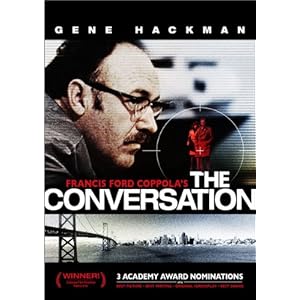

Sandwiched between the first two parts of The Godfather, Francis Ford Coppola made this film, a much more intimate and inward-looking affair. Gene Hackman does a great job (I find it amazing he was already 44 when this was made, but I hadn't realized he retired years ago either) as a surveillance expert who becomes worried by the content of a conversation he is hired to record, and reluctant to hand it over to his client. He's surrounded by a great cast, notably a young Harrison Ford as his main contact with the client, John Cazale as his spurned partner, and a brief appearance by Robert Duvall. It's mostly a character piece, and the script and Hackman's work do a great job of bringing a quiet by interesting man to life. Things do get hairier later on, with some surprisingly shocking moments as it reaches the climax. Nice anti-Hollywood ending, too.

The Hustler
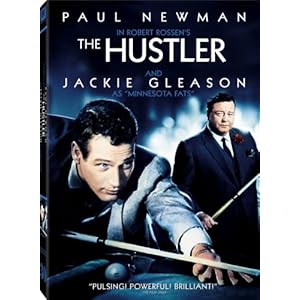

I feel like Paul Newman was sort of a singular talent that came into his own in the 60s, and since he didn't have any direct competitor like Robert De Niro versus Al Pacino, some people my age overlook how amazing of an actor he is. There's no ongoing debate around him, he's just an amazing actor. Could be making crap up, though. In The Hustler he plays a pool shark, and while there are extensive pool scenes in the movie, it's more about the turmoil of the character, who realizes he's not who he thought he was after a game against Jackie Gleason's Minnesota Fats goes bad. George C. Scott is also great in the movie, and it's just a fun film to watch despite some pretty dark material towards the end. The good kind of sports movie that's not really about sports.

MASH
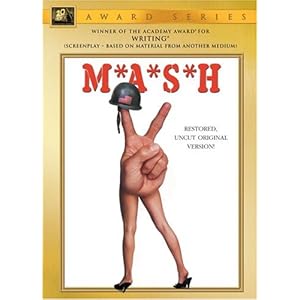

All I really knew about Robert Altman before seeing this was he made movies with ensemble casts that talked over each other, and that's certainly the case here. It's a Korean war movie that's really about the Vietnam war, and showcases funny actors rather than comedians trying to act. The three main characters are military doctors played by Donald Sutherland, Elliot Gould, and Tom Skerritt who don't care much for proper chain of command or behavior for their positions. It's not really realistic how cavalier they are with their mistreatment of other officers in the movie, but it's a satire, and it works. I didn't think it was an amazing movie, but I did enjoy watching it go through its paces, and there are a number of memorable scenes, even if some don't quite pay off or go on too long. I can definitely see how some producers looked at it and saw a way to make a series out of it, after removing some of the racier stuff. I assume I'll continue to never see it, but you never know.

Play Time
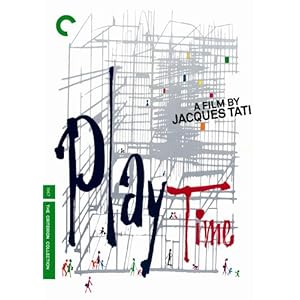

One of those movies that I didn't really love, but I appreciated the immense amount of care and craft behind. It's hard to say what Jacques Tati's deal is, beyond a lot of wide shots filled to the brim with little bits of physical comedy in every corner of the screen. Play Time is a film where dialogue isn't very important, and I could easily see the whole thing working almost as well with no subtitles at all (it's already a mix of French and English), or even as a silent film. It's about a tragic future version of Paris, where all of the famous landmarks people love have been replaced with plain buildings filled with sterile cubic offices, steel floors and chairs with squishy cushions. Humanity still shines through though, as Monsieur Hulot and an American tourist bumble around the trade shows and turn a disastrous restaurant opening into a heck of a party. I think the whole thing could have greatly benefited from chopping as much as half an hour off, but there's nothing wrong with any individual scenes. You can just only take so much whimsy and clever visual comedy before it all seems like the same stuff. Still a solid film.

Saturday, March 5, 2011

To Kill a Mockingbird


The primary reason to watch this movie is Gregory Peck's performance. As an adaptation of the classic book, it has to make a lot of sacrifices in the transition. The book was a story all about growing up, as the main character Scout has a lot of different experiences while coming of age in a transitional period in American history. But the film couldn't or just didn't try to cover that whole thing in a couple hours, so they decided to focus on the two most memorable parts of the book - the trial and the mystery of Boo Radley. Although it feels like a kind of old fashioned movie for the time, that's at least partially the point, and for what it is it pulls off what it attempts pretty darn well. The re-focused story places more emphasis on Atticus Finch, and as I started this by mentioning, Peck does a fantastic job in the role. The movie could have still been enjoyable without him, but he brings such a dignity and power to the part that you can't help but be in awe of his quiet manliness most of the time. Brilliant casting and acting.

Besides Peck, the movie's fine enough. The kid actors aren't great, but their straightforward performances fit the old fashioned tone, and the rest of the adult actors are okay. It's odd seeing Robert Duvall playing the mysterious Radley, because while I'm sure it was effective at the time with him being unknown, he's so pervasive now that it clashes with the original intent of his appearance. The courtroom stuff really works though, despite the specifics of the case being a bit too on-the-nose to the point that it obscures the intention of the whole thing a bit. But director Robert Mulligan does most of his best work in those scenes, letting the tension and gravity of what's happening speak for itself without trying too hard to make it dramatic. And Peck does some of his best work as well in those speeches and interrogations. It all adds up to something that's not a perfect adaptation of the book, but a good companion to it at least.

Sunday, January 30, 2011

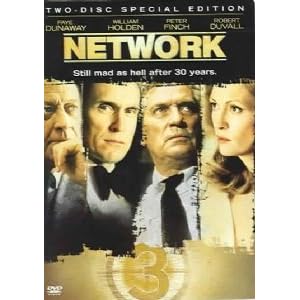
Network


Sometimes it's a bit difficult to watch these older movies, where a single line can hang over its entire legacy, and leave you waiting for it to come while you're trying to enjoy the story. Network's mad as hell line earns that fame though, in one of the film's most memorable scenes out of many. What's even more remarkable about the movie though is how much what its central ideas are still seem familiar today. It came out 35 years ago, but what some of the characters say about the world being a business rather than a collection of nations and people is still being said today. It's kind of a scary thing to think about, and I had no idea people were already seeing things that way back then.

So Network is roughly equal parts drama and dark satire. Things start when a retiring news broadcaster at a dying network named Howard Beale declares one night that he will kill himself on air a week later. The executives try to quiet him up and get rid of him, until Faye Dunaway as a programming developer realizes the ratings potential of a "mad prophet" cursing and yelling at people on the air every night. They keep him around, shifting it from a news program to a variety show with a number of segments with Beale as the star, preaching wildly to a studio audience and 60 million viewers at home. It's a pretty ridiculous scenario, but it serves as a solid platform for a lot of black humor and well written, apocalyptic speeches.

The movie is a showcase of talent as much as anything made in a long time, getting nominated for and winning a ton of awards, including five performances nominated for acting Oscars, three winning. Beatrice Straight's supporting actress win makes it the briefest role to ever win such an award, making me think it was kind of a light category that year, but pretty much everyone in the movie is excellent. Peter Finch won a posthumous award for playing Beale, and Dunaway also won playing a pretty unusual sort of woman. The last time I saw William Holden he was twenty five years younger, but he's also good as the first casualty of the internal conflict arising at the network, and Robert Duvall is solid as well. Sidney Lumet directed, showing off more of his talent for making scenes consisting of little more than people talking to each other for minutes on end completely compelling. The movie could have easily failed utterly, but they managed to turn a string of monologues intro truly compelling cinema.

Thursday, September 9, 2010

The Godfather: Part II


The Godfather might be the best made film I've ever seen, and the sequel does plenty to live up to that standard of cinematography, editing, and acting. I don't think it's an insult to say it doesn't quite live up the the original's standard of storytelling, because it's still an outstanding film and that's a hell of a thing to live up to. I had no issue with any individual element of the movie, I just don't think the overall character arc is quite as fascinating as in the first. In Part I, Michael Corleone is a war hero who slowly gets sucked into his family's criminal business due to loyalty to his father and a decade of desensitization to the wrongs he's committing. He eventually finds himself as don of the whole family. It's a transformation that's fascinating to watch. in Part II, Michael's the godfather. And he's the godfather for the whole movie. Lots of interesting stuff happens to his character, including some pretty brutal personal things in the second half. But while he descends deeper into the role of ruthless crime lord, the arc is just less distinct. It felt more like watching a few episodes of a brilliant crime show than a self contained, fulfilling story.

Again, I don't want to undersell how good this film is. It's one of the best of the decade. It just didn't quite match the first, to me. There's a lot going on, and it's definitely a movie that gets better the closer attention you pay to it. Bit characters from the first film show up to play important parts, there's a dense web of deception and backstabbing that's quite a bit of work to keep up with, and it's as interesting a straight gangster tale as I've ever seen. The flashback segments featuring Robert De Niro as a young Vito Corleone, depicting his rise to power in 1920s New York, are pretty brilliant, and I might have gotten more out of the film as a whole if they got a bigger share of the 200 minutes rather than feeling like a distinct B story to the main one of Michael's struggles. The mostly returning cast is brilliant, Al Pacino further proved himself to me as a master of the craft in his younger days, Robert Duvall continues to make Hagen one of the most sympathetic characters despite his somewhat thankless role, and Diane Keaton has a lot more to do this time, showing she deserved to be in several of the 70's best films. I don't really know many other actors here by name, but no one would have made it into the movie if they didn't know what they were doing. There's not much else to say about it without going into the specifics of the story, which I feel would be a disservice. I don't have to tell anyone this, but the Godfather movies deserve to be seen by anyone who likes the medium for more than just a few laughs and explosions.

Tuesday, March 3, 2009

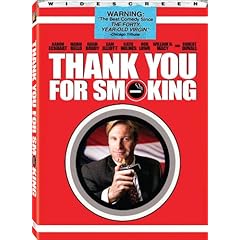
Thank You for Smoking


Thank You for Smoking is a unique, very funny movie with an outstanding cast. Smoking is a very touchy subject, but the film covers a lot of the nonsense that goes on with the anti-smoking movement without being insensitive to its dangers. Little tangent here, but every single campaign I've seen against cigarettes has been annoying and ineffective. If you've ever seen a commercial from New York's fairly recent series of commercials, you'll know what I mean. They try and shock you into quitting with grotesque imagery and fear mongering in a way that I find more offensive than if a smoker came up to me and blew smoke right into my face. Anyway, Eckhart plays a spokesman for a tobacco lobby who goes on TV and pokes holes in the poor arguments against the product he represents and generally wins at life, at least until the plot gets more serious near the middle. There's a bunch of different characters and subplots he jumps between, and the movie is pretty consistently and enjoyably paced.

After watching Juno, it's nice to see Reitman has some flexibility with the kind of comedy he can handle. Smoking is more mature and explicit, but never gets too base in the content and has a similar sense of intelligent humor. It's not quite the heartwarming film that Juno was, but it was put together just as well. I'm not sure how much of the script came from the book it was based on, but it's really just fun to watch how Eckhart faces each obstacle. I'm finding myself with not much to say here, other than almost every single speaking part was played by someone I know the name of or at least recognize, and that seemed almost odd but was also kind of cool. Really good film.